
Toys Testing Equipment
Product safety checks for toys often depend on repeatable mechanical and physical tests rather than visual inspection alone. In laboratories, quality departments, and compliance environments, the right tools help teams evaluate sharp edges, sharp points, accessibility, bite resistance, stability, and structural integrity in line with common toy safety methods. This is where Toys Testing Equipment becomes essential for manufacturers, importers, and third-party testing facilities.
This category brings together practical instruments used to assess whether toys and related children’s products meet typical safety test requirements. The range covers compact gauges and fixtures for bench testing as well as larger machines designed for durability, force, and stability evaluation across different product types.
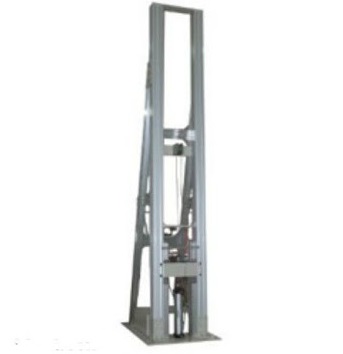
Equipment used for core toy safety checks
Mechanical toy testing usually focuses on foreseeable hazards during normal use and reasonably predictable misuse. That includes checking whether a component has a dangerous edge, whether a point could puncture skin, whether small parts are accessible to children in certain age groups, and whether structures remain safe under load, tension, or repeated motion.
Within this category, common examples include the Technical Engineering SET-50 Sharp Edge Tester, the TONYHK TW-221 Sharp Point Tester, and the TONYHK TW-204 Accessibility Probes. These tools support routine evaluation of physical hazards and help standardize inspection procedures across incoming quality control, product development, and compliance testing workflows.
Typical test functions covered in this category
A well-equipped toy test area often needs more than one device because each hazard requires a different test principle. Sharp edge and sharp point assessment is usually performed with dedicated handheld testers, while accessibility checks rely on probes sized for specific child age ranges. Fixtures for rattles, bite resistance, and tension testing address other product geometries and failure modes.
Representative items in this category show that range clearly. The TONYHK TW-203 Rattle Test Fixture is intended for checking whether a rattle-related design fits the required test profile, while the TONYHK TW-207 Bite Test Clamp is used where bite force simulation matters. For pull and tension evaluation, the TONYHK TL-404 TTF Push Pull Tension Tester supports controlled force application to verify the retention of components and assemblies.
From handheld gauges to full-size testing machines
Not every toy safety task requires the same level of equipment. Smaller instruments are useful for quick, repeatable screening and for tests that are defined by a fixture or contact geometry. They are typically chosen when portability, operator convenience, and straightforward setup are important.
Larger systems in this category are better suited to stability, dynamic loading, and durability testing. Examples include the TONYHK TW-270 Inclined Plane Device for Stability Test, which supports tilt-based assessment, and the TONYHK TW-257 2 m/s Tester for dynamic test conditions. For baby carriage related applications shown in this range, the TONYHK TC-002 Baby Carriage Free-Set Test Machine and TONYHK TC-009 Baby Carriage Brake Performance Testing Machine illustrate how the category can extend into children’s product safety equipment that requires heavier structures and more controlled motion.
How to choose suitable toys testing equipment
Selection should start with the product type, target market, and the test methods your team actually needs to run. A lab handling general toy compliance may prioritize probes, edge testers, point testers, and tension devices first. A manufacturer working with wheeled or load-bearing children’s products may need larger rigs for brake, handle, or stability checks in addition to standard hazard screening tools.
It is also important to match equipment choice to test frequency and workflow. For occasional verification, standalone fixtures may be sufficient. For higher-throughput environments, it may be more practical to build a more complete station around proven brands such as TONYHK or specialized solutions from Technical Engineering, depending on the type of test and the consistency required by your internal procedures.
Why standards alignment matters in toy testing
Many instruments in this category are designed around commonly referenced toy safety methods and dimensions. In practice, that means the geometry of a probe, the contact characteristics of an edge tester, or the loading approach of a clamp or tension system is intended to reflect the logic used in recognized test procedures. This improves repeatability and reduces uncertainty when comparing results between production, quality, and external compliance teams.
Standards-oriented testing is particularly important when products are sold into multiple markets. Even when test principles are similar, age grouping, loading conditions, or acceptance criteria may vary. Choosing equipment built for the relevant methods helps teams prepare for validation, documentation, and pre-compliance checks before formal certification testing is arranged.
Where these systems fit in a broader test environment
Toy and children’s product evaluation is often only one part of a larger quality assurance program. Some organizations also work with packaging barrier studies, material performance, environmental conditioning, or vibration-related setups depending on the product and supply chain requirements. If your application extends beyond toy mechanics, related test areas such as water vapor transmission rate systems or vibration isolators may also be relevant in the wider laboratory ecosystem.
That broader view is useful when planning a facility or upgrading existing capability. Rather than selecting instruments in isolation, many buyers evaluate how toy safety fixtures, force testers, and inclined plane devices will integrate with documentation practices, calibration routines, and adjacent material or transport-related test equipment.
Common buyers and use cases
This category is relevant for third-party test laboratories, OEM and ODM manufacturers, importers, brand owners, and factory quality teams. Development engineers may use these tools during design verification, while inspection and compliance staff use them for routine checks, sample validation, and investigation of nonconformities.
Children’s product safety testing can involve everything from screening a new toy concept for accessible hazards to confirming that moving assemblies or attached parts withstand repeated use. For that reason, many buyers look for a combination of compact testers and heavier-duty machines so they can cover both basic compliance checks and more demanding mechanical evaluations within one workflow.
Finding the right setup for your application
The most effective equipment mix depends on whether you are focused on bench-level hazard checks, production-line quality control, or full laboratory testing. A simple setup might begin with edge, point, bite, and accessibility tools, while a more advanced setup may add tension testers, inclined planes, or dynamic rigs for broader product coverage.
By comparing the intended test method, sample type, and required level of repeatability, buyers can build a practical solution from this Toys Testing Equipment range without overcomplicating their process. A clear understanding of the product risks and target standards will usually lead to a better selection than choosing by machine size alone.
For teams working with toys and children’s products, the goal is not just to perform a test, but to generate reliable evidence that supports safer design and more consistent quality. This category provides the foundation for that work, from straightforward manual fixtures to larger systems used in more demanding mechanical and physical evaluations.
Get exclusive volume discounts, bulk pricing updates, and new product alerts delivered directly to your inbox.
By subscribing, you agree to our Terms of Service and Privacy Policy.
Direct access to our certified experts