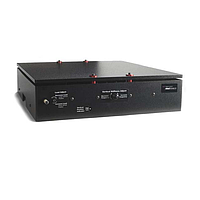
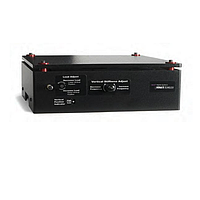
Vibration Isolator
When sensitive instruments are affected by floor vibration, building movement, or nearby mechanical activity, measurement quality can drop quickly. In research labs, inspection environments, and precision industrial setups, a vibration isolator helps protect equipment stability so that microscopes, metrology systems, and other high-accuracy platforms can operate with greater consistency.
This category brings together isolation solutions designed for applications where low-frequency disturbance matters. The selection includes compact units for relatively light payloads as well as heavy-duty models intended for much larger installed masses, making it easier to match the isolator to the actual load and operating conditions.
Why vibration isolation matters in precision environments
Unwanted vibration can come from many sources: foot traffic, adjacent machinery, HVAC systems, structural resonance, or external traffic transmitted through the building. Even when vibration is not obvious to the operator, it can still influence image sharpness, repeatability, alignment, and test reliability.
That is why low-frequency isolation is especially important in demanding applications. A properly selected isolator reduces the transfer of motion from the supporting structure to the instrument, helping maintain a more stable working platform for sensitive measurements and processes.
Coverage from compact payloads to heavy-duty systems
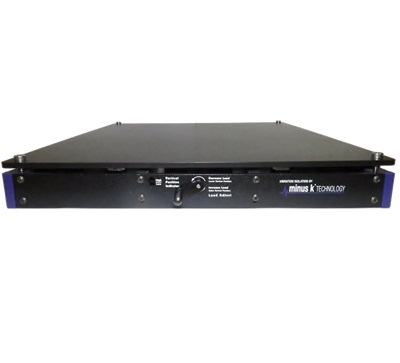
This range includes ultra-compact models such as the Minus K Technology 25LC-4U, 35LC-4U, 50LC-4U, 70LC-4U, 100LC-4U, and 125LC-4U. These models are suited to lighter payload bands, starting from 12-25 lb and extending up to 95-130 lb, while maintaining a very compact form factor. That makes them relevant where installation space is limited but isolation performance remains critical.
For substantially higher load requirements, the category also includes larger models such as the 1500SM-1, 1900SM-1, 2400SM-1, 2900SM-1, 3400SM-1, and 4000SM-1. These units cover payload ranges from 800-1550 lb up to 3400-4200 lb, supporting heavier platforms, machines, and integrated systems that still require precise control of transmitted vibration.
Featured solutions from Minus K Technology
Minus K Technology is the main featured manufacturer in this category. The listed models show a clear progression in payload capacity, which is useful for buyers who need to size an isolator around the real operating weight of the supported instrument or platform rather than choosing only by overall dimensions.
Among the compact options, the 25LC-4U and 100LC-4U illustrate how the same general platform concept can serve different load windows. On the heavy-duty side, models such as the 1500SM-1 and 4000SM-1 support much larger systems while remaining focused on low-frequency vibration control. For buyers comparing solutions across a broader range, you can also explore the full vibration isolator selection.
How to choose the right vibration isolator
The first step is to verify the payload range. Isolation performance depends strongly on loading, so the supported mass should fit within the specified working window of the model. Choosing too small or too large a unit can reduce effectiveness, even if the product appears mechanically compatible.
Next, consider the vibration direction that matters most in your setup. In many applications, both vertical and horizontal isolation behavior influence overall performance. The models in this category include solutions intended for very low natural frequency behavior, which is particularly relevant for sensitive equipment where low-frequency disturbances are difficult to manage with conventional support methods.
It is also worth checking installation constraints such as available footprint, equipment center of gravity, service access, and total system height. Compact LC-4U models may be attractive where bench space is limited, while SM-1 models are more suitable when the supported structure is much heavier and requires a more substantial isolation base.
Typical applications and use cases
Vibration isolators are commonly used wherever motion can interfere with results or process control. This includes precision inspection, optical setups, laboratory instrumentation, test benches, and high-resolution measurement systems. In these environments, isolation helps reduce external influence rather than attempting to correct bad data after the fact.
They also fit naturally within a broader ecosystem of mechanical and physical testing equipment, especially where stable support conditions are part of the test method. In some facilities, vibration control is considered alongside related infrastructure such as furnaces or other specialized test systems, depending on how the lab or production area is organized.
Understanding the model range in this category
The compact LC-4U series is characterized by a small physical envelope and multiple payload bands. This makes it easier to select a model that aligns closely with the supported load, whether the requirement is around 12-25 lb, 25-35 lb, 36-55 lb, 50-70 lb, 75-100 lb, or 95-130 lb. In practical terms, that flexibility helps users avoid oversizing while maintaining appropriate isolation conditions.
The SM-1 range addresses much heavier payloads, with models spanning 800-1550 lb, 1200-1950 lb, 1800-2500 lb, 2400-3000 lb, 2800-3600 lb, and 3400-4200 lb. For system integrators and industrial buyers, this structured payload ladder simplifies comparison and shortlisting, especially when working with platforms, machine assemblies, or large instrument frames.
What to review before placing an order
Before selecting a unit, confirm the total installed load, including the instrument, mounting hardware, fixtures, and any accessories that remain on the platform during operation. It is also good practice to review how the load is distributed, because uneven loading can affect setup and final performance.
If the application is highly sensitive, buyers should also consider the surrounding environment: floor construction, nearby rotating equipment, operator traffic, and whether the supported device generates its own motion during use. These factors help determine whether a compact low-profile isolator is sufficient or whether a larger low-frequency solution is more appropriate.
Supporting better stability in demanding setups
A well-matched vibration isolator can play a central role in improving measurement repeatability, protecting sensitive equipment operation, and reducing the influence of environmental disturbance. With compact and high-capacity options from Minus K Technology, this category supports a wide range of payload requirements without losing focus on low-frequency isolation performance.
If you are comparing solutions for a new installation or upgrading an existing setup, start with payload, space constraints, and sensitivity level. That approach makes it easier to narrow the selection to the models that best fit your application and long-term operating conditions.
Get exclusive volume discounts, bulk pricing updates, and new product alerts delivered directly to your inbox.
By subscribing, you agree to our Terms of Service and Privacy Policy.
Direct access to our certified experts