
Vibration test
When a product must survive transport, repeated handling, or real operating loads, vibration testing becomes a practical part of quality control rather than a checkbox exercise. In industrial manufacturing, packaging validation, and reliability engineering, the goal is to understand how a sample responds to controlled motion, frequency, stroke, and force before failures appear in the field.
Vibration test equipment is used to reproduce mechanical stress in a repeatable way, helping teams evaluate durability, packaging performance, structural weakness, and fixture stability. This category brings together systems designed for laboratory and production-oriented test environments, with solutions ranging from compact platforms to large-capacity vertical and horizontal configurations.
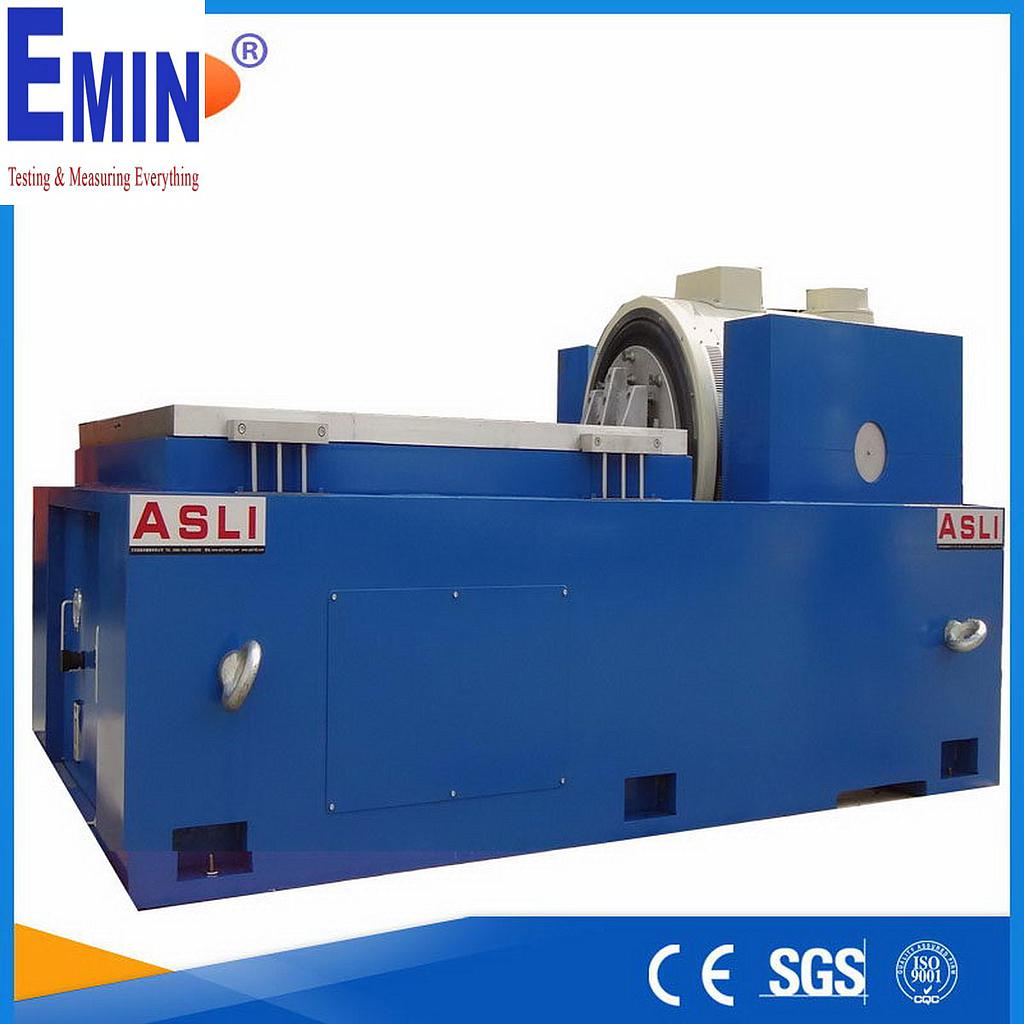
Where vibration testing fits in industrial test workflows
Vibration testing is widely used when engineers need to simulate transportation conditions, warehouse handling, product resonance behavior, or repeated dynamic stress over time. It is relevant for packaged goods, industrial assemblies, electronic equipment, automotive components, and large mechanical structures that may be exposed to movement during service or logistics.
In many labs, vibration systems are part of a broader reliability and materials evaluation process. Depending on the application, they may be used alongside support equipment such as a vibration isolator to improve test stability and reduce unwanted transmission into the surrounding installation.
Vertical and horizontal vibration systems for different test objectives
A key distinction in this category is the difference between vertical vibration systems and horizontal platforms. Vertical systems are commonly selected when the test setup needs to apply motion through the primary loading direction of a product or package, while horizontal systems are useful when side-to-side motion better represents the intended transport or use case.
Examples from this range include large-capacity vertical systems such as the Lansmont 65000 Vertical vibration test system and mid-range options such as the Lansmont 7000, 10000, and 28000 series. For horizontal testing, the Lansmont 6000H Horizontal vibration systems are representative solutions for users who need controlled lateral excitation across different performance levels.
The available models also show how system architecture scales with test demand. Some configurations focus on compact table sizes and moderate dynamic force, while others support larger fixtures, higher payloads, and broader motion capability for more demanding packaged-product or component testing.
Frequency range, force, and stroke: what matters when selecting a system
The right platform is usually determined by a combination of frequency range, actuator force, stroke, table size, and specimen mass. A wider frequency range can be important when the application involves resonance search, durability screening, or simulation of more varied transport and service conditions. Force and stroke influence how effectively the system can move the load under realistic test conditions.
Within the products highlighted here, some systems cover standard ranges such as 1 to 300 Hz, while others extend to 500 Hz for higher-performance requirements. Models such as the Lansmont 6200 and 1800 series illustrate how users can choose between standard and higher-frequency configurations depending on the expected test profile.
Table size is equally important. Large samples, palletized loads, or oversized fixtures may require broad test surfaces such as those seen on the Lansmont 15000, 56000, or 65000 systems, whereas smaller assemblies may be better matched to more compact platforms that simplify setup and reduce unnecessary system overhead.
How these systems support packaging, product, and transport validation
One of the most common uses of vibration test equipment is transport simulation. Manufacturers use controlled vibration to assess whether packaging, cushioning, closures, or internal supports can protect the product throughout shipping and handling. This helps identify issues such as loosening, abrasion, fatigue, seal damage, or product movement inside the pack.
For product-level validation, vibration testing can reveal mechanical weak points in frames, brackets, fasteners, connectors, and mounted subassemblies. It is also useful for comparing design revisions, confirming fixture integrity, and screening prototypes before formal qualification.
Because many test programs combine mechanical stress with other environmental or material checks, users may also review adjacent methods depending on the application. For example, thermal exposure may be assessed with industrial furnaces, while barrier packaging studies may involve a water vapor transmission rate test system.
Representative systems in this category
Lansmont is the most visible manufacturer in the current product selection, with systems that cover both vertical and horizontal test requirements across different capacities. The range includes models such as the Lansmont 1800 and 6200 for smaller or medium-duty testing, as well as larger platforms like the Lansmont 28000, 56000, and 65000 for heavier loads and larger fixtures.
The Lansmont 6000H Horizontal vibration systems are relevant when the application requires controlled horizontal motion, and they are offered in both standard and higher-performance frequency ranges. On the vertical side, systems such as the 6200 and 1800 series provide options for users who need flexibility in table size and operating range without immediately moving to the largest platforms.
Other manufacturers listed for this category include King Design, KMT, Tsubosaka, and JFM. Selection between brands and system families typically depends on specimen size, target frequency range, installation constraints, and the type of validation standard or internal test method being followed.
Practical selection points before requesting a quotation
Before choosing a system, it helps to define the test objective clearly: transport simulation, durability screening, resonance investigation, or packaging evaluation. That decision affects whether a vertical or horizontal configuration is more appropriate and how much dynamic capability is really needed.
Users should also confirm the specimen dimensions, total payload, fixture requirements, and facility conditions. Power supply, cooling water, plant air, and floor layout can all influence whether a given system is realistic for the intended site. Large-capacity vibration equipment often requires more planning than the product page alone may suggest.
Finally, consider long-term usability. A system that meets today’s sample size but leaves no headroom for future projects can quickly become a limitation. In many B2B environments, choosing a platform with suitable table options, stroke flexibility, and performance margin leads to more consistent testing and fewer compromises in fixture design.
Choosing the right vibration test category for your application
This category is intended for buyers and engineers who need a structured view of industrial vibration testing systems rather than a simple list of models. Whether the focus is package validation, mechanical reliability, or transport simulation, the most effective choice comes from matching the motion direction, force level, frequency range, and table size to the real test condition.
If you are comparing systems, start with the sample mass, fixture envelope, and target test profile, then narrow the options by performance range and installation requirements. That approach makes it easier to identify whether a compact vertical platform, a high-capacity table, or a dedicated horizontal system is the better fit for your lab or production test workflow.
Get exclusive volume discounts, bulk pricing updates, and new product alerts delivered directly to your inbox.
By subscribing, you agree to our Terms of Service and Privacy Policy.
Direct access to our certified experts