Coordinate Measuring Machine (CMM)
When dimensional accuracy has to be verified across complex parts, a manual gauge is often not enough. In quality control, mold inspection, machining validation, and reverse measurement tasks, a Coordinate Measuring Machine (CMM) provides the repeatable 3D data needed to check geometry, position, form, and critical dimensions with much higher consistency.
This category brings together CMM systems and essential probing components used in industrial metrology. It is relevant for manufacturers working with precision parts, large workpieces, incoming inspection, and final quality assurance where traceable measurement results support both production and documentation requirements.
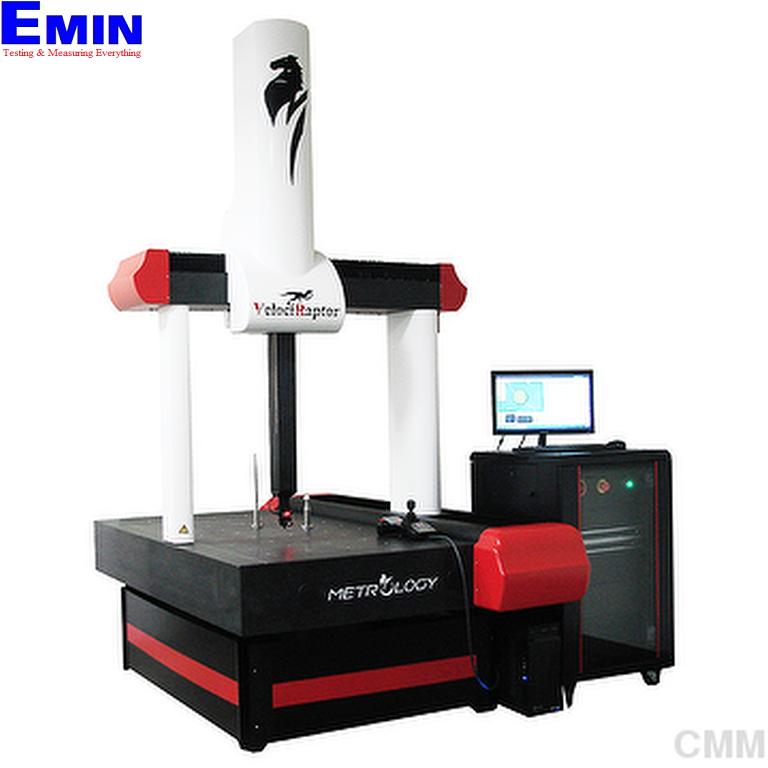
Why CMM systems matter in industrial inspection
A CMM is designed to measure the coordinates of points on a workpiece in three axes, allowing operators to evaluate size, location, profile, and geometric relationships. This makes it especially valuable when conventional tools such as callipers or handheld gauges cannot provide enough reach, accuracy, or data depth for modern production requirements.
In practical use, CMM equipment supports first article inspection, batch sampling, tooling verification, and post-machining control. It is widely applied in sectors where dimensional conformity directly affects fit, assembly, or performance, including precision machining, automotive components, tooling, metal fabrication, and general industrial manufacturing.
What you can find in this category
This range includes complete CMM machines as well as probing accessories that play a critical role in measurement performance. Depending on the application, users may need a full measuring system for shopfloor or lab-based inspection, or replacement styli and holders to configure the probe for different geometries and access conditions.
Representative systems in this category include the Hexagon Glory Touch 12.30.10 Coordinate Measuring Machine and several large-format models from Jaten such as the JT-10108L, JT-121210L, JT-151510L, JT-161610L, JT-252510L, and JT-353510L Kryton series. For probing setups, examples include the Renishaw A-5000-7800 straight styli, Renishaw A-5000-9685 tungsten carbide ball stylus, Renishaw SH25-2 Stylus Holder, and MITUTOYO straight styli in compact sizes for detailed measurement work.
Different CMM configurations for different measuring tasks
Not every inspection job requires the same machine structure. Compact and medium-size CMM systems are commonly selected for routine dimensional control of machined parts, fixtures, and production components, while larger machines are more suitable for oversized parts that exceed the travel range of standard measuring platforms.
The large-sized Jaten Kryton models listed in this category illustrate this need clearly, with extended measuring ranges intended for bigger workpieces and long-axis inspection scenarios. In contrast, a system such as the Hexagon Glory Touch 12.30.10 can fit applications where stable 3D measurement is required for substantial components but within a defined bridge-style working envelope.
Selection usually depends on part size, required accuracy, throughput, fixture layout, and available installation space. Environmental conditions, access for loading, and whether the machine will be used in a controlled metrology room or closer to production also influence the right choice.
The role of styli and holders in measurement accuracy
A CMM is only as effective as its probing setup. The stylus tip, stem, holder, and thread interface all affect access to features, rigidity during contact, and the ability to reach internal surfaces, small bores, grooves, or delicate geometries without compromising measurement quality.
For example, the Renishaw A-5000-7800 straight styli uses a very small tip diameter suited to fine-feature inspection, while the Renishaw A-5000-9685 tungsten carbide ball stylus is more aligned with applications that need a more robust contact element. The Renishaw SH25-2 Stylus Holder supports probe assembly configuration, and MITUTOYO stylus options such as A-5000-8663 and A-5003-1345 can be relevant when adapting the CMM for smaller measurement points or different reach requirements.
These components should not be treated as minor accessories. In many measurement routines, the choice of stylus length, ball diameter, and material directly affects repeatability, collision risk, feature accessibility, and the quality of inspection results.
How to choose the right CMM for your application
The first step is to define the measuring task clearly. Part dimensions, feature complexity, tolerance requirements, and expected inspection volume will determine whether a standard machine, a larger platform, or a specific probe configuration is more appropriate. Buyers should also consider maximum workpiece weight, travel range, and whether the parts require long Y-axis coverage or higher Z-axis clearance.
It is also important to evaluate the complete inspection workflow rather than the machine alone. Fixturing, probe changes, software compatibility, operator skill level, and maintenance planning all influence long-term productivity. In some production environments, supporting tools such as dial indicators or a roundness measuring machine may complement CMM inspection for specific checks within the same quality system.
For organizations standardizing around established metrology brands, this category also aligns naturally with suppliers such as Renishaw for probing accessories and MITUTOYO for compatible measurement components and metrology workflows.
Applications across manufacturing and quality control
CMM equipment is used wherever dimensional verification must go beyond simple linear measurement. Typical applications include checking hole positions, flatness-related inspection workflows, profile comparison, fixture validation, mold and die inspection, and dimensional reporting for customer or internal quality records.
Large-capacity systems are particularly relevant for fabricated structures, large machined parts, and components that cannot be measured efficiently with benchtop or handheld instruments. Smaller probe elements, meanwhile, are useful for fine features, miniature contact points, and precision surfaces where access is limited and stable probing geometry matters.
Building a practical CMM setup
A well-matched CMM solution is usually a combination of machine capacity and probe configuration. The machine defines the available measuring volume and structural stability, while the stylus and holder setup determine how effectively the probe can reach the required features. This is why many buyers evaluate complete measurement capability rather than choosing the machine body in isolation.
For teams comparing options in this category, it helps to think in terms of actual part families: size range, common inspection features, and the balance between throughput and accuracy. That approach makes it easier to shortlist whether a larger Jaten system, a bridge CMM such as the Hexagon Glory Touch 12.30.10, or a replacement stylus and holder set is the more relevant investment.
Final considerations
Choosing a CMM is ultimately about matching measurement strategy to the realities of production and inspection. From full-scale coordinate measuring systems to specialized styli and holders, the products in this category support reliable 3D inspection across a wide range of industrial applications.
If you are selecting equipment for a new metrology workflow or expanding an existing setup, focus on part size, feature accessibility, tolerance demands, and probe compatibility. A carefully chosen combination of machine platform and probing accessories will usually deliver better inspection efficiency and more dependable measurement results over time.
Get exclusive volume discounts, bulk pricing updates, and new product alerts delivered directly to your inbox.
By subscribing, you agree to our Terms of Service and Privacy Policy.
Direct access to our certified experts