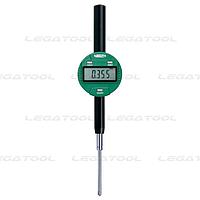
Dial Indicators
When machining tolerances become tighter, even a small deviation in runout, flatness, height, or alignment can affect final quality. That is why Dial Indicators remain a standard inspection tool in workshops, tool rooms, maintenance departments, and quality control environments where repeatable mechanical measurement is essential.
On this page, you can explore analog dial indicators, dial test indicators, and related probing accessories used for comparative measurement. These instruments are commonly selected for checking part movement, setup accuracy, machine alignment, and dimensional variation during production or inspection tasks.
Where dial indicators are used in real measurement work
A dial indicator is typically used to measure small linear displacement by converting probe movement into a needle reading on a dial face. In practical use, this makes it suitable for checking surface variation, concentricity, parallelism, spindle runout, or height differences between reference points.
In many applications, the instrument is mounted on indicator stands and magnetic bases so the contact point can remain stable during inspection. This setup is especially helpful when sweeping across a surface, comparing repeated positions on a part, or aligning fixtures and machine components.
Dial indicator, dial test indicator, and digital indicator: understanding the difference
Although these products are often grouped together, they serve slightly different measuring needs. A standard dial indicator usually provides direct plunger-type movement and is widely used for general comparative measurement. It is a common choice for fixture setup, checking travel, and inspecting dimensional variation over a defined range.
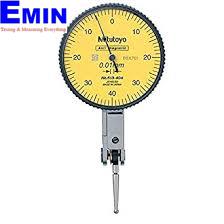
A dial test indicator is designed for lighter contact and more sensitive comparative work, often with a lever-style movement. This makes it useful for runout checks, centering operations, and measurements where access angle is limited. If your workflow requires electronic readout or easier data visibility, a digital indicator may be more convenient, especially for users who want fast reading without interpreting dial revolutions.
Typical product examples in this category
The selection includes instruments for different stroke ranges, graduations, and reading formats. For example, the MOORE & WRIGHT MW400-06 is a conventional dial indicator with a 0-10.0 mm range and 0.01 mm resolution, suitable for general workshop measurement where a larger travel is needed. The MW400-05 offers a similar mechanical format for routine analog inspection tasks.
For finer comparative work, models such as the Mahr 4305200 Test Indicator 800 S with ±0.4 mm range, or the MITUTOYO 513-403-10E Dial Test Indicator with inch reading, are more aligned with precision alignment and runout checks. In applications requiring a larger measuring stroke, the MITUTOYO 3058A-19 Dial Indicator extends to 0-50 mm, while the MITUTOYO 2044AB provides a 5 mm range with 0.01 mm graduation for standard shop-floor inspection.
This category also includes accessories and contact elements that support the measurement system. For instance, the MITUTOYO 900391 angled contact probe is relevant when the measuring point is difficult to reach directly, showing that probe geometry can be just as important as the indicator body itself.
What to consider before choosing a model
The first point is the required measuring range and graduation. A longer range is useful for larger displacement checks, but very fine comparative inspection may call for smaller travel and more sensitive resolution. The right balance depends on whether you are checking broad movement or subtle deviation around a nominal reference.
The second factor is contact style and working position. Plunger-type indicators are generally preferred for straight-line displacement, while test indicators are often better for side contact, limited access, or sweeping around cylindrical parts. Dial size, reading layout, measuring force, and probe material can also influence usability in repetitive inspection routines.
It is also important to think about units and standards. Some models are metric, others inch, and some applications require conformity with standards such as DIN 878 or DIN 2270. In mixed production environments, selecting a consistent unit system helps reduce reading mistakes and improves inspection efficiency.
How to get reliable readings from a dial indicator
Accuracy in comparative measurement depends not only on the instrument but also on setup quality. The indicator should be mounted securely, the probe should contact the workpiece at the correct angle, and the zero point should be set carefully against a known reference before measurement begins.
Stable contact is especially important when checking flatness, concentricity, or repeated position changes. If the probe drags, the mounting shifts, or the part is not supported properly, the reading may vary even if the indicator itself is functioning correctly. Good measuring practice usually involves clean contact surfaces, smooth motion, and repeated checks to confirm consistency.
Maintenance and handling in workshop conditions
Because these are precision mechanical instruments, careful handling has a direct effect on service life and measurement repeatability. Avoid sudden impact on the spindle or stylus, do not force the measuring point beyond its intended travel, and store the indicator in its case when not in use.
Periodic inspection is also advisable if the tool is used frequently in production. Signs such as poor return to zero, unstable needle movement, or inconsistent readings across repeated checks may indicate wear, contamination, or the need for recalibration. In many environments, a simple maintenance routine prevents unnecessary downtime and reduces the risk of false acceptance or rejection during inspection.
Brand options and selection approach
This category features well-known metrology brands including MITUTOYO, Mahr, and MOORE & WRIGHT. Each of these names is commonly associated with mechanical measuring instruments used in industrial inspection, maintenance, and precision workshop applications.
Rather than choosing by brand name alone, it is better to match the model to the measuring task: required range, reading direction, contact geometry, mounting method, and the type of tolerance being checked. That approach usually leads to a more practical selection, especially in B2B purchasing where the instrument needs to fit existing fixtures, operator habits, and inspection procedures.
Choosing the right indicator for your process
Whether the task is machine setup, runout inspection, surface comparison, or precision alignment, the right dial indicator helps make small displacement visible and repeatable. A suitable model should support the way the operator actually measures, not just meet a headline specification.
If you are building a complete inspection setup, it is often worth considering the indicator together with its mounting method, contact accessories, and required measurement range. A well-matched combination improves reading stability, shortens setup time, and makes everyday inspection work more dependable.
Get exclusive volume discounts, bulk pricing updates, and new product alerts delivered directly to your inbox.
By subscribing, you agree to our Terms of Service and Privacy Policy.
Direct access to our certified experts