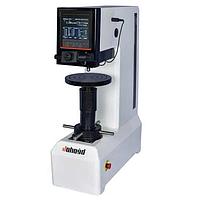
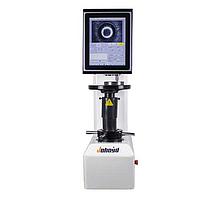
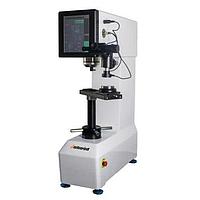
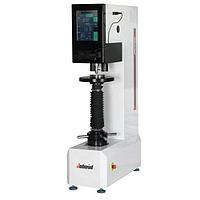
Brinell Hardness tester
When hardness testing is used for castings, forgings, non-ferrous metals, or large machined parts, the choice of method matters as much as the instrument itself. Brinell hardness testers are widely selected for materials and surfaces where a larger indentation provides a more representative result, especially on coarse or heterogeneous structures.
On this category page, you can explore benchtop and digital Brinell systems for routine inspection, laboratory use, and production quality control. The range also includes supporting components such as ball indenters, helping users build or maintain a complete Brinell testing setup.
Where Brinell testing fits in hardness measurement
The Brinell method is commonly used when testing materials that may not be ideal for lighter-load or very small-indentation techniques. In practical terms, it is often applied to steel, cast iron, non-ferrous alloys, softer metals, and larger workpieces with relatively rough surfaces. Because the indentation is larger, the result can better reflect the overall hardness of the tested area rather than a very local point.
This makes Brinell testing a practical option in foundries, metalworking shops, incoming material inspection, and general mechanical testing. For users working with portable or field-oriented methods, it can also be helpful to compare this category with Leeb and handheld hardness meters, which are often chosen for mobility rather than traditional bench testing.
Typical Brinell hardness tester configurations
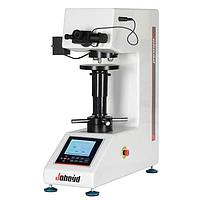
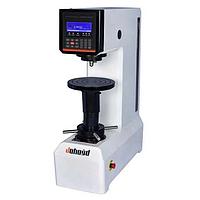
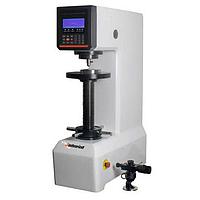
Within this category, you will find several equipment styles, from conventional digital testers to more advanced semi-automatic and image analysis-based systems. Common capabilities across the listed models include selectable test force ranges, adjustable dwell time, digital readout, and support for multiple HBW scales used in standard Brinell applications.
Some systems are designed for straightforward bench testing with microscope-based measurement, while others integrate touchscreens, automatic loading cycles, or expanded communication interfaces. Higher-end options may also support hardness conversion to other scales for reporting convenience, though the primary result remains Brinell hardness.
Examples from the current product range
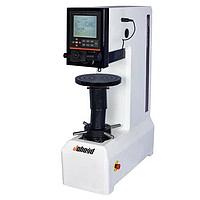
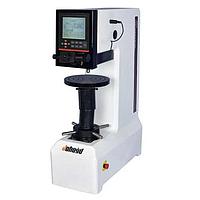
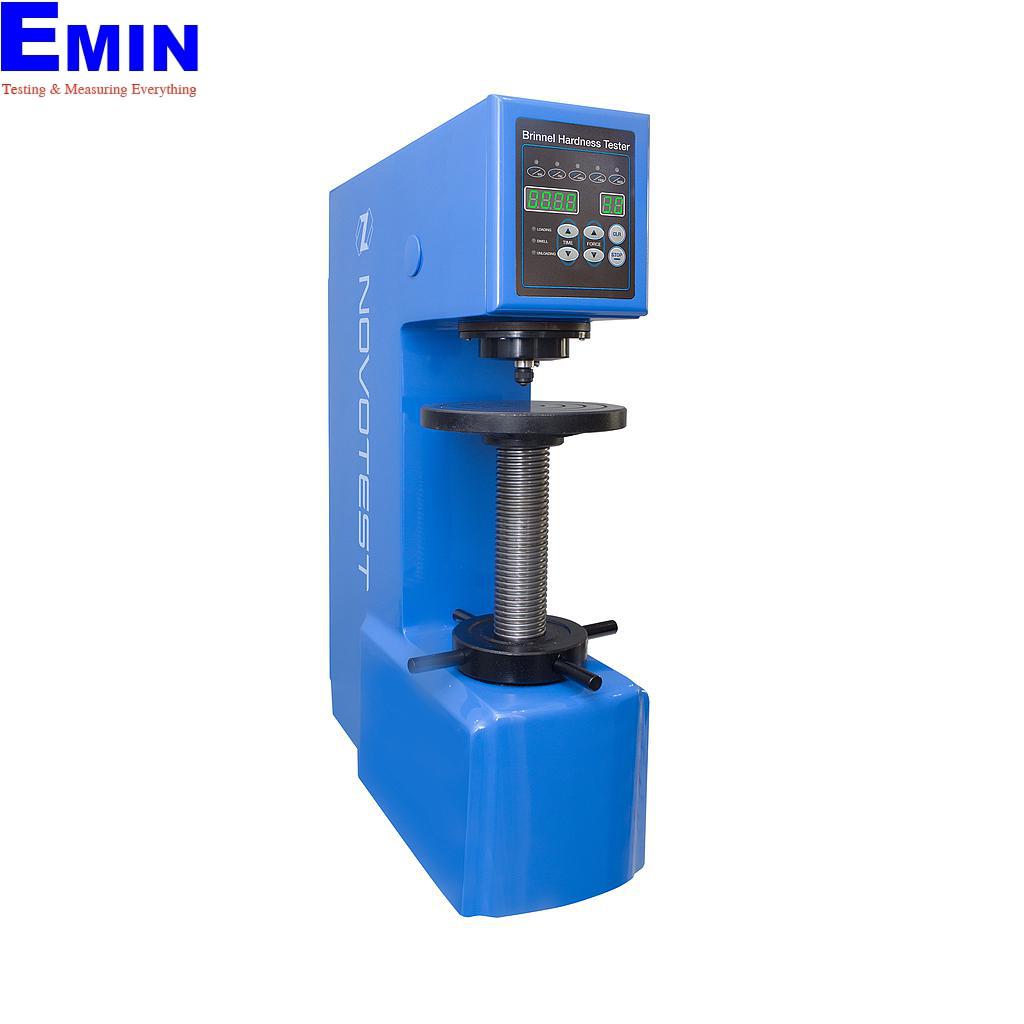
For users looking at established bench-style systems, models from NOVOTEST such as the NOVOTEST TS-B-C1 and NOVOTEST TS-B-C2 provide broad Brinell testing coverage in the 8 to 650 HBW range. These units are suited to general laboratory and workshop environments where repeatable static testing and standard force options are required.
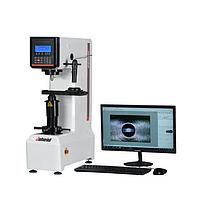
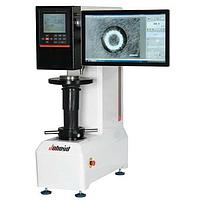
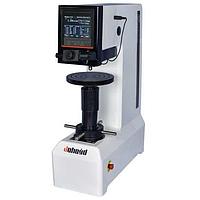
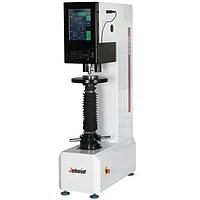
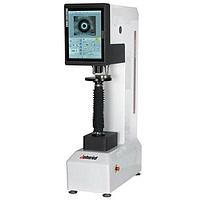
For more automated workflows, Mikrosize offers models such as the iBrin-3000SA, iBrin-3000SA2, iBrin-3000SA5, and iBrin-3000CLA, which emphasize digital control, automatic or semi-automatic operation, and wider data handling functions. The Trojan HBST-3000Z is another notable example, using image analysis to support indentation measurement. Alongside complete testers, this category also includes accessories such as MITUTOYO 11AAD469, 11AAD470, 11AAD471, and 11AAD472 ball indenters for different indenter diameters.
How to choose the right Brinell tester
The first selection point is the type of material and the size of the workpiece. If you routinely test large or heavy parts, pay close attention to sample height capacity, throat depth, and the available force range. A system that supports common Brinell loads up to 3000 kgf may be appropriate for traditional metal applications, while lower-load variants can be useful for lighter or more specialized testing tasks.
The second factor is how the indentation will be measured and recorded. Basic systems may rely on optical reading through a microscope, while more advanced instruments use digital imaging, touchscreen interfaces, and data export functions. If your process requires traceability, report generation, or integration with inspection records, a tester with digital output and communication ports can simplify routine operation.
Finally, think about maintenance and long-term use. Accessories such as ball indenters and certified reference blocks are part of the testing ecosystem, not afterthoughts. If periodic verification is part of your workflow, it is worth reviewing standard blocks for hardness testers alongside the main instrument.
Manual, digital, and image-based measurement options
A traditional Brinell setup usually combines controlled force application with optical measurement of the indentation diameter. This remains a dependable approach for many labs and maintenance departments. It is especially suitable where testing volume is moderate and operators are familiar with standard hardness procedures.
Digital and image-assisted systems improve usability by reducing operator dependency in reading and documenting the result. Features such as automatic loading, automatic turret operation, camera-assisted measurement, and touchscreen displays can improve consistency and throughput. For organizations that run multiple hardness methods in one lab, a broader comparison with a universal hardness tester may also be useful.
Accessories and supporting components matter
A Brinell system is only as reliable as its working components. Ball indenters in different diameters are essential because the selected indenter size is tied to the applied force and the test method being used. The MITUTOYO Brinell ball indenters listed in this category serve exactly this supporting role and are relevant for replacement, maintenance, or configuration matching.
It is also important to view accessories as part of process control. Over time, wear, handling conditions, and repeated use can affect measurement confidence. Combining the correct indenter, proper verification routine, and a suitable test block helps maintain measurement consistency across shifts, batches, and operators.
When Brinell is preferred over other hardness methods
Brinell testing is often preferred when the material structure is relatively coarse or when a larger indentation is beneficial for averaging local variation. This is one reason it remains common for cast materials, forgings, and non-ferrous alloys. In contrast, other methods may be selected for thin materials, higher surface sensitivity, or faster portable inspection.
If your application focuses on smaller indentation methods for hardened materials, a Rockwell hardness tester may be the better fit. The right choice depends on material type, test standard, part geometry, reporting needs, and whether testing is performed in the lab, on the shop floor, or in the field.
Find a Brinell hardness tester that matches your workflow
This category brings together complete testers and essential accessories for users who need dependable Brinell hardness measurement in production, inspection, and laboratory settings. Whether the priority is a conventional bench instrument, a digital semi-automatic platform, or a replacement indenter, the available options support a wide range of practical testing requirements.
Before selecting a model, it is worth reviewing the material to be tested, force range, sample dimensions, reading method, and data output needs. A well-matched Brinell tester not only improves measurement reliability, but also makes day-to-day hardness control easier to standardize and document.
Get exclusive volume discounts, bulk pricing updates, and new product alerts delivered directly to your inbox.
By subscribing, you agree to our Terms of Service and Privacy Policy.
Direct access to our certified experts