Universal Hardness Tester
When one workstation needs to evaluate multiple hardness methods without moving parts between different instruments, a Universal Hardness Tester becomes a practical solution. In production, incoming inspection, tool room verification, and laboratory quality control, this type of system helps teams compare materials and components under Rockwell, Brinell, and Vickers principles within one testing platform.
That flexibility matters when product geometry, material type, and applicable test standards vary from one job to the next. Instead of maintaining separate benches for each method, users can work with a broader hardness range and choose the most suitable scale for steel, cast materials, non-ferrous alloys, heat-treated parts, or thinner specimens depending on the machine configuration.
Why universal hardness testers are used across different inspection tasks
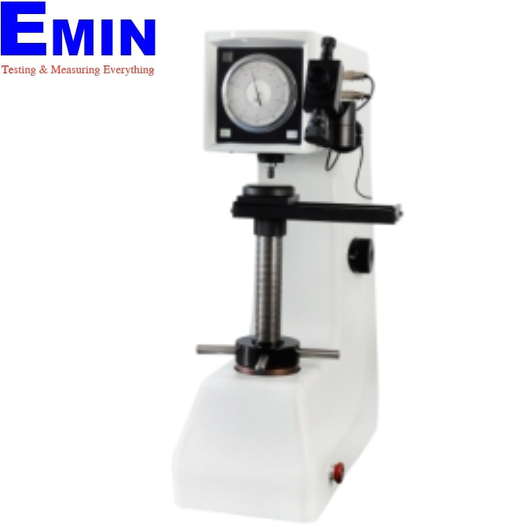
A universal hardness tester is designed for multi-method hardness measurement. In practice, that means one instrument may support Rockwell for fast routine checks, Brinell for larger impressions on cast or softer materials, and Vickers for more precise evaluation on smaller areas or a wider hardness range.
This makes the category especially relevant for manufacturers handling mixed production. A machine shop, heat-treatment department, foundry, or QA lab may test different workpieces every day, so the ability to switch between methods can improve workflow and reduce the need for separate dedicated systems. For users who only need one method, a dedicated Rockwell hardness tester may still be more appropriate.
Typical measurement methods covered in this category
Most products in this category focus on the three widely used hardness methods: Rockwell, Brinell, and Vickers. Each method uses a different indenter geometry, force range, and reading approach, which is why a universal machine is valuable in environments where the test requirement changes from part to part.
Rockwell is often selected for quick direct readings and routine shop-floor control. Brinell is commonly used when a larger indentation is preferred for coarse or inhomogeneous materials, while Vickers is useful where finer impressions and broader scale coverage are needed. Some models in the wider hardness ecosystem also support portable or combined approaches; for field-oriented alternatives, users may also review Leeb and handheld hardness meters.
How to choose the right system for your application
The most important selection factor is not only the hardness scale list, but the actual testing scenario. Buyers should look at specimen size, throat depth, maximum workpiece height, available test forces, and whether the required parts are better suited to analog reading, digital display, microscope-based measurement, or printer and PC output.
Another key point is whether the instrument will be used for routine bench testing or more advanced quality documentation. Digital models can simplify data capture and reporting, while mechanical or analog versions may still suit stable inspection procedures. If your work involves broader mixed-scale testing as part of a long-term quality setup, it is also useful to compare options within the wider universal hardness tester range based on specimen dimensions, force combinations, and reading method.
Representative product types in this category
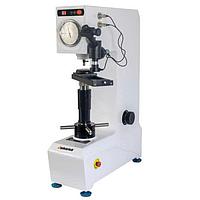
Several product examples illustrate the variety available. The NOVOTEST TS-BRV and TS-BRV-C are bench-type systems built around combined Brinell, Rockwell, and Vickers testing. They are suitable for users who need one machine to cover multiple common scales, with versions ranging from analog-style operation to digital display, microscope support, printer functions, and PC connectivity depending on the model.
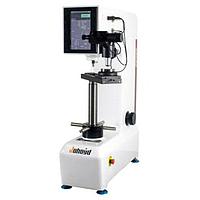
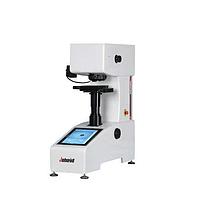
For more advanced digital universal testing, Mikrosize models such as the iBRRV-250 and iBRRV-187.5 show how a single platform can support extensive scale coverage and data output features. The IBRV-187.5EM represents another approach with electric motorized operation for combined Brinell, Rockwell, and Vickers work. In parallel, Samyon units such as the HBRV-187.5 and combination Brinell-Vickers systems provide alternatives for users balancing capability, bench space, and routine lab requirements.
There are also category-adjacent solutions that help define the broader selection logic. For example, the MITUTOYO HM-103 is a dedicated Vickers system rather than a universal platform, while Mashproject combined and probe-based products show how portable hardness verification fits into other inspection scenarios. These comparisons help buyers decide whether they need one stationary multi-method machine or a more specialized instrument.
Bench-top universal testers vs portable hardness solutions
Universal hardness testers are generally chosen when controlled bench measurement, repeatability, and method flexibility are priorities. They are well suited to laboratories, inspection rooms, and production areas where operators can position samples carefully and use the appropriate indenter, force, and optics for the selected scale.
Portable devices serve a different purpose. They are useful when the workpiece is too large, installed, or difficult to move. In those cases, products related to ultrasonic hardness testing may be relevant, especially for localized checks, hard-to-reach areas, or on-site inspection. The choice is less about which technology is better overall and more about where the measurement has to happen and how much method flexibility is required.
Accuracy, repeatability, and calibration considerations
In hardness testing, the machine itself is only one part of the measurement chain. Indenters, loads, optics, dwell time, sample support, and operator procedure all influence consistency. That is why buyers should consider not just the nominal scale coverage, but also how the tester will be verified and maintained in day-to-day use.
Calibration blocks and reference verification remain essential for reliable results over time, especially when one system is used across multiple methods. For regular performance checks and traceability support, it is worth reviewing available standard blocks for hardness testers alongside the instrument selection. This is particularly important in QA environments where internal procedures or customer specifications require documented verification.
Applications commonly matched with universal hardness testers
This category is relevant for metalworking, heat treatment, tool and die production, foundry inspection, educational labs, maintenance workshops, and general industrial QA. A universal machine is especially useful when the same organization handles a mix of steels, alloy parts, cast components, and finished pieces with different geometry or surface conditions.
It can also support comparison work during process development. Engineers may use different scales at different production stages, then standardize on the most appropriate method for routine control. In that context, a universal platform helps reduce equipment fragmentation while keeping multiple established hardness methods available in one system.
Finding the right fit for long-term use
The right choice depends on how often testing is performed, which scales are truly needed, how large the specimens are, and whether results must be documented digitally. Some buyers need a straightforward analog bench instrument for routine checks, while others benefit from digital display, conversion functions, microscope reading, printing, or PC communication.
Across this category, models from NOVOTEST, MITUTOYO, Samyon, Mashproject, and Mikrosize illustrate different approaches to hardness measurement, from dedicated Vickers testing to bench-top universal systems and portable combined solutions. Reviewing the intended method, sample geometry, and reporting workflow will usually lead to a more suitable selection than choosing by brand or scale count alone.
If your work requires one platform for several standard hardness methods, this category provides a strong starting point. A well-matched universal hardness tester can simplify inspection workflow, support broader material coverage, and make hardness control more consistent across production and laboratory tasks.
Get exclusive volume discounts, bulk pricing updates, and new product alerts delivered directly to your inbox.
By subscribing, you agree to our Terms of Service and Privacy Policy.
Direct access to our certified experts