
Vicker Hardness tester
When hardness needs to be evaluated on thin sections, surface-treated parts, coatings, or small precision components, the testing method matters as much as the number itself. Vicker Hardness tester systems are widely used in laboratories, quality control, heat treatment verification, and metallurgical analysis because they can measure very small indentations with high repeatability across a broad hardness range.
In industrial practice, this category is especially relevant for users working with steel, non-ferrous metals, ceramics, carburized layers, nitrided surfaces, plating, and fine specimens where conventional high-load methods may be less suitable. The products in this range cover micro, macro, semi-automatic, and fully automatic configurations, giving buyers flexibility based on sample size, workflow, and reporting requirements.
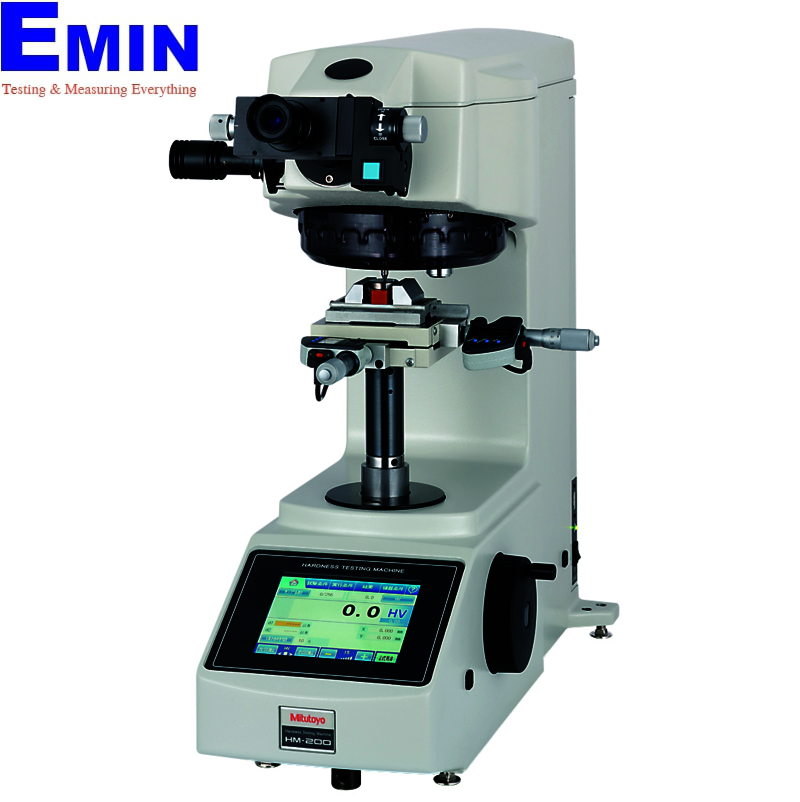
Why Vickers hardness testing is widely used
The Vickers method uses a diamond pyramid indenter and is valued for its ability to test both very soft and very hard materials using different load ranges. This makes it practical for applications that require one platform to cover microstructure evaluation, case depth study, and routine hardness control.
Compared with larger-indent methods, a Vickers hardness tester is often chosen when the test area is limited or when the material layer being evaluated is thin. It is also useful when users need finer observation under optical magnification and more controlled load application, especially in metallography, R&D, and incoming inspection.
Typical applications in manufacturing and materials inspection
These systems are commonly used to assess heat-treated parts, welded zones, small machined components, foils, plated surfaces, and hardened layers. Micro-Vickers models are particularly suitable for coating analysis, carburized layers, nitriding treatment, and other cases where the indentation must remain very small while still being measurable with precision.
For broader hardness workflows, some buyers also compare this method with Rockwell hardness testers when testing larger parts or production samples with faster pass/fail needs. Where mobility is important, portable and handheld hardness meters may be more appropriate, but they serve a different use case than optical indentation-based Vickers systems.
Product range in this category
This category includes instruments for different test-force ranges and automation levels. At the micro end, the NOVOTEST TS-MCV Micro-Vickers Hardness Tester supports low-force testing for thin and small samples, making it suitable for detailed laboratory work and surface layer studies. The Trojan 7MHVS-1000A Digital Micro Vickers Hardness Tester addresses similar needs with automatic loading, holding, and unloading.
For users needing broader load coverage, Mikrosize offers several options such as the MVision-1, MVision-10, MVision-30, and MVision-50 series. These models illustrate how the category spans from low-force micro testing to higher-force Vickers applications, with features such as touch-screen display, digital X-Y stage support, automatic turret shifting, and report export on selected systems.
There are also macro and high-automation solutions. Mikrosize MVicky-10T and MVicky-50T are positioned for macro Vickers testing, while the uVicky-1AI, uVicky-10AI, and uVicky-50AI extend into fully automatic hardness testing with motorized stage and turret functions for higher-throughput environments.
How to choose the right Vickers tester
The first selection factor is the required test-force range. If your work involves coatings, thin layers, or small precision parts, a micro-Vickers model with loads from gf to 1 kgf is usually more suitable. For larger sections or broader material hardness programs, macro Vickers configurations with higher kgf ranges may be a better fit.
The second factor is the sample itself: its size, thickness, accessible test area, and whether edge distance or layer thickness limits the indentation. You should also review the available test height, throat depth, optical magnification, and stage movement, especially when testing cross-sections or multiple points in sequence.
Another important consideration is workflow. Manual and semi-automatic models are often appropriate for laboratories with moderate throughput, while automatic stage movement, turret shifting, and digital reporting become increasingly valuable when traceability, repeatability, and operator efficiency are priorities. If your inspection program spans multiple hardness methods, it may also be worth reviewing a universal hardness tester for broader method coverage.
Key features to evaluate before purchase
For most B2B buyers, the decision should go beyond hardness range alone. Optical quality, measuring resolution, dwell time control, data output options, and stage precision all influence daily usability. In production and laboratory settings, integrated printers, touch-screen interfaces, RS-232 or USB output, and software-generated reports can simplify documentation and reduce transcription errors.
Standards compliance is another practical point. Several products in this category reference common standards such as ISO 6507, ASTM E384, ASTM E92, JIS Z2244, and related requirements. For users operating under controlled quality systems, this can help align the instrument with internal procedures, calibration routines, and customer reporting needs.
Calibration support should not be overlooked either. To maintain confidence in measured values, many users purchase or regularly verify against hardness test blocks matched to their method and load range.
Micro, macro, semi-automatic, and fully automatic systems
Not every application needs the same level of automation. A micro-Vickers unit like the NOVOTEST TS-MCV or Trojan 7MHVS-1000A can be a practical choice for focused laboratory measurements where the operator manually positions the sample and evaluates specific points. This approach works well for metallographic sections, localized checks, and smaller batch volumes.
Semi-automatic systems such as the Mikrosize MVision series add convenience with digital interfaces, automatic loading cycles, and improved repeatability in routine inspection. Fully automatic models such as the Mikrosize uVicky series are more suitable when users need automated stage travel, programmed test sequences, or higher sample throughput across repeated measurement points.
The best fit depends on whether your priority is flexibility, throughput, operator independence, or traceable reporting. In many facilities, the selection is driven less by the hardness scale itself and more by the surrounding inspection process.
Brands and options available in this category
The available range includes products from Mikrosize, NOVOTEST, and Trojan, covering compact micro-Vickers models through to intelligent automatic systems. These brands illustrate the breadth of the category rather than a single fixed instrument type, which is helpful for buyers comparing load range, interface style, automation level, and sample handling requirements.
Depending on project scope, buyers may also compare Vickers testing with solutions from broader hardness measurement portfolios offered by manufacturers such as MITUTOYO, JISC, KMT, and Samyon. The right choice depends on the material, part geometry, test standard, and how the instrument will be integrated into your inspection workflow.
Conclusion
A well-matched Vickers hardness tester helps deliver reliable hardness data on materials and components that are too small, too thin, or too specialized for less precise methods. Whether you need micro-level surface evaluation, macro Vickers capability, or a more automated inspection setup, this category provides options for laboratory analysis, production quality control, and materials development.
Before choosing a model, focus on load range, specimen geometry, required automation, optical system, and reporting needs. That approach makes it easier to narrow the selection to an instrument that fits your actual testing process rather than simply comparing headline specifications.
Get exclusive volume discounts, bulk pricing updates, and new product alerts delivered directly to your inbox.
By subscribing, you agree to our Terms of Service and Privacy Policy.
Direct access to our certified experts