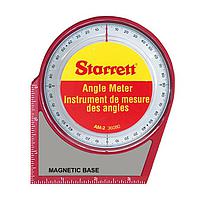
Protractor
Accurate angle checking is a routine requirement in fabrication, machining, assembly, maintenance, and quality control. When drawings specify a precise bevel, mitre, slope, or reference angle, the right protractor helps technicians verify geometry quickly and with less interpretation error than improvised methods.
In industrial and workshop environments, protractors are used for more than classroom-style angle reading. They support setup work, inspection, alignment, and repeatable measurement across parts or structures. This category brings together practical tools for manual and digital angle measurement, from simple plate-and-rule styles to electronic models designed for faster reading in the field.
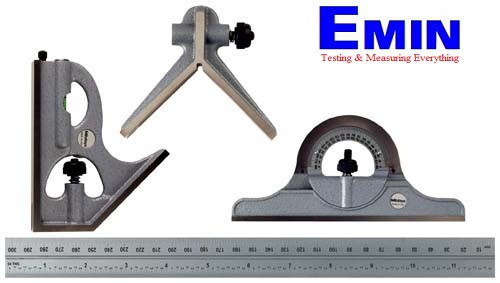
Where protractors are used in technical work
Angle measurement appears in many stages of industrial work. Fabricators may check cut angles before welding, machine shops may confirm part geometry against drawings, and maintenance teams may compare installed components to reference positions during repair or alignment. In these cases, a protractor is valuable because it gives a direct visual or digital indication of angular position.
Protractors are also useful when angle checking needs to be combined with basic dimensional reference. A model such as the MOORE & WRIGHT MW946-04 Protractor With Rule is suitable when the operator needs both an angular scale and a straight measuring arm to position against edges, faces, or layout lines.
Mechanical and digital protractors
A mechanical protractor remains a practical choice for many workshops because it is simple, easy to carry, and does not depend on batteries or electronics. Plate protractors and rule-type protractors are commonly selected for general inspection, marking-out work, and straightforward angle transfer on metal, wood, or fabricated assemblies.
For users who need faster reading or finer resolution, a digital protractor can be more convenient. Digital models reduce reading ambiguity and are especially helpful when working in awkward positions or when relative angle comparison is part of the job. For example, the MOORE & WRIGHT MW506-02 Digital Protractor offers a 300 mm format with 0.05° resolution, while the MOORE & WRIGHT MW505-03 Digital Protractor provides a 360° range with 0.05° resolution for broader angular measurement tasks.
If your application also involves checking installation horizontality or inclination, it can be useful to compare protractors with a dedicated spirit level range depending on whether you need angle values, level indication, or both.
Common formats available in this category
This category includes several practical protractor formats suited to different tasks. A standard plate type such as the MOORE & WRIGHT 44 Protractor is appropriate for basic angle reading and transfer. Its graduated scale design is useful when operators need a familiar manual tool for workshop or inspection bench use.
Rule-based versions combine an angular head with a straight blade, making them easier to align along edges or workpiece faces. The MOORE & WRIGHT MW946 series is available in multiple sizes such as 120 mm, 150 mm, 200 mm, and 300 mm, which gives users flexibility when measuring smaller components or larger fabricated sections.
There are also angle-related tools that support specialized use cases. The TOPTUL JDAW1602 Angular Torque Gauge, for example, is designed around angular tightening applications rather than general layout measurement, while the Tajima SLT-AL200M Magnetic Inclinometer is better aligned with inclination checking and magnetic attachment during field work.
How to choose the right protractor
The first selection factor is the measurement task. If you mainly need simple manual checking and layout work, a mechanical protractor is often sufficient. If your process requires quicker reading, repeated inspection, or reduced operator interpretation, a digital model may be the better fit.
Next, consider the working size and contact geometry. A short blade can be easier to handle on compact parts, while a longer rule gives better reach and alignment on larger workpieces. That is why different lengths within the MOORE & WRIGHT protractor-with-rule range can suit different benches, machines, or installation tasks.
Resolution and accuracy should be matched to the tolerance of the job rather than chosen on specification alone. A digital instrument with fine resolution is useful when process control requires tighter angle verification, but for many general workshop checks, a clearly marked manual protractor remains efficient and reliable.
Examples from leading manufacturers
This category includes products associated with recognized measuring and tool brands such as MOORE & WRIGHT, STANLEY, Niigata Seiki, Tajima, and TOPTUL. Each brand tends to be relevant in slightly different usage contexts, from general workshop tools to more inspection-oriented angle measurement devices.
Within the listed products, MOORE & WRIGHT stands out for its broad coverage of manual and digital protractors, including plate types, rule types, and electronic angle measuring models. For adjacent workshop measurement needs, STANLEY examples such as the 46-012 Combination Square and 46-536 Try Square show how angle verification often overlaps with squareness and layout tasks rather than existing as a separate process.
Users comparing categories may also want to review related tools for line and edge reference, especially when angular checks are part of a larger setup or inspection workflow. In those cases, the straightness measuring tools category can provide useful context.
Choosing by application instead of specification alone
For production inspection, repeatability and ease of reading are usually more important than having the most feature-rich instrument. A stable protractor that can be positioned consistently on the part often improves practical inspection speed more than a long list of functions. For maintenance work, portability and ease of use in confined spaces may matter more.
For installation and alignment, the decision often depends on whether you need to measure a true angle, compare one surface to another, or simply verify slope. In many field applications, teams use protractors together with levels, squares, or inclinometers depending on the access conditions and the reference surfaces available.
Why this category matters for B2B buyers
In B2B purchasing, the goal is rarely just to buy an angle tool. Buyers are usually trying to support a process: incoming inspection, production QC, machine setup, assembly verification, or maintenance troubleshooting. Selecting the appropriate protractor helps reduce rework, improve consistency, and make measurement steps easier to standardize across operators.
Whether you need a classic manual model for routine workshop checks or a digital instrument for quicker readout, this category gives a focused starting point for evaluating the right format, size, and measuring approach for your application.
FAQ
What is the difference between a protractor and an inclinometer?
A protractor is typically used to measure or transfer angles between surfaces or edges. An inclinometer is more focused on measuring tilt or slope relative to gravity.
When should I choose a digital protractor?
A digital protractor is a good option when you need faster reading, finer resolution, or easier measurement in positions where a manual scale is harder to read.
Is a larger protractor always better?
Not necessarily. Larger models help on bigger workpieces and longer reference edges, but smaller models can be easier to handle on compact parts or in tighter work areas.
A well-chosen protractor supports more reliable angle measurement across workshop, inspection, and maintenance tasks. By comparing format, size, reading method, and application needs, buyers can select a tool that fits real operating conditions rather than choosing on specification alone.
Get exclusive volume discounts, bulk pricing updates, and new product alerts delivered directly to your inbox.
By subscribing, you agree to our Terms of Service and Privacy Policy.
Direct access to our certified experts