Spirit Level
Accurate alignment often comes down to a simple but essential tool. Whether the job involves machine installation, fixture setup, structural work, or routine maintenance, a Spirit Level helps technicians verify horizontal, vertical, and angled positions quickly and reliably.
On industrial and technical sites, spirit levels are used far beyond basic household tasks. They support machine leveling, frame alignment, workshop inspection, and assembly work where even small deviations can affect fit, motion, or measurement consistency. This category brings together practical options ranging from traditional bubble levels to digital and engineer’s levels for more demanding applications.
Where spirit levels are commonly used
A spirit level is widely used wherever a surface, component, or installation must be brought into proper alignment. In fabrication and maintenance environments, it can be used to check machine beds, support structures, guide rails, mounting plates, piping runs, and enclosure installation. In construction and facility work, it remains a practical tool for door frames, shelving, ducting, cable tray runs, and general fitting work.
In many cases, leveling is only one part of a broader inspection process. When angle verification is also important, users may also work with tools such as an protractor to confirm angular positioning, especially during setup, jig alignment, or mechanical adjustment.
Main types available in this category
This category covers both traditional bubble levels and more advanced digital formats. Conventional levels use bubble vials to indicate whether a surface is level or plumb. They are simple, durable, and suitable for everyday workshop and installation work. Compact versions are useful for quick checks in tight spaces, while longer bodies can offer better reference over larger surfaces.
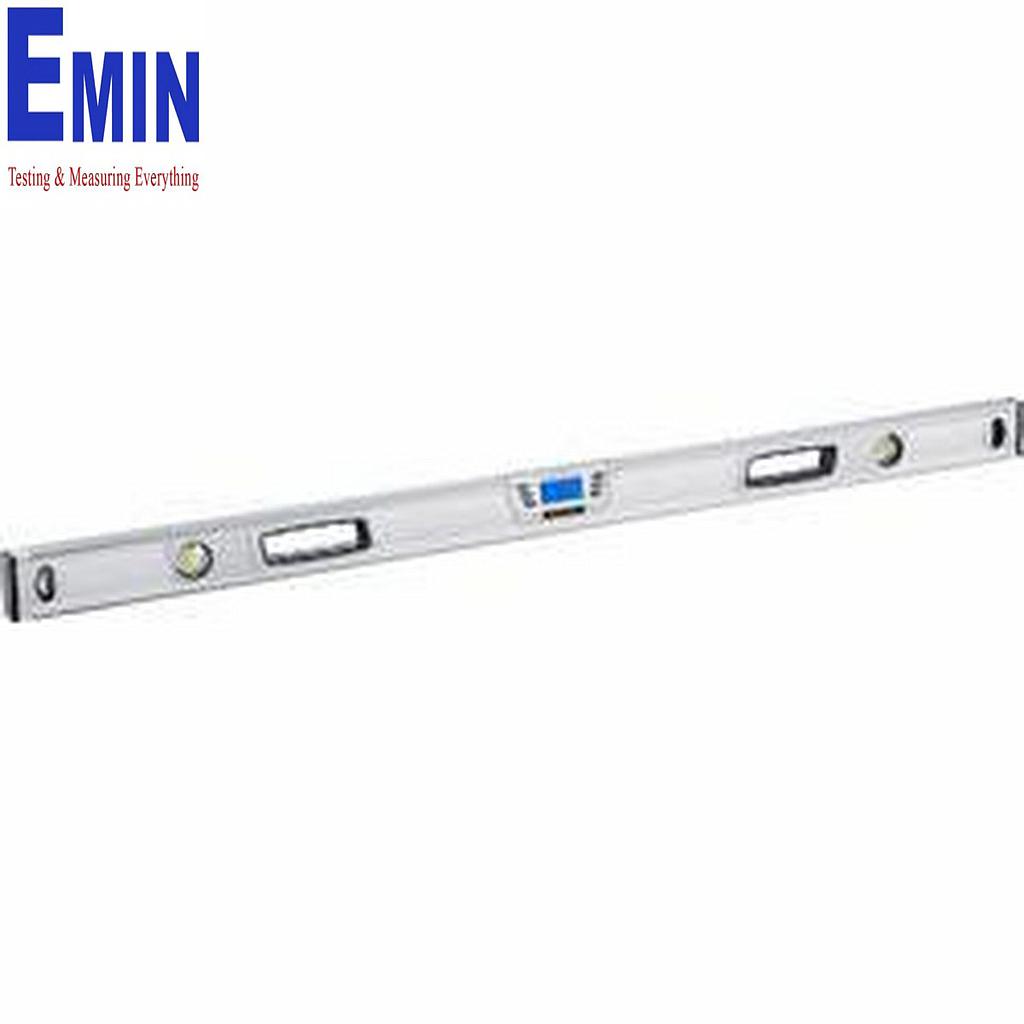
Digital models add electronic sensing and a display for angle readout. This is useful when users need more than a visual bubble reference, such as when checking a tilt value, setting zero at a custom position, or documenting an angle during machine setup. Some products in this range are also designed with magnetic mounting, making them convenient for steel structures and metalworking tasks.
For higher-precision workshop applications, engineer’s levels are also relevant. These tools are typically used for precision checking of flatness and alignment on machinery or reference surfaces where sensitivity is more important than portability.
Examples from leading brands
Several well-known manufacturers appear in this category, with options suited to different working styles and accuracy needs. For straightforward daily use, the STANLEY STHT43118-8 Top Read Aluminum Level (300mm) is a practical example of a compact manual level designed for easy reading during routine alignment work.
For users who need digital indication, MOORE & WRIGHT offers multiple configurations such as the MW575-01DIP Digital Level and MW575-01WIP Digital Level, both built around electronic angle measurement. The MW580-01 Digital Laser Spirit Level and MW570-01W Digital Mini-Mag Level illustrate how the range can extend into laser-assisted or compact magnetic designs, depending on the task and workspace.
More traditional precision-oriented options are also represented, including the MOORE & WRIGHT ELM Engineers Level and ELS Engineers' Level. For compact magnetic bubble level applications, Niigata Seiki models such as the SJL-150R and SJL-150W provide another practical format for fast alignment checks on metal surfaces.
How to choose the right spirit level
The best choice depends on the working environment and the type of measurement required. For general installation, maintenance, and fitting work, a standard manual spirit level is often enough. It is easy to carry, quick to use, and does not rely on batteries. If the level will be used frequently on steel beams, cabinets, machine frames, or pipework, a magnetic base can improve handling and repeatability.
For tasks involving measured tilt, machine setup, or repeatable angular adjustment, a digital level is often the better fit. Readouts can help reduce interpretation error, especially when users need to check a small deviation or compare multiple positions. Features such as zero setting at any point can be especially useful when establishing a relative reference rather than a true horizontal baseline.
Body length also matters. Shorter levels are easier to use in restricted areas, while longer models can bridge uneven surfaces better and give a more stable reference over a larger span. If the application is closer to machine inspection than general fitting, an engineer’s level may be more appropriate than a standard site level.
What to consider for precision and working conditions
Not every leveling task requires the same sensitivity. For basic alignment, a standard bubble level is usually sufficient. For workshop inspection, equipment installation, or quality-sensitive assembly work, users should pay closer attention to parameters such as resolution, accuracy, and reference surface quality.
Digital products in this category include examples with 360° measurement capability and fine angle resolution, which can help in applications where the operator needs actual numeric feedback rather than a visual bubble position. Meanwhile, engineer’s levels are more suitable when the requirement is precise checking of machine alignment or surface condition over a controlled reference.
Environmental conditions also influence selection. If the level will be used around coolant, dust, or frequent handling, durability and ingress protection may matter more than extra functions. In field service or fabrication work, body strength, clear visibility, and ease of placement can be just as important as raw measurement performance.
Related tools in alignment and inspection work
Spirit levels are often used alongside other measuring tools rather than as standalone instruments. In alignment tasks where linear reference is important, users may also review tools for straightness checking. This is especially relevant when the work involves rails, long machine surfaces, or structural members where both level and straightness affect the final result.
For broader angle and layout tasks, categories such as angle measuring instruments can help extend the inspection process. Choosing the right combination depends on whether the priority is horizontal reference, angular setting, or geometric verification across a larger assembly.
Good practice for use and storage
To keep a spirit level reliable, the contact surface should be kept clean and free from burrs, dust, or debris before measurement. A dirty or damaged reference face can introduce error even if the level itself is in good condition. It is also good practice to verify readings on a known surface when accuracy is critical.
Avoid dropping the tool or storing it loose with heavier equipment, especially in the case of digital and precision levels. Electronic models should be powered down after use, and batteries should be removed if the tool will be stored for a long period. Keeping the instrument dry, clean, and protected from impact helps preserve both readability and measurement consistency.
Choosing with confidence
This selection is designed for users who need a practical tool for alignment, leveling, and angle-related inspection across workshop, industrial, and site applications. From compact manual models to digital spirit levels and precision engineer’s levels, the right choice depends on how often the tool is used, what surfaces are being checked, and how much measurement detail the task requires.
If you are comparing options, focus on the application first: general installation, magnetic use on metalwork, compact inspection, or precision machine leveling. That approach makes it easier to identify a spirit level that fits the job without over-specifying or compromising on usability.
Get exclusive volume discounts, bulk pricing updates, and new product alerts delivered directly to your inbox.
By subscribing, you agree to our Terms of Service and Privacy Policy.
Direct access to our certified experts