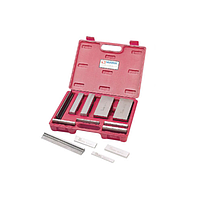
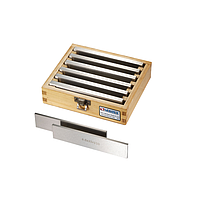
Gauge Block
Precision inspection and calibration work depend on one thing above all: a reliable length reference. Gauge blocks remain one of the most widely used standards for checking measuring tools, setting dimensions, and supporting repeatable results in workshops, quality rooms, and metrology environments.
Whether the task is verifying a micrometer, setting up a comparator, or building a precise reference length by wringing blocks together, the right set helps reduce uncertainty and improve consistency. This category brings together gauge block solutions for different accuracy levels, block counts, and day-to-day inspection needs.
Why gauge blocks are still essential in precision measurement
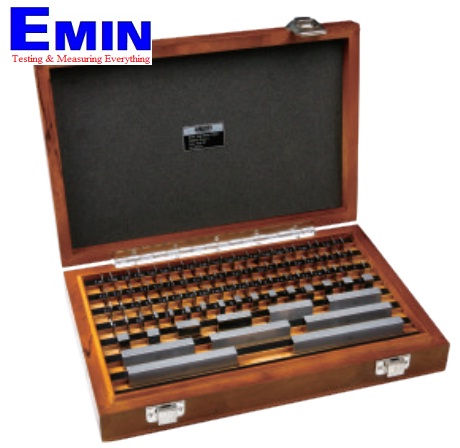
A gauge block is a precision-ground block with two extremely flat and parallel measuring faces. When used individually or combined, these blocks provide known reference dimensions for calibrating and checking length-measuring instruments such as calipers, micrometers, comparators, and other mechanical measuring tools.
In production and inspection workflows, gauge blocks support dimensional verification without relying on assumptions about machine condition or operator feel. They are especially useful when repeatability matters, when setup dimensions must be transferred accurately, or when an instrument needs a trusted physical standard for comparison.
Typical applications across workshop and laboratory environments
Gauge blocks are used in a wide range of industrial measurement tasks. In a quality control room, they may be used to check the performance of handheld instruments before inspection begins. In machining environments, they help establish setup dimensions, verify spacing, and support fixture or tool alignment where high precision is required.
They also sit naturally within a broader ecosystem of standards and reference tools. For example, size verification may be complemented by pin gauges for hole checking, while angular setup work may call for an angle gage block when angle generation or verification is part of the process.
How to choose the right gauge block set
The most practical starting point is the required accuracy grade. Lower-numbered grades are generally selected for calibration and higher-precision inspection tasks, while higher-numbered grades are often suitable for routine shop-floor checking. The correct choice depends on the uncertainty target of the measurement process, the instrument being checked, and how frequently the blocks will be used.
Set composition is equally important. Smaller sets can cover common calibration points efficiently, while larger sets offer more flexibility for building a wider range of dimensions. In this category, examples include 32-piece, 47-piece, 87-piece, and 103-piece configurations, allowing users to balance coverage, convenience, and budget based on actual measurement routines rather than simply choosing the biggest set available.
Material considerations: why carbide is often preferred
Material affects wear resistance, long-term stability, and how well the blocks hold up in repeated use. Many products in this range are carbide gauge blocks, which are commonly chosen for their durability in demanding inspection environments. For users who frequently wring blocks together or perform regular calibration work, carbide can offer a practical advantage in service life.
For example, several MOORE & WRIGHT sets in this category are available in carbide versions across Grade 0, Grade 1, and Grade 2. Options such as the MW710 series are offered in multiple set sizes, making them suitable for users who need anything from a compact reference set to a broader selection of block combinations for detailed dimensional buildup.
Examples available in this category
This selection includes representative sets for both routine and higher-accuracy work. The MOORE & WRIGHT range features carbide gauge blocks in several common formats, including 32-piece, 47-piece, 87-piece, and 103-piece sets, with grades tailored to different inspection requirements. That makes it easier to choose based on actual use case rather than trying to adapt one universal set to every task.
There are also more specialized options such as the MOORE & WRIGHT MW715-01 Mic-Check Gauge Block Set (Grade 0), which includes a 10-piece metric selection together with an optical flat. This kind of set can be relevant when specific checking points are needed in a compact format rather than a full block assortment. In addition to MOORE & WRIGHT, buyers often compare solutions from MITUTOYO, Mahr, Niigata Seiki, and Obishi depending on their preferred measuring system and quality workflow.
Good handling practices for reliable results
Even high-quality gauge blocks can deliver poor results if they are handled carelessly. Clean measuring faces, stable temperature, and correct wringing technique all influence the final measurement. Users should avoid unnecessary contact with measuring surfaces, remove dust or oil before use, and allow blocks to stabilize to the measuring environment where precision is critical.
Storage matters as much as usage. Keeping blocks in their fitted case helps protect the faces from damage and contamination. For inspection setups that involve other reference tools, related standards such as a setting ring may also be relevant when checking bore-measuring tools or establishing reference conditions for comparative measurement.
When a larger set makes sense
A compact set is often enough for basic instrument checks at fixed points, but larger assortments become more useful when operators need to build many intermediate dimensions. Sets with more blocks provide finer increment choices and greater flexibility for calibration routines, setup verification, and dimensional stacking across a wider range.
That is why this category includes broader combinations such as 87-piece and 103-piece sets, alongside smaller alternatives. The right decision usually comes down to how many target dimensions must be generated repeatedly, how tight the required tolerance is, and whether the blocks are intended for occasional verification or regular use in a formal measurement program.
Choosing with confidence
The best gauge block set is the one that matches the required grade, material preference, and dimensional coverage of your actual inspection work. For some users, a compact Grade 0 reference set is enough for high-accuracy checkpoints. For others, a larger Grade 1 or Grade 2 carbide assortment may be the more practical choice for routine calibration and shop-floor support.
By comparing set size, intended use, and material durability, it becomes much easier to narrow down the right option. Explore the available gauge block range here to find a suitable reference standard for calibration, comparative measurement, and precision setup tasks across industrial and laboratory applications.
Get exclusive volume discounts, bulk pricing updates, and new product alerts delivered directly to your inbox.
By subscribing, you agree to our Terms of Service and Privacy Policy.
Direct access to our certified experts