
Agriculture & Machine Control
Field operations and earthmoving tasks increasingly depend on accurate positioning, repeatable guidance, and reliable in-cab control. When operators need to maintain line precision, reduce overlap, or follow design targets more consistently, Agriculture & Machine Control equipment becomes a practical part of the workflow rather than an optional add-on.
This category brings together GNSS-based guidance and control solutions used in agricultural vehicles and construction machinery. It is relevant for buyers looking to improve steering accuracy, excavation guidance, machine utilization, and day-to-day operating efficiency across real working conditions.
Where this category fits in real operations
Machine control and agricultural guidance systems are commonly used where route consistency, pass-to-pass accuracy, and operator support have a direct impact on output. In farming, that may mean maintaining guidance lines during planting, spraying, or other field passes. In excavation work, it can involve helping the operator track bucket position and machine movement against the planned task.
Compared with basic navigation, these systems are built around positioning accuracy, correction data handling, operator display, and machine-side control components. They are especially relevant in environments where terrain, visibility, fatigue, and repetitive movement can affect manual performance over time.
Typical solution types in Agriculture & Machine Control
This category includes systems designed for both agricultural vehicles and excavators, with GNSS playing a central role in machine guidance. Some solutions focus on auto steering support for tractors and similar platforms, while others are intended for excavator guidance where bucket and boom positioning must be interpreted clearly in the cab.
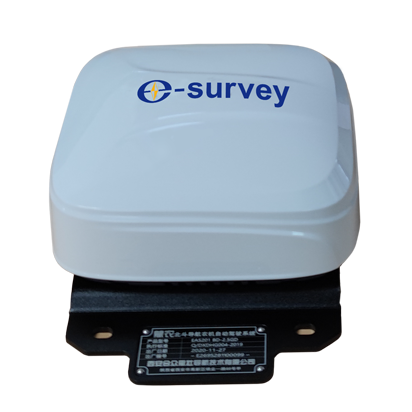
For example, the E-survey range in this category illustrates two distinct application directions. Products such as the E-survey eMC10 GNSS Intelligent Excavator Guidance System and E-survey eME10 GNSS Intelligent Excavator Guidance System support excavation-related guidance, while components used with the EAS301 platform support steering and vehicle guidance functions in agricultural use.
Key components buyers should understand
A complete machine guidance setup is usually made up of more than one device. A display provides the operator interface, the GNSS and control electronics process correction and positioning data, and steering or machine-side hardware executes commands or assists the operator during operation.
Within that ecosystem, products such as the E-survey ST6 Display act as the visual control point in the cab, while the E-survey MC5 ECU serves as a control module for the EAS301 Pro Auto Steering System. The E-survey EW1 Electric Steering Wheel represents another important part of the system, translating guidance logic into steering assistance in compatible applications. Understanding these roles helps buyers evaluate whether they need a full system, a replacement component, or an expansion of an existing installation.
What to consider when selecting a system
The first selection factor is the actual machine type and task. Agricultural guidance and excavator guidance are related but not interchangeable use cases. A buyer should confirm whether the requirement is for straight-line field operation, assisted steering, or machine guidance for digging and grading workflows.
The second factor is the expected level of correction accuracy and signal support. In this category, some products reference RTK, DGNSS, SBAS, or other correction methods, which indicates suitability for workflows where more precise positioning is needed. Buyers should also look at practical details such as update rate, power input range, environmental protection, and interface compatibility, because these directly affect integration in working vehicles.
It is also useful to assess the operating environment. Displays and control units used in mobile machinery often need to handle vibration, dust, moisture, and broad temperature ranges. That is why component-level characteristics can matter just as much as the navigation or guidance function itself.
Examples of products in this category
For excavator-focused guidance, the E-survey eMC10 and eME10 provide examples of GNSS intelligent excavator guidance systems intended to support machine positioning awareness in earthmoving tasks. These types of systems are relevant where operators need clearer spatial guidance and more repeatable digging performance.
For agricultural steering applications, the category also includes supporting hardware tied to the EAS301 and EAS301 Pro ecosystem. The ST6 Display, MC5 ECU, and EW1 Electric Steering Wheel show how a solution may be structured as a coordinated set of in-cab interface, control electronics, and steering hardware rather than a single standalone device.
How this category connects with broader measurement workflows
Agriculture and machine control equipment often sits alongside other motion and positioning technologies. In some projects, buyers may also review related sensing options such as speed sensors when movement data and machine response need to be considered together. The exact mix depends on the application and the level of integration required in the vehicle or project environment.
For more specialized positioning or environmental survey work, adjacent categories such as hydrography and oceanography survey equipment or Doppler radar may be more appropriate. These are different use cases, but they help show how machine guidance belongs to a wider ecosystem of survey and motion-related instrumentation.
Who typically buys Agriculture & Machine Control equipment
This category is relevant for agricultural operations, contractors, system integrators, equipment dealers, and project teams responsible for machine productivity and positioning-based workflows. Some buyers are sourcing complete systems for new deployment, while others are replacing displays, steering hardware, or control units within an installed base.
Because purchasing decisions in this area often involve compatibility, workflow fit, and support for correction methods, buyers usually benefit from comparing the intended use case first rather than selecting by product name alone. A more effective shortlist starts with the machine platform, operating conditions, and the required level of guidance performance.
Choosing the right path for your application
The most suitable solution depends on whether the goal is assisted steering in agricultural work, improved operator guidance in excavation, or the replacement of a specific system component. Looking at the role of each device within the overall control chain can prevent mismatched purchases and help create a more reliable machine setup.
As you review this category, focus on application fit, system architecture, and environmental suitability. That approach makes it easier to identify whether an excavator guidance system, a display, an ECU, or steering hardware is the right next step for your operation.
Get exclusive volume discounts, bulk pricing updates, and new product alerts delivered directly to your inbox.
By subscribing, you agree to our Terms of Service and Privacy Policy.
Direct access to our certified experts


