Radio stations tester
Reliable radio communication depends on more than the handheld itself. In field operations, public safety, industrial sites, transport, and service teams, technicians often need to verify transmitter performance, receiver sensitivity, audio quality, and operating frequency before a device goes back into use. That is where radio stations tester equipment becomes valuable: it helps support maintenance, inspection, fault finding, and routine service for two-way radio systems.
Why radio testing equipment matters in practical service work
A radio station tester is used to assess whether a communication device is transmitting and receiving within acceptable operating conditions. Instead of checking only basic power-on status, service personnel can examine key parameters such as carrier frequency, output power, modulation behavior, receiver response, and overall signal quality. This is especially important when communication reliability affects coordination, safety, or uptime.
In many workflows, these instruments are used alongside radios and accessories rather than in isolation. For teams working with walkie-talkie systems, proper testing helps confirm that a repaired or deployed unit is still performing consistently in the field.
Typical measurement tasks for a radio stations tester
The scope of testing can vary depending on the application, but several checks are common across service environments. A technician may need to verify transmitter frequency, measure carrier power, review frequency deviation in FM operation, or inspect modulation input behavior. On the receive side, sensitivity, selectivity, output voltage, and SINAD-related performance are often relevant when diagnosing weak or unstable communication.
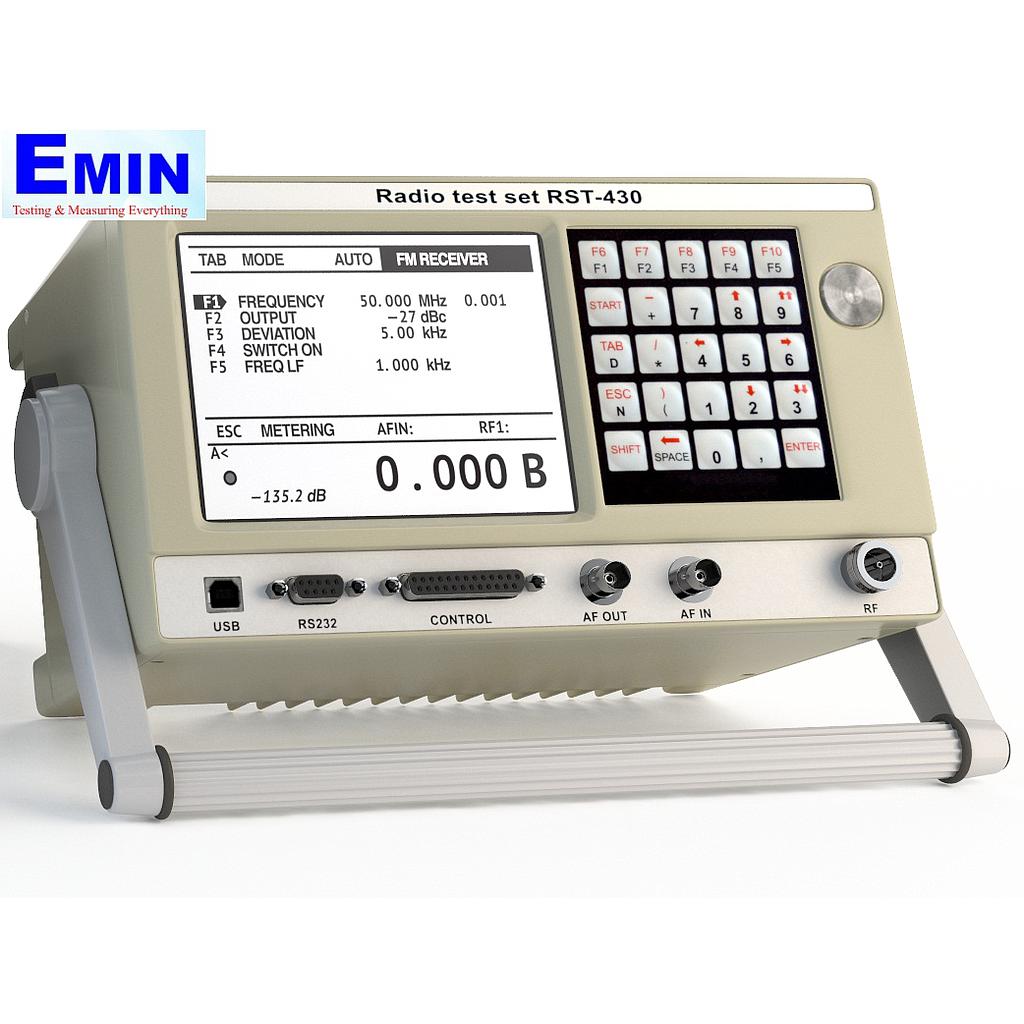
More advanced service testers may also integrate functions such as an HF generator, LF generator, modulation meter, frequency meter, AC voltmeter, and power meter in one platform. This consolidated approach reduces setup time and supports a more structured workflow when troubleshooting radio communication equipment.
- Transmitter checks for frequency, power, and modulation performance
- Receiver checks for sensitivity, selectivity, and audio-related output behavior
- Audio and signal generation for controlled service and calibration tasks
- Bench testing during maintenance, repair, and acceptance inspection
Representative products in this category
This category can include both dedicated service instruments and supporting accessories used in radio communication environments. A good example of a bench-oriented solution is the Kontour RST-430, a radio-communication service tester intended for checking a broad range of radio parameters. Based on the available context, it supports measurement and generation functions across HF and LF ranges, making it suitable for service tasks where multiple signal and audio-related checks are required in one device.
On the accessory side, products such as the Motorola PMLN4442A headset show how the radio ecosystem extends beyond the core transceiver. While a headset is not a tester itself, accessories still play a role in real-world communication quality and usability. If your work also involves equipment from MOTOROLA, it may be useful to review compatible communication products and accessories alongside test and service tools.
How to choose the right tester for your application
The right selection depends first on the type of radios you service and the checks you need to perform regularly. If your team mainly handles routine verification, a compact instrument with core transmit and receive measurements may be sufficient. For workshop, depot, or service-center use, a more capable platform with integrated generation, modulation, and power measurement functions can support deeper diagnostics.
Frequency coverage is another practical consideration. The tester should align with the operating bands of the radios in your fleet, while output level control and measurement resolution should match the level of precision required by your maintenance process. If your work extends into related motion or field measurement environments, you may also review instruments used with speed sensors or other technical measurement tools to build a more complete service setup.
Service environments and use cases
Radio station testers are commonly used in maintenance benches, communications workshops, fleet service departments, and technical support centers. They are relevant wherever radios need to be checked after repair, before deployment, or during periodic inspection. This includes industrial facilities, transportation networks, security operations, utilities, and field service organizations that rely on dependable voice communication.
In these settings, the instrument supports a more repeatable process than informal on-air checks alone. By measuring known parameters under controlled conditions, technicians can identify whether the issue comes from the transmitter stage, receiver path, audio modulation chain, accessory interface, or external attenuation arrangement.
Brand context and equipment ecosystem
Within this category, Kontour is relevant for dedicated radio communication test equipment, while MOTOROLA appears in the broader communication ecosystem through radio-related accessories and products. The distinction matters when browsing a category page: some items are core testing instruments, while others support operation, handling, or audio use around the communication system.
For B2B buyers, it is usually more effective to evaluate the category as a complete workflow rather than as a single product type. A workshop may need a service tester for diagnostics, radios for operational use, and accessories for user interaction. Looking at these elements together can make procurement more practical and technically consistent.
What to review before placing an order
Before selecting a unit, confirm the intended radio standard, service frequency range, and the main parameters you need to measure. It is also useful to check whether your workflow requires only verification or also signal generation for test setup and calibration support. For higher-power transmitter testing, technicians should also consider whether an external attenuator is required as part of the measurement arrangement.
If your team works across multiple communication or sensing technologies, comparing adjacent product groups can help clarify the role of each instrument. In some field and survey applications, users may also be evaluating technologies such as Doppler Radar for movement-related measurement, but radio testing equipment remains focused on communication-system performance rather than motion sensing.
Conclusion
A well-chosen radio stations tester helps technicians move from basic functional checks to more structured and measurable radio service work. Whether the requirement is routine inspection, troubleshooting, or maintenance support, the category is best evaluated by looking at frequency coverage, measurement functions, and how the instrument fits into the broader communication workflow. For organizations that depend on stable two-way radio performance, that practical fit is often more important than feature lists alone.
Get exclusive volume discounts, bulk pricing updates, and new product alerts delivered directly to your inbox.
By subscribing, you agree to our Terms of Service and Privacy Policy.
Direct access to our certified experts