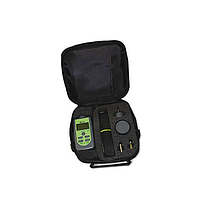
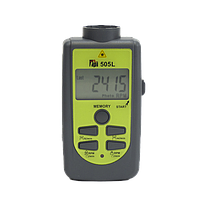
Tachometer
When rotating equipment needs to be checked, verified, or diagnosed, speed measurement becomes one of the most useful data points. A Tachometer helps maintenance teams, production engineers, and service technicians measure rotational speed quickly and with the level of precision required for troubleshooting, setup, and routine inspection.
In industrial environments, tachometers are used to confirm motor speed, monitor shafts, verify conveyor or roller movement, and compare actual operating conditions with expected values. Depending on the task, users may need a non-contact optical model for safe measurement at a distance, or a contact-capable instrument for direct shaft and linear speed measurement.
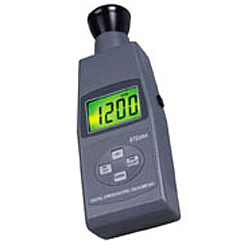
Where tachometers are commonly used
Rotational speed measurement is relevant across many sectors, including manufacturing, machine maintenance, automotive service, HVAC inspection, and laboratory testing. Measuring RPM is often part of preventive maintenance because abnormal speed can indicate slipping belts, worn components, unstable drive systems, or control issues.
Tachometers are also useful when evaluating fans, pumps, mixers, spindles, rollers, and other rotating assemblies. In some applications, users need more than RPM alone, and may also work with related solutions such as speed sensors for integration into continuous monitoring systems.
Contact and non-contact measurement methods
One of the first decisions when selecting a tachometer is whether the application is best served by non-contact optical measurement, contact measurement, or a combination instrument. Non-contact models are commonly chosen when direct access to the rotating surface is limited or when safer stand-off measurement is preferred. These instruments typically use reflective tape or an optical target to detect rotational movement.
Contact tachometers are better suited to direct shaft checks and can also support linear speed measurement when used with suitable accessories. Combination models offer flexibility for maintenance teams that work across different machine types and need to switch between optical and contact modes without carrying separate instruments.
Examples in this category include the FLUKE FLUKE-930 for non-contact RPM measurement and the FLUKE-931 for combined photo/contact use. For broader function sets, Chauvin Arnoux models such as the C.A 1725 and C.A 1727 are relevant when users need multiple measurement modes beyond simple RPM checks.
What to consider when choosing a tachometer
The required measurement range is usually the most practical starting point. Some tasks involve low-speed rotating parts, while others require verification at very high RPM. Instruments in this category cover a wide span, with examples reaching from single-digit RPM up to 99,999 or 100,000 RPM depending on model and method.
Accuracy is equally important, especially for calibration checks, machine comparison, and performance verification. Handheld units such as the FLUKE-930 and FLUKE-931 are designed for precise field measurement, while instruments like the SKF TKRT 21 add multifunction capability for users who need rotational and linear speed readings in a compact portable format.
Users should also think about working distance, access to the target, battery operation, display readability, and whether minimum, maximum, or average capture is needed. If data review or record handling is part of the workflow, models with added storage or PC connectivity may be more suitable than entry-level handheld tachometers.
Examples of instruments and accessories in this category
This category includes handheld tachometers for routine field work as well as more feature-rich units for diagnostics. The Chauvin Arnoux C.A 1725 supports contact and non-contact measurement with additional functions such as rotation speed, linear measurement, frequency, and period-related readings. The C.A 1727 expands that concept with storage and USB-related workflow support for users who need more traceability during inspection.
For general maintenance teams, the SKF TKRT 21 offers a multifunction digital approach, including optical and contact modes. FLUKE handheld models remain a practical choice where simple operation, portability, and dependable RPM verification are priorities. Users comparing brands may also explore the Chauvin Arnoux and SKF manufacturer pages for related instruments.
Accessories also play an important role in measurement reliability. Reflective targets such as Chauvin Arnoux P01101797 and TESTO 0554 0493 reflective tapes support optical measurement, while the Chauvin Arnoux P01174902 contact measuring kit and P01174903 accessory set help extend contact measurement capability for compatible instruments.
When a stroboscope may be a better fit
Not every speed-checking task is best handled by a standard tachometer. In some diagnostic situations, maintenance personnel need to visually freeze apparent motion to inspect rotating parts without stopping the machine. That is where a stroboscopic solution can be useful.
The FLUKE-820-2 LED Stroboscope, listed in this category, is an example of a related tool for rotational analysis. Rather than simply displaying RPM, it helps users observe motion behavior under synchronized flashing conditions. This can be valuable for identifying defects, misalignment patterns, or repeated mechanical anomalies on moving parts.
Practical selection tips for industrial buyers
For procurement teams and technical buyers, the right choice depends on how the instrument will actually be used in the field. If the goal is occasional spot-checking of motors or fans, a straightforward optical tachometer may be sufficient. If technicians regularly handle shafts, rollers, and belt-driven systems, a combined contact/non-contact model usually provides better long-term flexibility.
It is also worth checking whether the instrument will be used only as a portable handheld device or as part of a broader maintenance toolkit. In facilities where rotating speed is one of several motion-related parameters under review, teams may pair tachometers with products from adjacent categories such as speed sensing devices to support fixed monitoring or automation workflows.
Short FAQ
What does a tachometer measure?
A tachometer measures the rotational speed of a shaft, disc, motor, fan, roller, or similar moving part, typically in RPM.
What is the difference between contact and non-contact tachometers?
Contact models touch the rotating object or use an accessory tip or wheel, while non-contact models use optical detection and usually require a reflective target.
Can a tachometer measure linear speed?
Some multifunction or contact-capable models can measure linear speed when used with the proper accessories and setup.
Find the right tachometer for your application
Choosing the right tachometer is mainly a matter of matching measurement method, range, and workflow to the equipment you maintain. Whether you need a simple non-contact RPM checker, a combined handheld instrument, or a more advanced unit with accessories and data handling features, this category brings together practical options for industrial speed measurement.
Review the available models based on how your team works in the field, the type of rotating equipment involved, and whether accessories such as reflective tape or contact kits are required. A well-matched tachometer helps turn speed measurement into a fast, repeatable part of maintenance and inspection.
Get exclusive volume discounts, bulk pricing updates, and new product alerts delivered directly to your inbox.
By subscribing, you agree to our Terms of Service and Privacy Policy.
Direct access to our certified experts