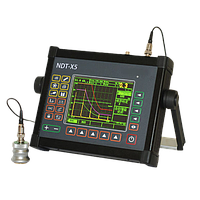
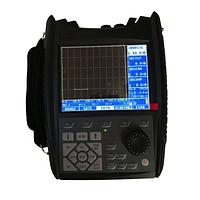
Ultrasonic Flaw Detector
When hidden discontinuities can compromise weld quality, forged parts, pressure vessels, or structural components, reliable ultrasonic inspection becomes a practical requirement rather than a nice-to-have. This category brings together Ultrasonic Flaw Detector solutions used in non-destructive testing workflows to help inspectors detect internal defects without cutting, damaging, or dismantling the part under test.
In industrial maintenance, fabrication, and quality control, ultrasonic methods are valued for their speed, depth capability, and flexibility across many metallic components. Whether the task involves routine weld inspection, thickness-related evaluation, or more advanced discontinuity assessment, the right instrument setup usually combines the flaw detector itself with suitable probes, cables, and calibration accessories.
How ultrasonic flaw detection fits into NDT workflows
Ultrasonic testing works by sending high-frequency sound waves into a material and analyzing returning signals. Changes in echo amplitude, travel time, or signal pattern can indicate cracks, voids, inclusions, lack of fusion, or other internal irregularities. Because the method is non-destructive, it is widely used during incoming inspection, in-process checks, final quality verification, and field maintenance.
Compared with other inspection methods, ultrasonic systems are often chosen when internal defect detection and depth-related evaluation are important. For broader comparison across methods, users may also review X-ray flaw detector systems or magnetic flaw detector equipment, depending on material type, access conditions, and defect orientation.
What you can expect in this category
This range includes portable instruments for general flaw detection as well as the supporting components needed to build a workable inspection setup. In practice, an ultrasonic inspection system is rarely just the main instrument. Probe selection, cable compatibility, calibration blocks, and operating mode all influence the usefulness of the final result.
Representative instruments in this category include the NOVOTEST UD2303, NOVOTEST UD2301, PCE FD 20, and the Waygate Technologies USM 36. The selection also includes ecosystem components such as the Waygate Technologies MWB angle probes, MSEB straight probe, MPKL 2 and SEKG 2 ultrasonic cables, plus calibration items like the VW Ultrasonic Step Calibration Block and K 2 Ultrasonic Calibration Block.
Portable flaw detectors for field and shop-floor inspection
Many buyers in this category are looking for portable ultrasonic flaw detectors that can be used in fabrication shops, maintenance environments, or inspection work on site. Models such as the NOVOTEST UD2303 and NOVOTEST UD2301 are designed around common industrial UT tasks, with frequency ranges suitable for standard contact testing and operating modes associated with practical defect evaluation.
The PCE FD 20 is another example suited to routine defectoscopy work, especially where compact size matters. For users who need a more advanced portable platform, the Waygate Technologies USM 36 offers a broader instrument architecture with configurable pulser and receiver behavior, multiple gate functions, and a ruggedized form factor that aligns well with demanding field conditions.
Buyers comparing brands may also want to explore dedicated manufacturer pages such as Waygate Technologies and NOVOTEST to review available product families and related accessories in the same ecosystem.
Why probes, cables, and calibration blocks matter
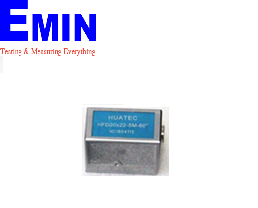
A flaw detector only performs as well as the complete inspection chain around it. Probes and transducers determine how sound enters the material, what beam angle is used, and how sensitive the setup is to particular defect types. Straight probes are commonly used for direct sound paths, while angle probes are often selected for weld inspection and discontinuities that are better detected with refracted beams.
Examples from this category include the Waygate Technologies MWB 45-4, MWB 60-4, and MWB 70-4 angle probes, as well as the MSEB 4 dual straight probe. Matching the correct cable is equally important, which is why items like the MPKL 2 and SEKG 2 ultrasonic cables are relevant rather than secondary. They help ensure a compatible and stable signal path between instrument and transducer.
Calibration blocks support setup verification, sensitivity adjustment, and repeatable reference conditions. Products such as the Waygate Technologies VW Ultrasonic Step Calibration Block and K 2 Ultrasonic Calibration Block illustrate the role of reference standards in validating range, response, and inspection consistency before testing actual parts.
Key selection points before you buy
Choosing an ultrasonic flaw detector usually starts with the inspection task, not the instrument alone. Material type, part geometry, expected defect orientation, inspection standard, portability needs, and reporting requirements all affect the best choice. Frequency range and velocity settings matter because they influence penetration and resolution across different materials and test conditions.
It is also worth checking practical items such as display readability, gate functions, time-variable gain support, battery operation, connection type, and available accessories. If your workflow depends on regular recalibration, probe interchangeability, or documentation in the field, those factors may be as important as core signal performance.
- For general field inspection, prioritize portability, battery life, and straightforward setup.
- For weld inspection, focus on suitable angle probes and gate-based evaluation functions.
- For repeatable shop-floor quality control, consider calibration support and accessory availability.
- For demanding industrial environments, review enclosure robustness and operating conditions carefully.
Typical application areas
Ultrasonic flaw detectors are used across fabrication, metalworking, energy, transport, and maintenance operations. Common applications include weld inspection, forged component testing, cast part evaluation, plate and pipe examination, and service inspection of critical structures. In many cases, UT is selected because it provides direct insight into subsurface and internal conditions that cannot be judged visually.
Some projects may require a narrower method focus. For example, rope and cable integrity checks may be better served by a dedicated wire rope ultrasonic flaw detector. This is why understanding the application is essential before choosing between a general-purpose flaw detector and a more specialized NDT instrument.
Building a more reliable inspection setup
Consistency in ultrasonic inspection comes from treating the instrument, probe, cable, couplant, and calibration process as one system. Even a capable detector can produce poor results if the probe angle is unsuitable, the reference setup is inconsistent, or the accessory chain is mismatched. For that reason, many professional buyers evaluate the whole inspection workflow rather than selecting by model name alone.
This category is intended to support that broader approach. Alongside compact handheld units and higher-spec portable systems, it includes the accessories that help convert an instrument into a working solution for actual industrial inspection tasks. That makes it easier to source a setup aligned with site conditions, inspection standards, and operator familiarity.
Finding the right ultrasonic inspection equipment
If you are comparing options in this category, the most useful starting point is your real inspection scenario: what material is being tested, what defect type is expected, how portable the setup must be, and which accessories are required to make the instrument usable in daily work. From there, it becomes much easier to shortlist the right combination of flaw detector, probe type, cable, and calibration support.
With a mix of portable detectors and essential ultrasonic accessories, this category is structured for buyers who need practical NDT equipment rather than a generic product list. A well-matched ultrasonic testing setup improves inspection confidence, supports repeatable results, and helps teams work more efficiently across production and maintenance environments.
Get exclusive volume discounts, bulk pricing updates, and new product alerts delivered directly to your inbox.
By subscribing, you agree to our Terms of Service and Privacy Policy.
Direct access to our certified experts