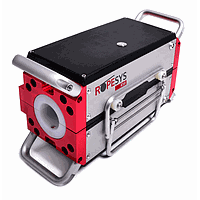
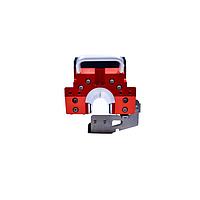
Wire Rope Ultrasonic Flaw Detector
When rope condition directly affects safety, maintenance planning, and equipment availability, inspection methods need to go beyond visual checks. A Wire Rope Ultrasonic Flaw Detector category is relevant for users who need more reliable ways to assess internal rope condition, detect damage trends, and document results in demanding industrial environments.
These instruments are typically used where wire ropes operate under heavy load, repeated bending, long service cycles, or strict inspection routines. For maintenance teams, testing specialists, and asset owners, the goal is not only to find obvious defects, but also to build a clearer picture of rope health over time and support informed replacement decisions.
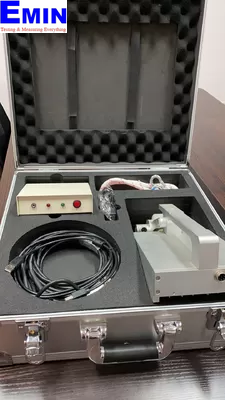
Where this category fits in wire rope inspection
Wire rope inspection belongs to a broader non-destructive testing workflow in which the rope is evaluated without damaging the asset. In practice, this helps maintenance teams identify internal deterioration, local faults, and wear-related changes while keeping the rope in service until planned intervention is needed.
Depending on the inspection objective, users may also compare this category with other methods such as ultrasonic flaw detectors for different material-testing tasks or magnetic flaw detector solutions used in broader NDT applications. The right choice depends on the structure being tested, the type of defect expected, and the level of portability or reporting required on site.
Why wire rope testing requires specialized equipment
Wire ropes can degrade in ways that are difficult to confirm from the surface alone. Internal wire breaks, corrosion, material loss, fatigue-related damage, and localized defects may develop before external changes become easy to see during routine checks. That is why specialized inspection devices are used in industries such as lifting, transport, and ropeway systems.
For these applications, the inspection device needs to match the rope diameter range, suit the rope type being tested, and support repeatable data capture. In many cases, teams also need portable equipment that can be moved to the field, used at height or in restricted spaces, and connected to software for recording and later review.
Representative devices in this category
This category includes equipment from Ropesys, with models covering multiple rope diameter ranges. Examples include the Ropesys R028-0001 and U028-0001 for smaller ropes from 6 to 28 mm, the R058-0001 and U058-0001 for 18 to 58 mm, and the R083-0001, U083-0001, and R140-0001 for larger sizes up to 140 mm.
Several listed devices include data recording, power supply, rechargeable battery support, and WiFi software, which is useful when inspection results need to be saved, reviewed, or compared across service intervals. Some models are specifically described as optimized for testing track ropes, which helps narrow down options for applications where rope configuration and operating conditions differ from general lifting use.
How to choose the right wire rope flaw detector
The first selection factor is rope diameter compatibility. Choosing a device that matches the actual rope range is essential for stable measurement and practical field use. In this category, the available examples span from compact units for small ropes to larger systems intended for much heavier rope dimensions.
The second factor is the inspection scenario. If the work involves frequent site visits, portability and overall device weight can matter as much as detection capability. Smaller models such as the R028-0001 or U028-0001 may be more suitable where mobility is important, while larger units such as the R140-0001 are better aligned with large-diameter ropes that require a dedicated setup.
A third point is documentation. If your inspection process requires traceable records, trend analysis, or handoff between field and office teams, it makes sense to prioritize devices with integrated recording and software support. This is especially relevant for operators managing recurring inspection schedules across multiple rope assets.
Common application contexts
Wire rope flaw detection is commonly considered where ropes are critical to safety, uptime, or regulatory inspection routines. Typical use cases include transport systems, heavy lifting equipment, industrial handling systems, and installations where replacing a rope too early or too late both carry significant cost.
In these environments, the value of the test is not limited to identifying a single defect. A reliable inspection process can also support maintenance planning, provide evidence for condition-based service decisions, and reduce uncertainty compared with visual assessment alone. For teams comparing methods, it may also be helpful to review X-ray flaw detector solutions for other internal-defect inspection needs outside rope-specific testing.
What to look for in day-to-day operation
Beyond core detection performance, practical operation matters. Users often look for equipment that is manageable in the field, straightforward to position on the rope, and suitable for repeated inspections without creating unnecessary setup time. Device dimensions and weight can influence how easily the tool is deployed during maintenance rounds.
Software and connectivity are also important for many B2B users. When a device includes recording functions and wireless data handling, it becomes easier to standardize inspection routines across teams and preserve a consistent test history. That can be valuable for audits, maintenance documentation, and long-term asset monitoring.
Choosing within a broader NDT strategy
A wire rope inspection device should be selected as part of a wider maintenance and testing strategy, not as an isolated purchase. The expected defect type, inspection frequency, environment, rope size, and reporting requirements all influence which platform is the better fit. In some operations, wire rope testing will complement other inspection tools rather than replace them.
For example, facilities that work across multiple material types may also use categories such as metal analyzers or general flaw detection systems for other maintenance tasks. The advantage of a specialized rope-testing solution is that it addresses a very specific inspection challenge with equipment designed around rope geometry, handling, and repeatable condition evaluation.
Final considerations
This Wire Rope Ultrasonic Flaw Detector category is intended for users who need more dependable wire rope condition assessment than visual inspection alone can provide. With options from Ropesys covering different diameter ranges and field-use needs, the selection can be aligned with rope size, portability requirements, and data-recording expectations.
If you are comparing models, start with the rope diameter range and the inspection environment, then look at portability, application focus, and reporting features. That approach makes it easier to narrow the shortlist to a device that fits real maintenance practice rather than just matching a specification sheet.
Get exclusive volume discounts, bulk pricing updates, and new product alerts delivered directly to your inbox.
By subscribing, you agree to our Terms of Service and Privacy Policy.
Direct access to our certified experts