
X-ray Flaw Detector
When internal defects cannot be identified from the surface alone, X-ray inspection becomes a practical way to verify product integrity without cutting, breaking, or destroying the part. In manufacturing, casting inspection, welded assemblies, and safety-critical components, the right imaging system helps teams detect porosity, inclusions, cracks, voids, and structural inconsistencies early in the process.
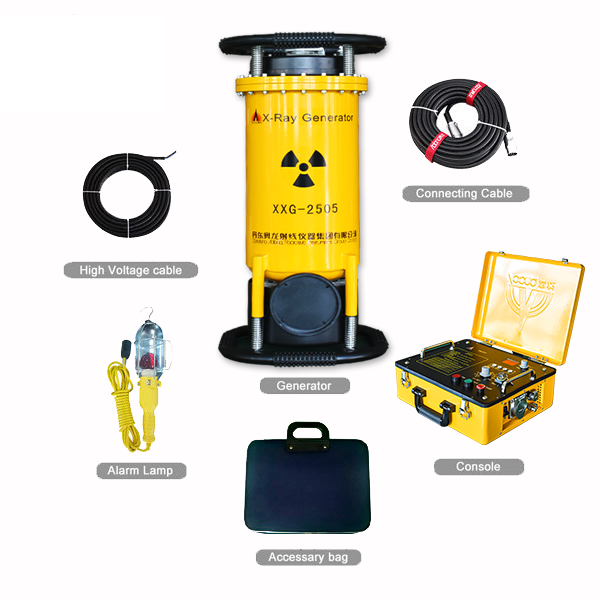
X-ray Flaw Detector systems are used in non-destructive testing workflows where internal visibility matters as much as dimensional or surface quality. This category focuses on solutions suited for 2D inspection and, depending on the system configuration, more advanced control tasks such as 3D analysis or automated defect recognition in at-line, off-line, or in-line environments.
Where X-ray flaw detection fits in industrial inspection
X-ray-based non-destructive testing is especially useful when a component’s internal structure directly affects performance, safety, or downstream assembly quality. Unlike surface inspection methods, it can reveal hidden discontinuities inside metal castings, complex assemblies, and dense parts where visual checks are not enough.
In many production environments, X-ray inspection is used alongside other NDT methods depending on the material, defect type, and inspection objective. For example, applications focused on subsurface crack detection in forged or welded parts may also consider ultrasonic flaw detection, while X-ray remains a strong choice for identifying internal voids, porosity patterns, and assembly-related defects.
Typical inspection tasks for X-ray systems
An X-ray flaw detector is commonly selected for parts where hidden internal quality must be verified without damaging the product. This is relevant for cast components, mechanically complex parts, and production lines where defect escape can lead to costly rework or field failure.
Depending on the setup, these systems can support 2D inspection, defect review, process monitoring, and in some cases 3D control or ADR-oriented workflows. The practical goal is not only to find defects, but also to improve inspection repeatability and support faster decision-making in production or quality laboratories.
Representative systems in this category
This category includes industrial solutions from ZEISS, with several BOSELLO series systems covering different part sizes, throughput needs, and inspection layouts. Rather than serving one identical use case, these platforms are positioned for different balances of resolution, speed, footprint, and installation environment.
For example, ZEISS BOSELLO HEX Xray 2D is oriented toward smaller parts and compact installation needs, making it relevant where space is limited and a mix of 2D and 3D control is required. ZEISS BOSELLO MAX Xray 2D extends inspection flexibility across small to large parts with higher part identification capability and higher resolution-oriented positioning.
For production environments that prioritize throughput, ZEISS BOSELLOWREthunder Xray 2D and ZEISS BOSELLO OMNIA Xray 2D are more aligned with in-line inspection scenarios. These systems are geared toward medium to large parts and support 2D inspection with ADR-related workflows, helping manufacturers move toward more automated quality control.
How to choose the right X-ray flaw detector
Selection usually starts with the part itself: size, material density, geometry, and the type of defect that must be detected. A compact part with fine internal features may require a different resolution and system footprint than a larger production component that needs faster inspection cycles.
It is also important to define the inspection location in the process. At-line and off-line inspection often allow more flexibility for detailed review, while in-line systems are typically chosen when throughput, integration, and repeatability are critical. If your workflow requires broader comparison with other radiographic solutions, this X-ray inspection category provides a useful starting point.
Another key factor is the level of automation required. Some operations mainly need operator-assisted image review, while others benefit from ADR support to improve consistency and reduce manual inspection load. The right choice depends on whether your priority is high detail, high speed, flexible part handling, or a balanced combination of these factors.
2D, 3D, and automated review considerations
Not every application needs the same depth of analysis. For many routine industrial checks, 2D X-ray inspection is sufficient to detect common internal flaws and verify assembly conditions. In more demanding cases, added 3D control capability can improve interpretation of complex structures and help reduce uncertainty during evaluation.
Automated defect recognition can also play an important role when inspection volumes increase. While automation does not replace process understanding, it can support standardized inspection criteria, faster sorting, and more stable quality reporting across shifts or production batches.
X-ray inspection within a broader NDT strategy
X-ray systems are rarely evaluated in complete isolation. Many quality teams build inspection strategies around material type, expected defect mechanisms, and production stage. In some workflows, radiographic inspection is complemented by methods such as magnetic flaw detection for surface and near-surface discontinuities in ferromagnetic materials.
That broader view is useful because no single method is ideal for every defect type. X-ray is particularly valuable when internal structure must be visualized directly, while other methods may be better suited to specific crack orientations, material conditions, or portable field inspection requirements.
What buyers and engineers usually compare
For industrial buyers, comparison often comes down to a few practical questions: What part range must be covered? How much detail is necessary? Is the system intended for lab-based review, at-line quality checks, or continuous in-line production? These factors influence the right balance between footprint, speed, and image quality.
It is also worth considering long-term workflow fit rather than only headline performance. A system that matches the actual inspection routine, operator skill level, and part mix often delivers better results than one selected only for maximum specification. In X-ray flaw detection, the best fit is usually the one that aligns inspection capability with process reality.
Final considerations
Choosing an X-ray flaw detector means matching imaging capability to the real demands of your parts, production environment, and defect criteria. Whether the priority is compact inspection for smaller components, flexible handling across part sizes, or faster in-line control with automated review support, this category brings together solutions relevant to industrial non-destructive internal inspection.
If you are comparing options, focus on part size, required resolution, inspection speed, installation site, and the level of automation your process can genuinely benefit from. A clear understanding of those factors will make it easier to shortlist the right system and build a more reliable inspection workflow.
Get exclusive volume discounts, bulk pricing updates, and new product alerts delivered directly to your inbox.
By subscribing, you agree to our Terms of Service and Privacy Policy.
Direct access to our certified experts