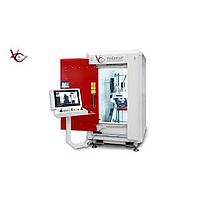
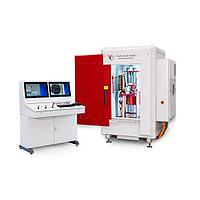
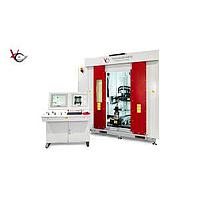
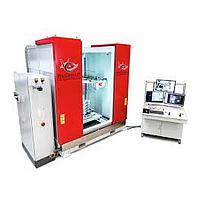
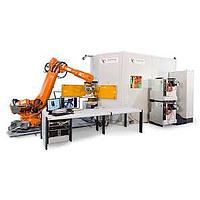
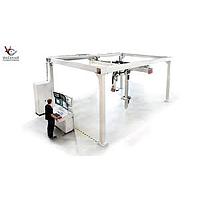
X ray-machine
When internal defects cannot be verified by visual inspection alone, X-ray imaging becomes a practical way to examine parts without cutting, breaking, or disassembling them. In manufacturing, quality control, and failure analysis, X ray-machine systems are widely used to reveal voids, cracks, inclusions, solder issues, and other hidden conditions inside castings, electronic assemblies, and battery-related components.
This category brings together equipment designed for non-destructive inspection across several industrial scenarios. Whether the goal is routine production screening or more detailed analysis of complex samples, the available systems support different inspection sizes, detector formats, motion ranges, and imaging capabilities.
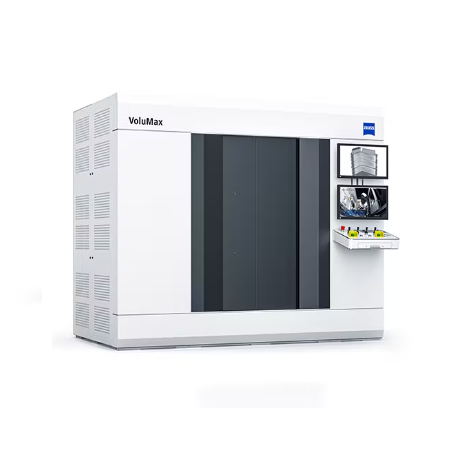
Where X-ray inspection fits in non-destructive testing
X-ray inspection is a core method in the wider field of non-destructive testing because it allows users to evaluate internal structure while keeping the sample intact. That makes it useful for incoming inspection, process validation, defect analysis, and final quality checks in sectors where hidden flaws can affect safety, reliability, or downstream assembly.
Compared with surface-focused methods, X-ray systems help identify internal discontinuities that may not be visible from the outside. In some workflows, companies also combine radiographic inspection with other techniques such as ultrasonic flaw detectors when they need complementary information about material integrity or defect location.
Typical applications for this category
The products in this category are relevant to several inspection tasks. One major application is casting inspection, where internal porosity, shrinkage, bubbles, and cracks must be checked before parts move into machining or assembly. X-ray systems help operators evaluate these hidden features more efficiently than destructive sectioning.
Another important area is electronics and battery inspection. For printed circuit assemblies, connectors, packaged devices, and battery cells, X-ray imaging can help verify internal positioning, structural consistency, and hidden defects. If your inspection process is focused more specifically on radiographic defect analysis, you may also want to review the broader X-ray flaw detector range for related NDT equipment.
Examples of systems available
This category includes equipment from Electronicstalk, with systems tailored to different inspection tasks and sample sizes. For casting applications, models such as the HT1000, HT2000D, HT5000, and HT5000C illustrate how users can select between compact and larger-format inspection platforms depending on part dimensions, detector area, and load requirements.
For electronics-focused work, models such as the HT100, HT100L, HT300, HT300L, and MFX600LP show a different equipment profile, often emphasizing fine-detail imaging, programmable positioning, and table motion suited to PCB assemblies or smaller industrial components. The category also includes ELT battery X-ray machines such as the MFX100L, MFX100LD, and MFX100LI for battery-related inspection scenarios where stable imaging and small-feature visibility are important.
Key points to compare before selecting a machine
Choosing the right unit usually starts with the sample itself. Part size, material density, inspection throughput, and required image detail all influence the best fit. A system intended for larger cast components may prioritize a bigger effective imaging area, higher load capacity, and wider axis travel, while a system for electronics inspection may place more value on fine resolution and flexible positioning.
It is also important to review the relationship between X-ray tube capability, detector format, and magnification. In practice, these factors affect penetration, image sharpness, and how easily small defects can be recognized. Motion axes, tilt, and rotation functions can further improve inspection efficiency by helping operators examine the same sample from multiple angles without manual repositioning.
Software should not be overlooked. Image enhancement, inversion, histogram processing, binarization, and similar functions can support defect interpretation and routine analysis. For production environments, automated protection features and repeatable positioning can also contribute to safer operation and more consistent inspection results.
Understanding the differences between casting, electronics, and battery inspection
Although these systems all rely on X-ray imaging, the inspection objectives are not exactly the same. In castings, users typically focus on bulk internal defects within metal parts, so detector size, table capacity, and penetration capability become especially relevant. Larger components often require more working space and stable sample handling.
In electronics inspection, the challenge is usually different: smaller structures, layered assemblies, and hidden joints require clearer detail and easier angular viewing. Battery-related inspection may also demand attention to internal alignment, structural anomalies, or manufacturing defects that cannot be confirmed from the outside. Matching the machine type to the application is therefore more useful than choosing only by nominal power or physical size.
Safety and workflow considerations
Industrial X-ray equipment should always be evaluated as part of a complete inspection workflow, not just as a standalone machine. Enclosure design, door interlock behavior, operator procedures, and maintenance access all matter in daily use. Several listed systems indicate safety-oriented features such as interlock protection and low surface radiation levels, which are important for controlled operation in industrial environments.
Workflow efficiency is another practical factor. If the inspection task involves repetitive product types, programmable movement, teaching functions, and automatic positioning can reduce setup time. For mixed-product environments, flexible table travel and image processing tools can help technicians switch between part types without extensive reconfiguration.
How this category supports broader quality control needs
X-ray inspection is often one step within a larger quality strategy. Depending on the material and defect type, users may combine radiographic inspection with methods such as magnetic flaw detection for certain ferromagnetic surface or near-surface checks, or with chemical and composition-focused tools such as a metal content meter when verification of material makeup is also required.
This broader view is useful when building or upgrading an inspection process. Instead of treating every defect problem as the same, buyers can compare methods by material, geometry, defect depth, and inspection speed. That leads to a more practical equipment decision and a better long-term fit for production, laboratory, or incoming quality environments.
Choosing with application priorities in mind
A good selection process usually begins with a few clear questions: what kind of parts are being inspected, what defects matter most, how much detail is needed, and how often the inspection will be performed. From there, it becomes easier to narrow down whether a compact electronics-oriented system, a larger casting inspection unit, or a battery-focused platform is the more suitable choice.
For buyers comparing options in this category, the most useful approach is to look beyond product names and focus on inspection task, sample dimensions, detector area, table movement, and software support. With the right configuration, an industrial X-ray machine can become a reliable tool for defect detection, process monitoring, and non-destructive quality assurance across multiple manufacturing applications.
Get exclusive volume discounts, bulk pricing updates, and new product alerts delivered directly to your inbox.
By subscribing, you agree to our Terms of Service and Privacy Policy.
Direct access to our certified experts