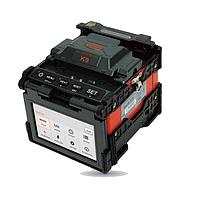
Fusion Splicer
Reliable fiber joints are critical in telecom, data network, and field maintenance work, especially when low splice loss and stable transmission are required. Choosing the right Fusion Splicer depends not only on budget, but also on fiber type, alignment method, working conditions, and the scale of installation or repair tasks.
On this page, you can explore fusion splicers used for single-fiber and ribbon-fiber applications across FTTx deployment, backbone links, enterprise cabling, and maintenance work. The category includes solutions from established manufacturers such as Fujikura, SUMITOMO, INNO, and UCLswift, covering both compact field units and higher-capability systems for demanding splice quality requirements.
Where fusion splicers are used
Fusion splicers are used whenever two optical fibers must be permanently joined with minimal signal loss. Typical applications include FTTx subscriber connections, fiber restoration after cable damage, LAN and CCTV fiber runs, as well as metro or backbone network installation.
In practice, the required device can vary significantly by job type. A contractor handling routine access network work may prioritize portability and fast setup, while a team working on core transmission links may focus more on alignment accuracy, repeatability, and compatibility with a wider range of fiber standards.
Understanding the main splicer types
One of the most important selection criteria is the alignment method. Core-alignment splicers are typically chosen when lower splice loss and tighter alignment control are needed, while clad-alignment models are often suitable for general field installation and maintenance.
For example, the Fujikura 99S Fusion Splicer uses active core alignment and supports a broad range of common fiber types, making it relevant for demanding splice applications. The Fujikura 45S Fusion Splicer uses active clad alignment and fits well where a compact, lighter unit is preferred for day-to-day field work.
Ribbon splicers form another important segment in this category. Models such as the UCLswift KR12 Ribbon Splicer or SUMITOMO TYPE-72M12 are designed for multi-fiber ribbon work, which is especially useful in higher-density cable environments where productivity across multiple fibers matters.
How to choose the right model for your work
A good starting point is to match the device to the actual cable and fiber environment. Check whether you need single-fiber or ribbon-fiber splicing, what cladding and coating sizes are commonly encountered, and whether the work involves standard SM/MM fibers only or also includes G.657, G.654 E, or other specialized fiber types.
Field teams should also pay attention to practical handling factors such as weight, battery operation, touchscreen usability, storage for splice records, and resistance to temperature, humidity, altitude, dust, or wind. These points become especially important for outdoor maintenance crews or installation teams working at cabinets, poles, or remote sites.
If your workflow also includes link troubleshooting after installation, pairing a splicer with an OTDR meter can help verify events and losses along the fiber path. For quick continuity checks during maintenance, an optical fault locator is also a useful companion tool.
Typical product examples in this category
For high-performance single-fiber splicing, the Fujikura 99S and UCLswift K33A-HDC represent core-alignment options aimed at applications where stable splice quality is a priority. These types of models are often considered for telecom backbone, restoration work, and installations that demand strong repeatability across different environmental conditions.
For lighter and more portable field use, products such as the Fujikura 45S, UCLswift KF4, and SUMITOMO TYPE-201e-VS fit applications where technicians need mobility without moving to ribbon-capable systems. Their compact form factor can be advantageous in customer-premises installation, drop cable work, and routine service calls.
Where multi-fiber throughput matters, ribbon-capable models such as the UCLswift KR12A and SUMITOMO TYPE-72M12 support splicing multiple fibers in one operation. That makes them relevant for structured high-count deployments, access network aggregation points, and environments where splice efficiency directly affects project time.
INNO View 6L is another example in the category for users looking at core-alignment performance in a field-oriented format. Rather than comparing models only by headline splice time, it is more useful to evaluate them by alignment type, supported fibers, battery cycles, data handling, and suitability for the working environment.
What matters in daily splicing performance
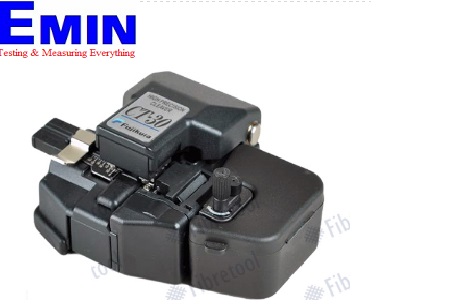
Actual splice quality depends on more than the splicer itself. Fiber preparation, correct stripping, clean end faces, accurate cleaving, and proper sleeve protection all influence the final result. Even a capable machine will not compensate for poor preparation or inconsistent field handling.
It is also important to consider the full workflow around the splice. Technicians often need to inspect the completed link using an optical power meter to confirm insertion loss at the link level, especially during acceptance testing or troubleshooting after repair.
For organizations that perform frequent installation or maintenance, consistency matters as much as speed. Features such as multiple splice and heat modes, storage for splice records and images, USB connectivity, and battery-backed field operation can improve traceability and reduce repeat visits.
Manufacturer options in this category
This category includes products from several recognized brands in fiber splicing. UCLswift offers a broad range that covers compact single-fiber units and ribbon splicers, while Fujikura and SUMITOMO are commonly associated with professional telecom deployment and maintenance environments.
INNO is also represented with models positioned for practical field work, including core-alignment capability in portable formats. The presence of multiple manufacturers gives buyers flexibility to compare device architecture, ergonomics, supported fiber ranges, and workflow features instead of focusing on brand name alone.
Who should buy which kind of splicer?
For access network contractors, ISP installation teams, and maintenance crews working mostly on single-fiber jobs, a compact clad-alignment or portable core-alignment unit is often the most practical choice. It balances mobility, operating simplicity, and suitable performance for everyday field tasks.
For backbone deployment, high-value restoration, or technically demanding transmission work, a core-alignment splicer is generally the safer choice. It is also worth considering models that support broader fiber compatibility and stronger environmental tolerance when work is done outdoors or across varied project sites.
Where ribbon cable splicing is part of the workflow, choosing a dedicated ribbon machine is more efficient than trying to adapt a single-fiber unit. This is particularly true for teams handling high fiber counts, cabinet build-outs, or dense infrastructure projects.
Final considerations before ordering
Before selecting a fusion splicer, review the fiber types you actually handle, the number of splices per day, site conditions, and whether your team needs portability or higher-capacity ribbon work. It is usually more effective to choose based on the complete field workflow rather than on splice time alone.
A well-matched splicer helps reduce rework, improve splice consistency, and support faster commissioning in optical networks. If you are comparing models in this category, focus on alignment method, supported fibers, environmental capability, and how the device fits your real installation and maintenance tasks.
Get exclusive volume discounts, bulk pricing updates, and new product alerts delivered directly to your inbox.
By subscribing, you agree to our Terms of Service and Privacy Policy.
Direct access to our certified experts