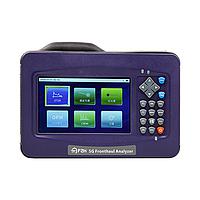
Optical analyzer
In fiber-optic testing and photonic component development, measurement quality depends heavily on how clearly you can observe wavelength behavior, loss characteristics, signal integrity, and network events. A well-matched optical analyzer helps engineers move from basic verification to deeper analysis, whether the task involves field troubleshooting, component characterization, or high-speed optical evaluation in the lab.
On this page, the category brings together instruments used across different stages of optical work: portable fiber network test platforms, tunable laser modules, component testers, and analyzers for advanced optical and electrical signal assessment. Instead of treating all instruments as the same, it is more useful to look at them by application, measurement objective, and integration into a broader optical test workflow.
Where optical analyzers fit in real testing workflows
In practice, the term optical analyzer can cover several instrument types. Some are designed for field technicians who need to inspect fiber links, locate events, and document attenuation behavior. Others are intended for R&D, production validation, or photonic component measurement, where wavelength stability, insertion loss, polarization-dependent loss, eye quality, or multi-lane performance are more critical.
That is why this category sits naturally alongside tools such as an OTDR meter and an optical power meter. In many projects, these devices are not substitutes for one another. They work as part of the same measurement chain, with each instrument answering a different technical question.
Field analysis for fiber link installation and maintenance
For network deployment and service work, portable analyzers with OTDR capability are often the most practical choice. They help users evaluate distance, loss, return loss, and event locations along single-mode fiber, while also simplifying reporting and trace storage for maintenance records.
A representative example in this category is the YOKOGAWA AQ7280 platform with interchangeable test modules. Based on the listed configurations, this family supports common telecom wavelengths such as 1310 nm and 1550 nm, multi-format data storage, touchscreen operation, and portable battery-powered use. That makes it suitable for contractors, telecom maintenance teams, and engineers who need one platform for fault isolation, acceptance testing, and day-to-day field diagnostics.
Compared with a simple continuity check, this type of analyzer provides far more context about the fiber under test. It can reveal reflective events, dead zones, section loss, and trace differences between measurements, which is especially useful when troubleshooting long links or documenting work after splicing. For teams also working on termination and restoration, related equipment such as a fusion splicer often forms part of the same service toolkit.
Wavelength-dependent analysis in photonics and component testing
Not all optical analysis happens in the field. In photonic labs and component manufacturing, engineers often need to sweep across wavelength ranges and observe how devices behave over specific bands. Here, tunable laser sources and optical component test systems become much more relevant than a portable network tester.
The category includes several EXFO tunable laser modules in the T100 series, each covering different wavelength regions such as O-band and bands extending through the 1.5 µm and 1.6 µm ranges. These modules are useful when characterization requires controlled wavelength tuning, stable output, and repeatable source conditions for validating filters, passive components, or transmission behavior across a target spectrum.
Also notable are EXFO CT440-PDL configurations for optical component testing. Instruments in this class are typically selected when insertion loss and polarization-dependent loss need to be measured with high repeatability. In production and validation environments, that kind of capability is important for understanding how optical components behave under changing wavelength and polarization conditions, rather than checking only a single-point result.
Signal integrity and high-speed optical evaluation
As optical systems move into higher data rates and more complex modulation formats, analysis requirements also change. Engineers may need to assess eye quality, jitter behavior, multi-channel performance, or lane-level characteristics that go beyond traditional power or loss measurements.
This is where products such as the EXFO EA-4000 Eye Analyzer and EXFO MA-4000 Module Analyzer fit into the broader optical analyzer category. Based on the listed information, these instruments support high-bandwidth and multi-channel measurement tasks relevant to advanced optical modules and high-speed links. They are better aligned with validation benches, module development, and manufacturing test environments than with basic field maintenance.
For buyers comparing equipment across this category, this distinction matters. A field-ready OTDR platform and a rack-style eye analyzer both belong to optical analysis, but they solve very different problems. Choosing correctly starts with understanding whether the main requirement is network troubleshooting, wavelength-swept component testing, or signal integrity evaluation.
How to choose the right optical analyzer
The best selection process starts with the measurement objective. If the goal is to inspect installed fiber, locate faults, and generate link reports, a portable platform with OTDR-related functions is usually the logical direction. If the goal is to characterize optical components over wavelength, tunable laser and component test solutions are more appropriate. For high-speed transceiver or module work, eye and multi-lane analyzers become the priority.
It is also important to review the practical details around the measurement setup. These may include wavelength range, connector format, number of channels, portability, storage and reporting options, remote control interfaces, and whether the instrument is intended for field or bench use. A mismatch in any of these areas can slow down testing even if the core measurement function looks correct on paper.
When comparing manufacturers, users often look first at ecosystems and application fit. Brands featured in this category include EXFO for component, laser, and analyzer platforms, as well as YOKOGAWA for portable fiber network testing solutions. The right choice usually depends less on brand alone and more on how well the platform matches the intended workflow and measurement depth.
Typical applications across industries
Optical analyzers are used in telecom infrastructure, fiber installation, network maintenance, photonic device development, and optical manufacturing environments. In field service, they help teams confirm link quality after installation, isolate faults, and document network conditions. In laboratories and production settings, they support repeatable evaluation of wavelength-sensitive components and high-speed optical assemblies.
They are also useful when troubleshooting intermittent performance issues that cannot be explained by simple pass/fail checks. A deeper optical view can help identify loss trends, wavelength-dependent behavior, or signal degradation mechanisms that remain hidden when using only basic test tools.
For maintenance teams dealing with broken or uncertain links, optical analysis may also be paired with a dedicated optical fault locator for fast visual checking before moving to more detailed trace or spectral investigation.
What to expect from this category page
This category is built for users who need more than a generic list of optical instruments. The available products cover different layers of the optical test stack, from portable fiber network platforms like the YOKOGAWA AQ7280 series to wavelength-tunable and component-focused EXFO solutions such as the T100 and CT440 families, as well as analyzers for eye and module evaluation.
If you are selecting equipment for a new lab, expanding a field service kit, or replacing an existing optical test platform, start by narrowing the use case first. Once the application is clear, it becomes much easier to compare architecture, wavelength coverage, interface options, and portability. That approach leads to a more efficient purchase decision and a test setup that remains useful as requirements evolve.
In short, an optical analyzer is most valuable when it is chosen as part of a complete measurement strategy. By aligning the instrument with the actual optical task—fiber event analysis, wavelength-swept characterization, or high-speed signal evaluation—you can build a workflow that is more accurate, more repeatable, and easier to scale.
Get exclusive volume discounts, bulk pricing updates, and new product alerts delivered directly to your inbox.
By subscribing, you agree to our Terms of Service and Privacy Policy.
Direct access to our certified experts