Optical power meter
Accurate fiber testing starts with knowing how much optical signal is actually reaching the end of the link. Whether you are checking a newly installed cable, validating attenuation, or troubleshooting unstable communication, a optical power meter is one of the most practical tools for day-to-day fiber work.
On this page, you can explore handheld meters for field technicians as well as more advanced measurement platforms used in lab and production environments. The category is suitable for users who need a straightforward instrument for insertion loss checks, reference setting, and routine verification across common telecom wavelengths.
Where optical power meters fit in fiber testing
An optical power meter measures the level of light transmitted through an optical fiber and displays the result in units such as dBm, mW, or µW depending on the instrument. In practice, this helps technicians confirm whether a link is within expected loss limits, compare readings against a reference, and quickly identify abnormal attenuation.
It is often used alongside other fiber test tools rather than as a standalone solution. For example, a power meter is useful for acceptance testing and basic loss checks, while a more advanced OTDR meter is better suited for locating breaks, events, or reflections along longer fiber runs.
Typical applications in the field and in the lab
For installation teams, handheld optical power meters are common in FTTH deployment, campus networks, telecom maintenance, and structured fiber cabling. They support quick verification after connector termination, patching, or repair work, especially when technicians need a compact tool that can be carried between test points.
In engineering, manufacturing, or validation environments, optical power measurement may be part of a larger automated test setup. This is where modular systems and chassis-based platforms become relevant, especially for repeated measurements, multi-user access, remote control, or integration into broader optical characterization workflows.
Key selection criteria before you buy
The first point to check is wavelength compatibility. Fiber systems do not operate at a single wavelength, so the meter should support the ranges relevant to your application. Several products in this category cover common test points such as 850, 1300, 1310, 1490, 1550, and 1625 nm, which are typical in multimode and single-mode environments.
The second factor is connector adaptability and overall usability. A meter that supports familiar interfaces such as FC, SC, and ST can reduce setup friction in the field. Practical details also matter: a backlit display, fast reference setting, low battery warning, and automatic power-off are small features that make everyday testing easier.
Finally, look at the intended workflow rather than specifications alone. A basic handheld meter is often enough for routine maintenance, but users who also need cable checking or visible fault tracing may prefer a combined instrument. For broader fault isolation, an optical fault locator can complement the power meter in service tasks.
Examples from this category
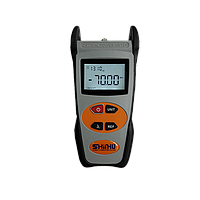
The Proskit MT-7601 Optical Power Meter is a good example of a dedicated handheld unit for general-purpose fiber measurement. Its supported wavelengths, common connector compatibility, LCD backlight, and reference value storage reflect the kind of features many technicians expect for routine on-site work.
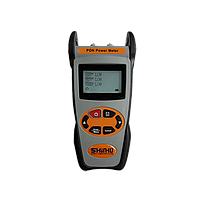
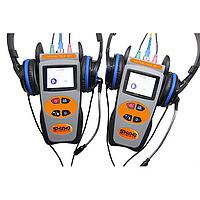
Users who want more than simple power measurement may look at multifunction tools such as the Proskit MT-7615 4 in 1 fiber Optical Power Multimeter or the Pro'skit MT-7602 4 IN 1 FIBER OPTIC POWER MULTIMETER. These models combine optical power measurement with additional functions such as cable testing, visual fault location, or utility lighting, which can be helpful when field teams need to travel light and reduce the number of separate tools carried to site.
At the higher end of the workflow, some products listed here are based on Viavi MAP mainframes such as the MAP-220CXR-A, MAP-220CX-A, and MAP-380AX-B platforms. These are not simple handheld meters; they serve as modular optical test chassis for controlled environments where optical power measurement may be part of a larger automated or multi-module setup.
Handheld versus modular optical measurement platforms
Handheld instruments are usually the right choice when the priority is portability, speed, and simplicity. They are widely used by installers, maintenance teams, contractors, and service personnel who need to check loss and signal level directly at the job site with minimal setup.
Modular platforms, on the other hand, make more sense when measurement is embedded in R&D, manufacturing, or repeated validation procedures. Chassis-based systems can offer better integration with software, remote interfaces, automation frameworks, and shared test environments. If your work includes bench testing, optical component evaluation, or repeatable production measurements, this architecture may be more appropriate than a compact field meter.
How to evaluate accuracy and long-term usability
Measurement quality is not only about the headline accuracy figure. In real use, consistency, linearity, display resolution, and the stability of the reference process all influence how useful the meter will be. A device that is easy to zero or reference correctly can help reduce operator error, which is often just as important as the published specification.
It is also worth considering service and calibration support over time. Optical measurement tools are often used repeatedly across projects, so buyers should think beyond the initial purchase and evaluate whether the product fits internal maintenance routines, verification practices, and operator skill levels. In professional environments, a meter that is easy to maintain and straightforward to use often provides better value than one that appears more advanced on paper but is rarely used correctly.
Related tools in the optical test workflow
An optical power meter is one part of a broader fiber toolkit. In installation and repair work, it is commonly paired with splicing equipment, visible fault tracing tools, and link characterization instruments depending on the stage of the job.
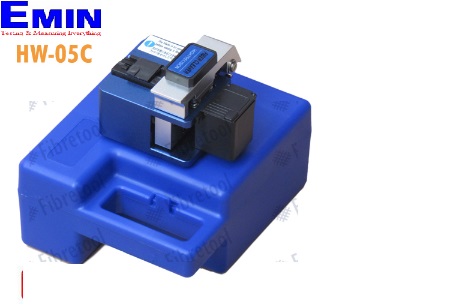
For example, if you are building or repairing fiber links, you may also need a fusion splicer for low-loss fiber joining. If your work extends into spectral measurement, component analysis, or lab-based optical characterization, more specialized instruments in the optical test ecosystem may be relevant than a standard field meter alone.
Choosing the right optical power meter for your environment
The best fit depends on how and where the instrument will be used. Field technicians usually benefit from a compact meter with support for common wavelengths and connectors, while engineering teams may need a modular platform that can be integrated into repeatable test systems. Multifunction units can be a practical middle ground when daily tasks include both signal measurement and basic troubleshooting.
This category brings together options for different levels of fiber testing, from straightforward handheld measurement to advanced optical test infrastructure. If you already know your wavelength range, connector type, and workflow requirements, it becomes much easier to narrow down the right optical power meter for reliable day-to-day use.
Get exclusive volume discounts, bulk pricing updates, and new product alerts delivered directly to your inbox.
By subscribing, you agree to our Terms of Service and Privacy Policy.
Direct access to our certified experts