Level controller
Stable level control is essential wherever liquids must be filled, drained, protected, or monitored without constant operator intervention. In industrial tanks, water treatment systems, process skids, and utility installations, the right level controller helps automate pump operation, prevent overflow, reduce dry-run risk, and keep the process within a defined operating range.
This category brings together devices used to detect and manage liquid level conditions through relay-based control logic, electrode inputs, or compact plug-in and DIN-rail formats. Whether the application is simple high/low point control or part of a broader level monitoring system, these products support practical automation in both standalone and integrated control panels.
Where level controllers are used
Level control devices are commonly applied in storage tanks, sump pits, boiler feed systems, chemical dosing units, cooling water loops, and general industrial water handling. Their main role is to switch outputs based on detected liquid level conditions, allowing pumps, alarms, solenoids, or other control elements to respond automatically.
In many installations, a controller works alongside other level instrumentation. For example, continuous measurement may be handled by a level transmitter, while a controller manages on/off actions at set points. In simpler systems, the controller itself may be the primary decision point for filling and emptying functions.
Typical control functions and operating logic
A level controller usually operates by receiving a signal from conductive probes, sensor bars, or similar sensing elements and then changing relay status according to predefined conditions. Common control logic includes high and low level control, pump-up or pump-down sequencing, and overflow or low-level alarm switching.
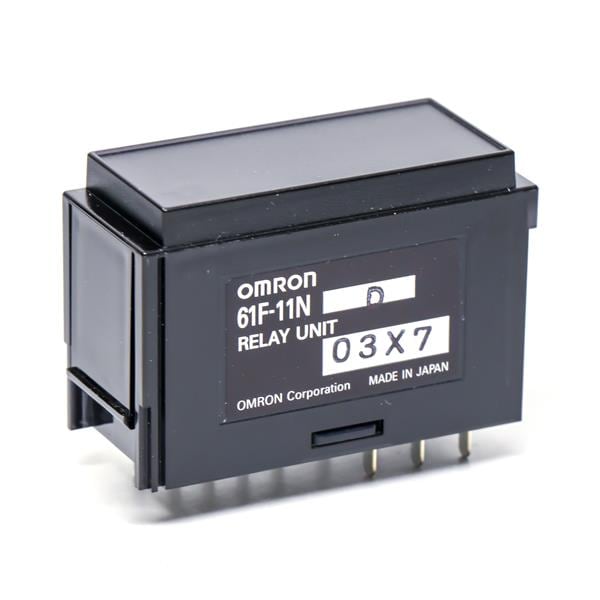
Some designs are intended for compact panel integration, while others are plug-in modules suited to maintenance-friendly replacement. Products in this category also show a variety of output arrangements, including SPDT, DPDT, and relay-based switching, which can be matched to the required control circuit and load interface.
For applications where the switching function itself is the main requirement, users may also review options in the related level relay category. The distinction often comes down to application architecture, sensing method, and how much logic or adjustment is needed at the device level.
Examples from leading product lines
Several well-known manufacturers are represented in this category, including Omron Automation and Safety, Littelfuse, Crouzet, and HANNA. These brands are frequently selected for industrial automation, utility control, and panel-building projects where proven relay behavior and practical mounting options matter.
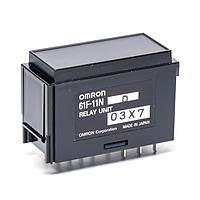
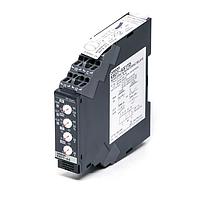
Examples include the Omron Automation and Safety 61F series such as 61F-G3NH AC110/220, 61F-INL AC110/220 2KM, 61F-G2N AC110/220, and 61F-GND AC110/220, which are commonly associated with conductive level control tasks. For more compact or newer control formats, the K8DT-LS1CD provides another Omron Automation and Safety option for conductivity-based level applications.
From Littelfuse, models such as LLC44B5F100, LLC24A2AN, LLC56AA, and LLC16A25AX illustrate different mounting and control styles for liquid level switching and pump control. The Crouzet 84870700 adds a DIN-rail solution with filling and emptying functionality, while the HANNA HI7871/220 Mini Level Controller is relevant where compact level management is needed with matching sensing accessories and transmitter components.
How to choose the right level controller
Selecting the right device starts with the process itself: what liquid is being controlled, what action should happen at each level point, and how the controller will fit into the electrical panel. The sensing principle is critical, especially in conductive liquid applications where electrode-based controllers are often used. Mounting format also matters, since panel mount, plug-in, and DIN-rail designs each suit different maintenance and enclosure preferences.
It is also important to check the supply voltage, output contact arrangement, environmental limits, and whether visual indication is needed. Some controllers are very compact and optimized for straightforward relay switching, while others provide clearer status indication or support dedicated filling/emptying logic. If the process requires local visual checking in addition to control, a complementary level gauge may be useful in the wider system design.
Integration in pump and tank systems
In practical use, level controllers are often part of a broader pump protection and tank automation strategy. A controller may stop a pump when a vessel reaches low level, start refill when the liquid drops below a set point, or activate an alarm when the high level condition is reached. This kind of control helps reduce manual intervention and improves process consistency.
For bulk solids rather than liquids, other technologies are more appropriate. If the challenge is material flow in hoppers or bins, equipment such as bin vibrators addresses a different problem in the broader level and flow handling environment. That distinction is useful when specifying equipment for mixed industrial facilities.
Why device format and maintenance access matter
Beyond sensing and switching logic, physical format can strongly affect long-term serviceability. Plug-in octal designs can simplify replacement during maintenance, while DIN-rail units help standardize modern control cabinet layouts. Panel-mounted controllers may be preferred where dedicated front-panel access and established wiring practices are already in place.
In B2B environments, these details can influence downtime, spare parts planning, and retrofit compatibility. Matching the controller style to the existing cabinet design often saves more time than focusing only on basic electrical ratings. This is especially relevant when replacing legacy level control hardware in utilities, OEM equipment, or building services systems.
Finding a suitable option for your application
The most suitable level controller depends on the control objective, sensing method, installation format, and the wider process architecture. Some users need a simple relay output for pump start/stop duty, while others need a compact controller that fits neatly into an existing automation panel. Reviewing the available product range by mounting style, electrical supply, and operating logic can make specification much easier.
Across industrial water handling, process control, and equipment protection applications, this category provides practical solutions for reliable liquid level management. If you are comparing models for new installation, replacement, or panel design, focus on the sensing approach, relay behavior, and installation constraints to narrow the best fit with confidence.
Get exclusive volume discounts, bulk pricing updates, and new product alerts delivered directly to your inbox.
By subscribing, you agree to our Terms of Service and Privacy Policy.
Direct access to our certified experts