
Level Data Logger
Reliable water level records are essential for groundwater studies, surface water projects, landfill leachate observation, and long-term environmental monitoring. When measurements need to be collected continuously without constant manual checks, Level Data Logger devices help capture pressure- and level-related data over extended periods with stable, repeatable performance.
In this category, users can find data loggers designed for water quantity monitoring as well as models that add conductivity measurement for broader water quality correlation. This makes the range suitable for hydrogeological work, remediation projects, wetlands monitoring, aquifer storage and recovery, and other field applications where dependable unattended logging is a priority.
Where level data loggers are typically used
Level data loggers are commonly installed in boreholes, wells, piezometers, aquifers, surface water points, and monitoring networks where periodic readings are not enough. By storing measurements internally at defined intervals, they support trend analysis, seasonal comparison, event tracking, and long-duration field campaigns.
Typical applications in this category include groundwater and surface water monitoring, geohydrological research, water quantity assessment, and tidal or estuary observation. Some models also support conductivity-based analysis, which can help correlate salinity, TDS, nitrate, sulphate, permanganate, or related water quality changes in agriculture, remediation, and landfill environments.
Key device types in this category
This category includes different logger families with distinct monitoring roles. Standard water level loggers focus on accurate long-term pressure-based level measurement, while combined CTD models add conductivity and temperature-related context for more advanced environmental interpretation.
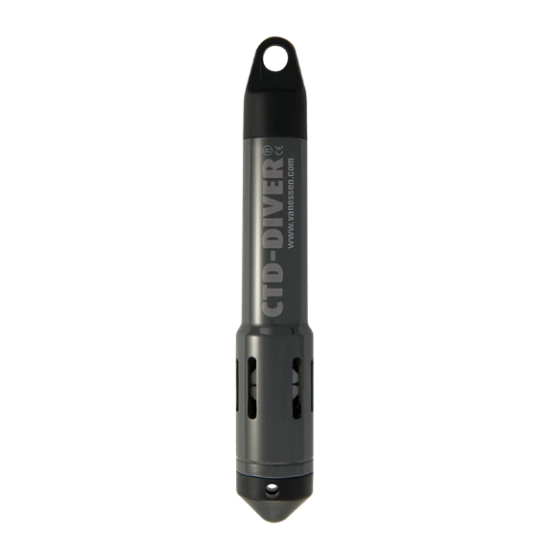
Examples from Eijkelkamp include the Cera-Diver, TD-Diver, and CTD-Diver series. In practical terms, this gives buyers options ranging from compact long-life level logging for groundwater projects to multi-parameter logging for sites where both water level and conductivity behavior matter.
Example products for groundwater and environmental monitoring
For applications centered on water quantity and long-term level tracking, the Eijkelkamp 11.11.03.02 Cera-Diver water level logger (10m; 0.06cmH2O) and the Eijkelkamp 11.11.03.08 Cera-Diver water level logger (100m; 0.36cmH2O) illustrate how the same logger family can cover different depth ranges. These models are positioned for geohydrological research, groundwater monitoring projects, and long-duration installations where compact construction and stable logging intervals are important.
The Eijkelkamp 11.11.04.02 TD-Diver water level logger (10m; 0.06cmH2O) and Eijkelkamp 11.11.04.08 TD-Diver water level logger (100m; 0.36cmH2O) provide another option for users comparing range, memory approach, and housing characteristics. For applications that require both water level and conductivity observation, the Eijkelkamp 11.11.60.01 CTD-Diver water level logger (10m) through the Eijkelkamp 11.11.60.04 CTD-Diver water level logger (200m) extend the category into broader hydrochemical monitoring scenarios.
How to choose the right level data logger
The first selection factor is usually measurement range. Shallow wells, small tanks, and short monitoring columns may only need 10 m or 20 m versions, while deeper boreholes or more demanding hydrogeological installations may require 50 m, 100 m, or even 200 m capability. Choosing excessive range is not always ideal if the application benefits from finer resolution in a lower range model.
The second factor is the parameter set. If the requirement is strictly water level or pressure-derived level logging, a dedicated level logger may be sufficient. If the project also needs conductivity trends for salinity intrusion, wetland change, tidal influence, or leachate assessment, a CTD-style logger can be more appropriate than using separate instruments.
It is also important to review memory capacity, sampling interval flexibility, housing material, submersion protection, operating temperature, and battery life. In remote monitoring programs, these practical details often have a direct impact on service intervals, data continuity, and overall field maintenance effort.
Why long-term logging matters in field projects
A single spot reading can confirm the current level, but it rarely explains how the site behaves over time. A logger captures fluctuations caused by recharge events, pumping cycles, seasonal changes, tidal effects, and slow environmental shifts that would otherwise be missed between manual visits.
This is especially valuable in groundwater investigations, remediation sites, and agricultural water studies where decisions depend on trend quality rather than isolated numbers. For projects that need a broader measurement ecosystem, related categories such as level transmitters or a level gauge may also be relevant depending on whether continuous output, local indication, or autonomous data storage is the main requirement.
Materials, durability, and deployment considerations
Many environmental monitoring points are harsh by nature: submerged installations, remote wells, changing temperatures, and long service intervals are common. That is why buyers often look beyond range alone and evaluate enclosure material, corrosion resistance, ingress protection, and expected battery life before standardizing on a logger platform.
Within the featured products, users will notice designs intended for extended underwater use, with compact dimensions suited to narrow installations and memory capacities intended for long logging campaigns. These characteristics make level data loggers well suited for unattended deployment where robust construction and predictable performance are more important than frequent operator interaction.
Integrating data loggers with broader level monitoring systems
A level data logger is often one part of a wider monitoring strategy. Some sites use autonomous loggers for historical trend collection while also using a level controller or level relay for alarms, switching, or process actions. This combination is common when a project needs both operational control and long-term environmental records.
For B2B buyers, the best choice usually depends on whether the priority is standalone field logging, process integration, multi-parameter water monitoring, or a combination of these needs. Reviewing the site conditions, required depth range, and expected logging duration will narrow the options quickly and help match the logger to the actual monitoring objective.
Final considerations
This category is intended for projects where continuous level monitoring and dependable stored data are more valuable than occasional manual readings. Whether the requirement is a compact groundwater logger, a deeper-range unit for hydrogeological work, or a CTD model for combined level and conductivity tracking, selecting the right device starts with the real site conditions and the data you need to collect over time.
By comparing range, resolution, logging interval, memory, and environmental suitability, buyers can identify a level data logger that supports both immediate measurement needs and long-term project reliability. If your application also involves indication, transmission, or control, related level measurement categories can help complete the system around the logger.
Get exclusive volume discounts, bulk pricing updates, and new product alerts delivered directly to your inbox.
By subscribing, you agree to our Terms of Service and Privacy Policy.
Direct access to our certified experts