Level sensor
Reliable level detection is a basic requirement in tanks, dosing systems, process lines, water treatment equipment, and OEM machinery. When the goal is to prevent overflow, protect pumps from dry running, or confirm whether material is present at a defined point, the right level sensor helps turn a simple on/off condition into a dependable control signal for the wider system.
On this page, you can explore level sensing solutions used for liquids and, in some cases, bulk materials across industrial environments. The range includes technologies suited to compact machine integration as well as more demanding process applications where media type, mounting style, electrical interface, and environmental resistance all matter.
Where level sensors fit in industrial measurement and control
A level sensor is commonly used when the application needs a switching point rather than a full continuous measurement output. In practical terms, that means detecting conditions such as empty, full, high-high alarm, low-level protection, or presence of liquid at a specific location inside a vessel or pipe.
These devices are widely used alongside other level instruments. For applications that require continuous tracking instead of point detection, a level transmitter may be the more suitable option. In control panels and automation systems, level switches are also frequently paired with a level relay to process signals and drive alarms or outputs.
Common sensing technologies in this category
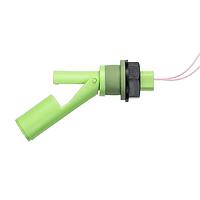
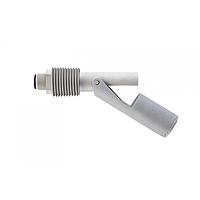
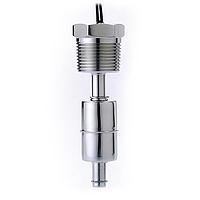
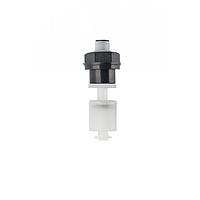
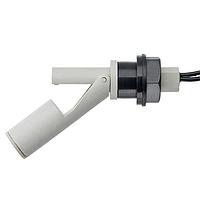
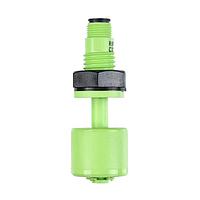
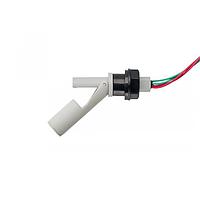
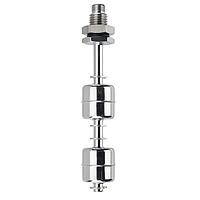
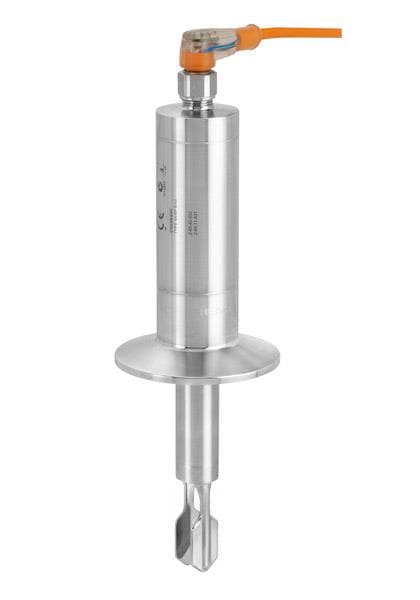
This category covers several established sensing principles, each with advantages depending on the process medium and installation constraints. Float-based sensors are often selected for straightforward liquid level switching, while vibronic level switches are valued in many industrial processes for stable operation and reduced dependence on media conductivity.
There are also capacitance level switches, which can be useful where the material’s dielectric properties support that method, and ultrasonic designs for non-contact detection or level monitoring in suitable vessels. Choosing among these technologies usually depends on whether the medium is conductive or non-conductive, clean or coated, turbulent or still, and whether the process calls for hygienic fittings, compact installation, or longer insertion lengths.
Representative products and practical use cases
Several products in this category illustrate the breadth of available solutions. The Endress+Hauser FTL33 and FTL31 series represent compact vibronic switching devices for liquid level detection, suitable for applications where a robust point-level signal is needed. The Endress+Hauser FTC262 shows how capacitance-based detection can support specific tank or vessel requirements, while the Endress+Hauser FMU30 demonstrates an ultrasonic approach for level sensing in selected liquid and solid applications.
For more application-specific designs, the Pepperl+Fuchs LVL-A7-BG4B-E5PU-CG..EMS highlights a float-based sensing format, and the Omron Automation and Safety F03-16SFC-10M reflects the role of accessory or sensor-related components in a liquid sensing system. Although this page is focused on level sensing, some listed products such as OMEGA FMA6702, OMEGA FMA6612, and Festo SFAM-62-1000L-TG12-2SV-M12 belong to adjacent measurement tasks involving flow, which is often closely related in skid, process, and machine design.
How to choose the right level sensor
Selection usually starts with the medium itself. Liquids with foam, buildup, changing density, or aggressive chemistry may influence which sensing principle is most dependable. Mounting position also matters: top-mounted, side-mounted, and in-pipe installations can lead to different sensor styles, especially when space is limited or the switching point must be tightly controlled.
Next, review the electrical and mechanical interface. In many OEM and factory automation environments, users look for common supply ranges such as 10 to 30 VDC, PNP outputs, and M12 connectivity. In process plants, AC/DC compatibility, relay outputs, enclosure rating, process connection type, and wetted material are often just as important as the sensing principle itself.
If the application needs visual verification at the vessel or a simpler local reading, a level gauge may complement the sensor. For systems that need direct output handling and automated fill or drain logic, a level controller can be part of the same control architecture.
Manufacturer options for different project needs
This category includes products from recognized industrial suppliers with experience across sensing and automation. Endress+Hauser is strongly represented here, particularly in compact point-level and process-oriented devices. Their range in this selection covers vibronic, capacitance, and ultrasonic sensing approaches, making them relevant for users comparing technologies within one brand ecosystem.
Other notable names in the broader category context include Festo, OMEGA, Omron Automation and Safety, and Pepperl+Fuchs. Each may align with different machine-building, process, or control integration requirements, depending on whether the priority is compact installation, standard industrial connectivity, or compatibility with existing automation hardware.
Application environments and integration considerations
Level sensors are used in a wide range of industries, including food and beverage machinery, water and wastewater systems, packaging lines, chemical handling equipment, and utility tanks. In each case, the installation environment affects product selection: vibration, washdown, temperature, process pressure, and media contamination risk can all influence long-term performance.
For integration, it is important to consider not only the sensor output but also how the signal will be used. A simple switching output may feed a PLC input, trigger an alarm, stop a pump, or enable a downstream process step. In more complete systems, the level sensor becomes one element within a broader measurement chain that may also include flow monitoring, pressure sensing, and control logic.
Finding the right fit for your level sensing requirement
The most suitable solution depends on the process objective: point detection, overflow prevention, dry-run protection, interface control, or basic presence monitoring. From compact vibronic switches to float, capacitance, and ultrasonic designs, this category supports a range of industrial level sensing needs without forcing a one-technology-fits-all approach.
If you are comparing options, focus on the medium, mounting arrangement, electrical interface, and how the signal will be used in the system. A well-matched level sensor can simplify control design, improve operating reliability, and help maintain safer, more consistent process conditions.
Get exclusive volume discounts, bulk pricing updates, and new product alerts delivered directly to your inbox.
By subscribing, you agree to our Terms of Service and Privacy Policy.
Direct access to our certified experts