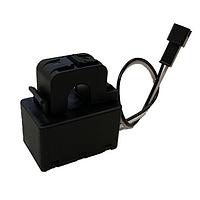
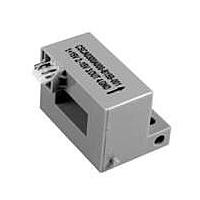
Industrial Current Sensors
Reliable current measurement is fundamental in modern control panels, motor circuits, power distribution assemblies, and machine monitoring systems. Whether the goal is protection, energy tracking, leakage detection, or process feedback, Industrial Current Sensors help convert electrical current into a usable signal for controllers, monitoring devices, and safety circuits.
In industrial environments, the right sensor is not chosen by current range alone. Engineers typically also look at sensing method, isolation, response time, output type, mounting style, and whether the application involves AC, DC, or bidirectional measurement. This category brings together devices suited to those practical requirements, from compact board-level sensing parts to panel-oriented monitoring components.
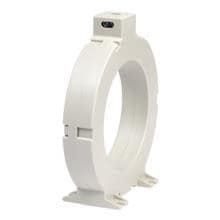
Where industrial current sensors are used
Current sensing plays a central role in equipment health monitoring and electrical protection. In industrial automation, these devices are commonly used to detect load presence, verify motor operation, monitor branch circuits, identify overload or ground-fault conditions, and provide analog or switching signals to higher-level control systems.
They are also useful when current data must be integrated into a broader sensing architecture. For example, a machine builder may combine current monitoring with flow sensors & pitot tubes in pumping systems, or pair electrical load feedback with environmental inputs such as air quality sensors in facility management applications.
Common sensing approaches in this category
Industrial current sensors are available in both open-loop and closed-loop designs. Open-loop sensors are often selected for compactness and cost efficiency, while closed-loop devices are commonly preferred when higher accuracy, improved linearity, or faster dynamic performance is important. The best choice depends on the precision level required and the electrical characteristics of the measured circuit.
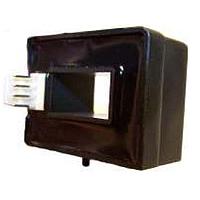
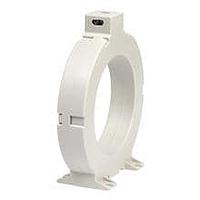
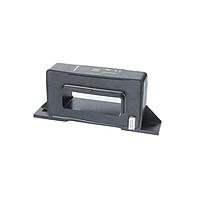
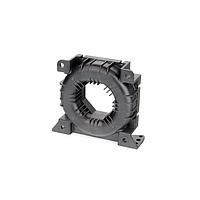
This category also includes specialized devices for leakage and zero-phase detection. Components such as the KEMET MR-2 and MR-3 zero-phase current transformers are relevant where differential current monitoring is needed, while Eaton CurrentWatch models are suited to panel applications that focus on status detection, switching, or fault-related monitoring.
Examples of products available
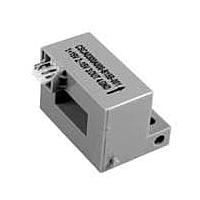
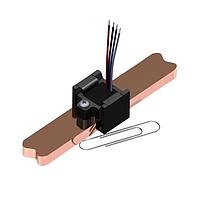
Several product types illustrate the breadth of the range. From KEMET, examples include compact current sensing parts such as the USETR053AA0000 and USETR054AA0000, as well as the FG-R02-4A and FG-R05-3A families that support low-current measurement in space-constrained designs. These are relevant when designers need integration-friendly solutions rather than large enclosure-mounted hardware.
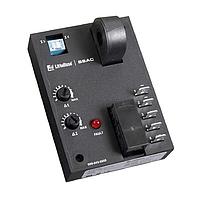
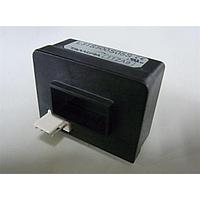
For higher-level industrial monitoring, Eaton offers CurrentWatch devices such as the EGF1NCACDE100, EGF3NCDCNET3, EGF1NODCNE050, ECSD212SC, and EDC410SPY1. Within this group, some models are oriented toward ground-fault or leakage-related monitoring, while others are intended for current switching or analog current feedback in control systems. For higher-current closed-loop measurement, the Honeywell CSNV700N-424 is an example of a flux gate industrial sensor designed for demanding sensing tasks.
What to consider when selecting a current sensor
The first step is matching the sensor to the electrical behavior of the application. Consider whether the measured current is AC, DC, or both, and whether the signal changes direction. A unidirectional load-monitoring task may need a different device than a bidirectional DC drive or battery-related circuit.
Next, review the required output format. Some applications need an analog output for PLC or controller input cards, while others benefit from solid-state or relay-style switching outputs for alarm, trip, or simple presence detection. Isolation level, frequency range, supply voltage, and installation space are equally important, especially in dense panels or systems with strict safety separation requirements.
Environmental conditions should not be overlooked. Temperature range, expected electrical noise, and response time can all affect performance in real installations. In many industrial settings, stable operation matters more than selecting the most sensitive device on paper.
Current sensing for protection and diagnostics
Not every current sensor serves the same purpose. Some are used for continuous measurement and trending, helping maintenance teams understand how equipment behaves under changing load. Others are used mainly for threshold detection, where the system only needs to know whether current is present, above a limit, or indicative of a fault condition.
This distinction is important for specification and integration. A sensor used for diagnostics in a motor feeder may support predictive maintenance, while a leakage-monitoring unit may be selected primarily for safety and compliance logic inside a protection circuit. Understanding that difference helps narrow the product shortlist more quickly.
Fit within a broader industrial sensing system
Current sensors rarely operate alone. In practical machine and plant designs, they are often part of a larger sensor network that includes process, position, or environmental feedback. For example, machine builders may combine electrical load monitoring with inclinometers on moving equipment, or correlate current draw with optical feedback from color sensors in automated inspection or packaging systems.
Looking at current sensing as part of the wider automation architecture makes product selection more effective. It helps define not just the sensor itself, but also the required signal conditioning, controller compatibility, and maintenance visibility expected from the finished system.
Choosing the right option for your application
If your application centers on compact electronic integration, low-current measurement, or zero-phase detection, KEMET parts in this category provide useful options. If the requirement is panel-mounted monitoring, current switching, or fault-oriented sensing in industrial power circuits, Eaton CurrentWatch models are often more aligned with that use case. Where higher-current, closed-loop measurement is needed, Honeywell solutions may be more relevant.
The most effective selection process usually starts with the actual use case: measurement, switching, leakage detection, protection, or diagnostics. From there, it becomes easier to compare sensing method, output, current range, and mounting style without over-specifying the design.
Conclusion
Choosing industrial current sensing hardware is ultimately about application fit, not just electrical range. The products in this category support a wide range of needs, from compact embedded sensing to panel-level monitoring and protection. By focusing on signal type, sensing principle, isolation, output requirements, and installation context, engineers and buyers can identify a sensor that integrates cleanly into the broader automation system and delivers reliable long-term performance.
Get exclusive volume discounts, bulk pricing updates, and new product alerts delivered directly to your inbox.
By subscribing, you agree to our Terms of Service and Privacy Policy.
Direct access to our certified experts