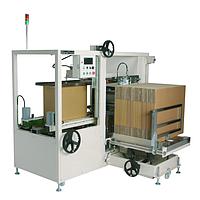
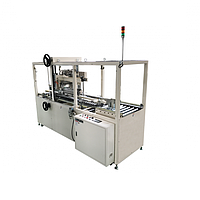
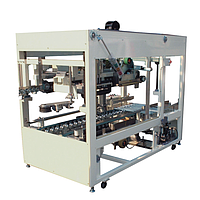
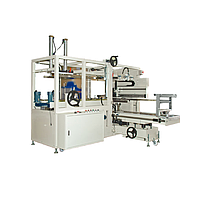
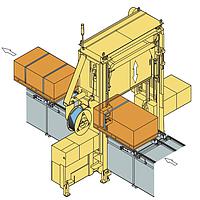
Auto case erector
Reliable carton forming is one of the first requirements for a stable end-of-line packaging process. When boxes are not erected consistently, downstream sealing, packing, and palletizing steps can slow down or stop altogether. For operations handling repetitive carton preparation, an auto case erector helps standardize box forming, reduce manual labor, and improve overall line efficiency.
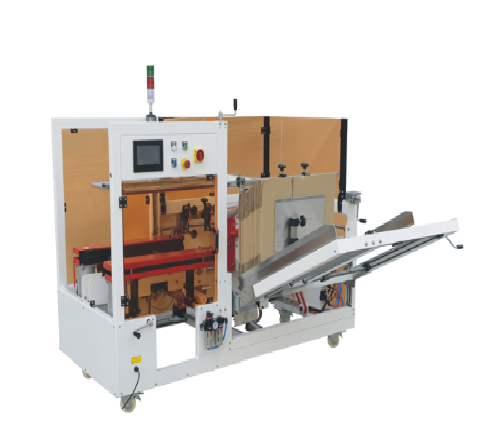
Why auto case erectors matter in packaging lines
In industrial packing environments, case erecting is more than a simple box-opening step. It affects carton shape, alignment, adhesive or tape application, and the ability of the next station to receive each case without interruption. A properly selected machine supports smoother material flow and helps maintain repeatable packaging quality.
Compared with manual box setup, automated systems are better suited to lines that require higher throughput, reduced operator intervention, or more predictable output. They are commonly used where cartons must be opened, formed, and transferred in a controlled sequence before filling and closing.
How an automatic case erector fits into the line
An automatic case erector typically takes flat cartons, opens them into shape, and prepares them for the next packaging stage. In many installations, it works as part of a broader sequence that may also include case packing equipment, sealing stations, and product identification steps.
For facilities building a more complete end-of-line system, the erector is often paired with a carton sealer after the box has been filled. This creates a more continuous workflow, especially in lines where carton handling must remain consistent from forming to final closure.
Common features buyers usually look for
Selection criteria often depend on carton size range, available floor space, desired speed, and the level of automation required. In practice, buyers also pay close attention to how easily the machine integrates with conveyors, PLC-based line control, and operator interfaces used for setup or troubleshooting.
Useful design elements in this category can include compact machine layout, stable carton opening, and mechanisms that reduce box misalignment before the case proceeds downstream. In automated environments, functions that support reliable feeding and minimize failed cartons are especially important because they help reduce unplanned stops.
Another consideration is whether the machine is intended for fixed carton formats or changing box sizes. Operations with mixed product packaging often prefer systems that simplify changeover or adapt more easily to line variations, while dedicated lines may prioritize stable output for a narrower carton range.
Examples from the Strapack range
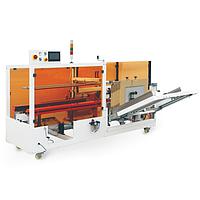
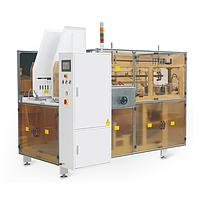
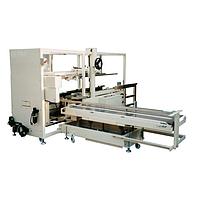
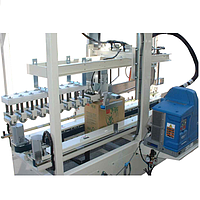
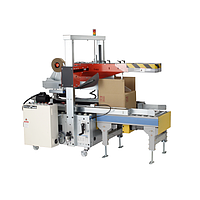
Within this category, Strapack offers several machines that illustrate how auto case erecting equipment can be used in practical packaging setups. The Strapack HF-5N Box-Making Machine is positioned as a HOT MELT carton erector with a compact L-shaped design, making it relevant where space efficiency and line integration are important.
The Strapack AF-5NS Box-Making Machine also reflects common buyer priorities in this segment. Features such as a touch panel for operation support, a vacuum pump suction system for carton opening, and side belt control for alignment show the kind of functional details that matter when line uptime and repeatability are key decision factors.
Although product configurations vary by application, these examples highlight a broader point: an auto case erector is not only about opening cartons, but about preparing each case consistently so that the next machine receives it in the right condition and at the right pace.
Integration with sealing and strapping processes
Case erecting is rarely an isolated process in industrial packaging. Once cartons are formed and filled, they commonly move to sealing and load stabilization steps. That is why many buyers evaluate this category in relation to the full packaging line rather than as a standalone machine purchase.
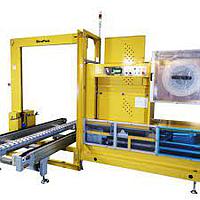
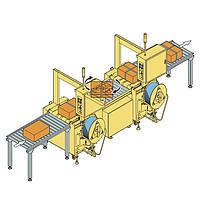
For example, Strapack systems such as the AS-5S, AS-6S, T-402 Series, and AS523C show how carton sealing can be integrated into automated workflows. In applications where outer-pack security or transport stability is critical, strapping systems such as the Strapack Top Seal Strapping System, Cross Strapping Systems, or Pallet Stabilizing Systems can extend automation beyond carton forming and closure.
Lines that also require product coding or visual identification may be planned alongside a labeling machine, helping create a more connected packaging process from case setup to final dispatch.
How to choose the right system
Choosing the right equipment starts with understanding the production environment. Buyers should consider carton dimensions, target throughput, available utilities, line layout, and the level of synchronization needed with upstream and downstream stations. In many cases, the best choice is the model that fits the process reliably, not simply the one with the most features.
It is also useful to review how the machine handles operator interaction. A clear control interface, practical maintenance access, and stable carton handling can have a significant impact on daily operation. Where reduced intervention is a priority, equipment designed for automatic line integration and lower fault rates may be a better fit.
If the application involves frequent box changes, random carton sizes, or a combination of erecting and sealing stages, it may also be worth comparing related equipment categories. Some projects benefit from evaluating the full packaging sequence, including complementary solutions such as a blister packing machine in broader production environments where primary and secondary packaging must align.
Typical applications in B2B environments
Auto case erectors are used across manufacturing, warehousing, and distribution settings where large numbers of shipping cartons must be prepared efficiently. They are especially relevant in facilities that need repeatable carton forming before automated filling, sealing, and pallet handling.
These systems are commonly evaluated by production engineers, plant managers, packaging integrators, and procurement teams looking to improve labor efficiency while supporting more consistent end-of-line performance. In this context, machine compatibility with the rest of the packaging cell is often as important as the erector itself.
Final considerations
When carton setup becomes a bottleneck, moving from manual forming to an automated solution can improve consistency across the whole packaging line. The right auto case erector should match carton requirements, support smooth integration, and help maintain stable downstream operation.
For buyers comparing solutions in this category, it is helpful to look beyond the basic box-forming function and assess how the machine contributes to the wider packaging workflow. A well-matched system can support more reliable case handling from the first erected carton to the final sealed and stabilized load.
Get exclusive volume discounts, bulk pricing updates, and new product alerts delivered directly to your inbox.
By subscribing, you agree to our Terms of Service and Privacy Policy.
Direct access to our certified experts