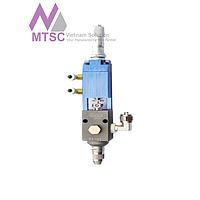
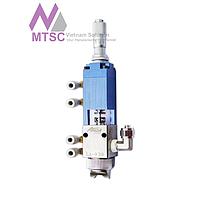
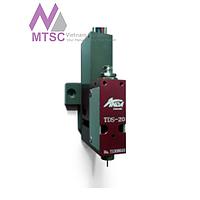
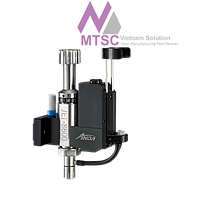
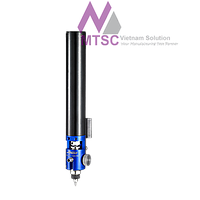
Fluid Dispensing Valves
Accurate fluid application is critical in many production environments, especially when adhesive volume, line width, dot size, or coating consistency directly affect product quality. In these situations, Fluid Dispensing Valves play a central role by controlling how material is delivered onto the workpiece with repeatable flow and placement.
This category is relevant for manufacturers working with solder paste, UV adhesive, encapsulation materials, sealants, underfill, and conformal coating media. Whether the process requires micro-dot dispensing, narrow bead application, spray coating, or handling particle-filled fluids, selecting the right valve type helps improve throughput, reduce waste, and support more stable automation results.
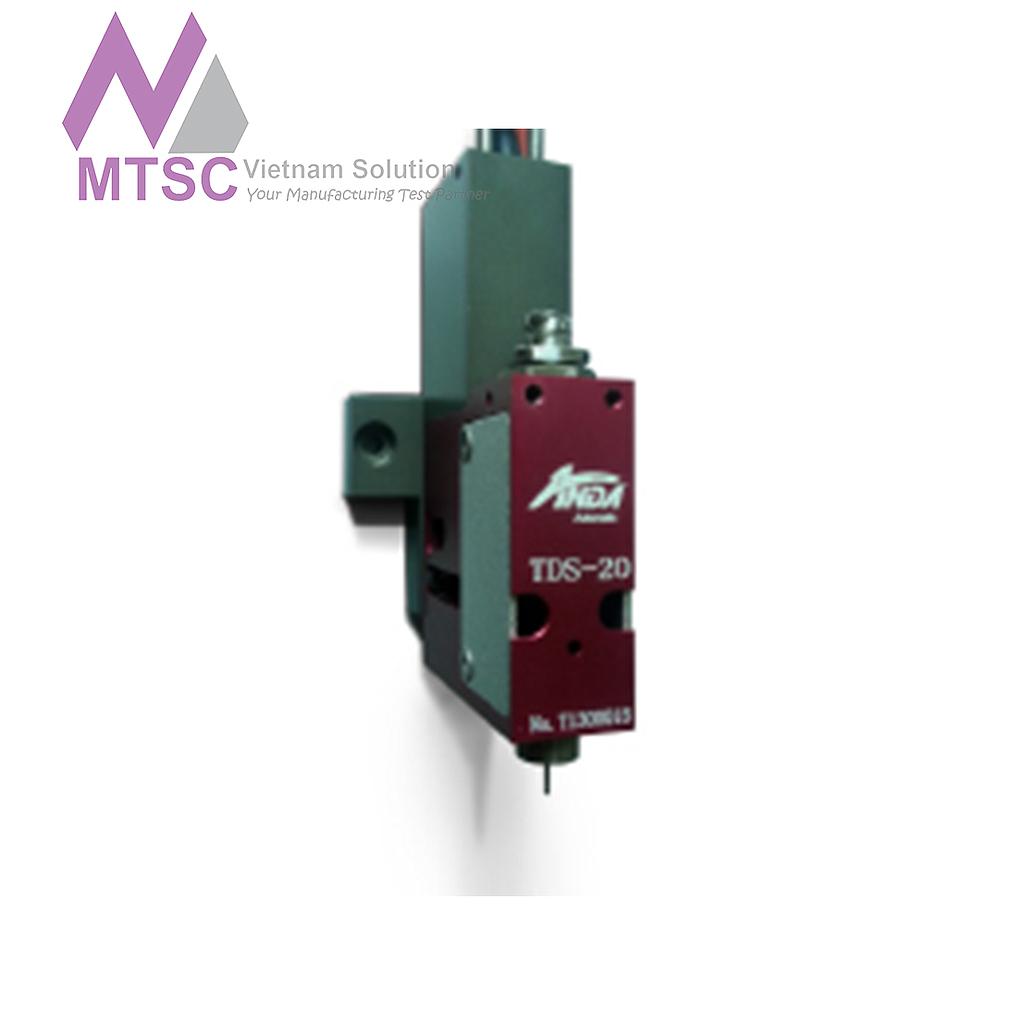
Where fluid dispensing valves are used
Dispensing valves are widely used in electronics manufacturing, assembly automation, sealing, potting, and selective coating tasks. Their function is not limited to simply opening and closing material flow; they also influence deposition accuracy, cycle time, edge definition, and the ability to process fluids with different viscosities.
In practical applications, the required output may vary from a fine dot to a controlled line or a broader spray pattern. That is why this category includes several valve styles suited to different process goals, from precise adhesive placement to fan-shaped conformal coating coverage. In production lines where downstream packaging and handling are also automated, related equipment such as a labeling machine may be part of the broader system around the dispensing station.
Common valve types in this category
One of the main differences between dispensing solutions is the dispensing mechanism. Needle valves are often chosen for controlled bead, dot, potting, or encapsulation tasks where directional placement matters. Spray valves are more suitable when a coating film must be distributed over a defined width, while screw or slider-based designs can be useful for thicker materials and applications requiring stable extrusion.
For example, the Anda DJ-01 Needle Valve is suitable for single-component dispensing and coating tasks that demand controlled access to narrower or harder-to-reach areas. The Anda LA-W30 Fan Spray Valve, by contrast, is designed for repeatable fan-pattern coating, making it relevant when broader and more uniform coverage is needed rather than a narrow deposited line.
Handling different fluid characteristics
Material behavior is one of the most important factors when selecting a valve. Low- to medium-viscosity fluids may perform well with spray or needle-based systems, while pastes, particle-containing media, or thicker adhesive compounds often require a design that can maintain smoother feed and more consistent output.
The Anda SV-05 dispensing valve is a good example of a valve intended for precise extrusion and uniform dispensing, especially where detachable wetted parts are helpful for cleaning and maintenance. The Anda TDS-25 Radial Slider Valve also fits applications involving paste-like materials and fluids containing metal particles, where dispensing stability and low residual pressure can be important for process control.
Process considerations for choosing the right valve
The right valve is usually determined by a combination of fluid type, target pattern, cycle speed, maintenance requirements, and how the dispensing head fits into the automation layout. A process that requires very small dots and narrow lines may prioritize fine control at the nozzle, while a coating application may focus more on spray width and film repeatability.
It is also important to evaluate whether the process uses compressed air, motor-driven actuation, or another drive principle. The Anda Jet-8600 dispensing valve, for instance, is a pneumatic injection valve suited to high-speed dispensing scenarios and a wide viscosity range, making it relevant for adhesives, silver paste, underfill, and sealing materials used in electronics and component assembly.
Maintenance, cleaning, and production continuity
In industrial dispensing, performance is not only about accuracy on day one. Long-term usability depends on how easily wetted parts can be cleaned, replaced, or detached during routine maintenance. This matters even more when changing between materials or when the fluid contains particles that may increase the risk of buildup.
Valves with detachable fluid-contact components can support faster service intervals and reduce downtime. That benefit is especially practical in production environments where dispensing is only one stage in a larger automated flow that may include handling, packing, or transfer equipment such as a case packer or a carton sealer.
Anda solutions in this category
Anda is the main manufacturer represented in this category, with valve options covering multiple dispensing and coating requirements. Rather than focusing on one single process, the range supports different application styles, including needle dispensing, fan spray coating, pneumatic jet dispensing, screw-based extrusion, and slider valve operation for paste-like media.
This makes the category useful for engineers comparing solutions across different material types and line requirements. Instead of selecting by model name alone, it is better to match the valve structure to the process objective: fine line accuracy, spray width control, compatibility with higher-viscosity materials, or simplified cleaning for frequent production changeovers.
How to evaluate valves for an automated line
When integrating a valve into an automated system, buyers typically assess several points together: required output pattern, acceptable tolerance, fluid rheology, maintenance frequency, and compatibility with the existing dispensing platform. A valve that performs well in a manual test may still need further review for continuous operation, especially if takt time and repeatability are critical.
It is also useful to consider the surrounding process flow. In some factories, dispensing is positioned upstream of inspection, curing, product handling, or packing. If the line is part of a wider packaging setup, equipment such as an auto case erector may become relevant at later stages, even though the valve itself serves a much more precise fluid-control function earlier in production.
Choosing with application fit in mind
This category is best approached as a set of process tools rather than a simple list of components. Some applications need highly controlled dots for SMT adhesive or die attach work, while others require broader coating coverage, support for filled materials, or stable dispensing under higher production speeds. Understanding the relationship between fluid properties and valve mechanism is the key to narrowing down suitable options.
For buyers comparing industrial dispensing hardware, the most effective approach is to start from the application: what material is being dispensed, what pattern is required, and how the valve will operate within the automation cycle. With that perspective, this range of fluid dispensing valves can support more reliable selection for coating, bonding, sealing, and encapsulation processes across modern manufacturing lines.
Get exclusive volume discounts, bulk pricing updates, and new product alerts delivered directly to your inbox.
By subscribing, you agree to our Terms of Service and Privacy Policy.
Direct access to our certified experts