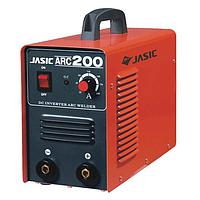
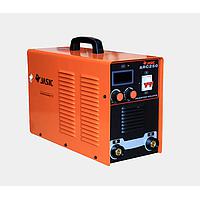
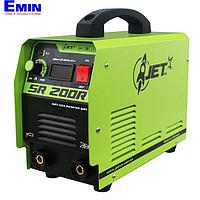
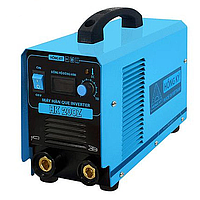
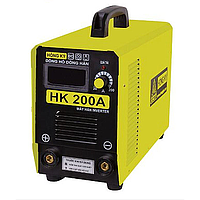
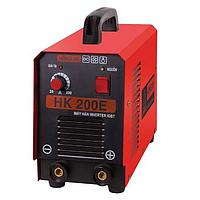
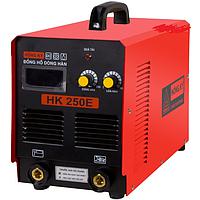
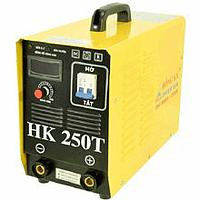
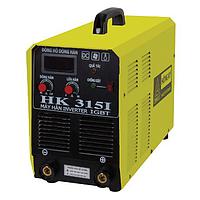
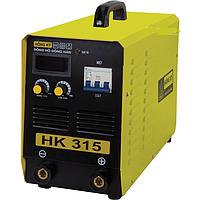
Arc welding machine
When fabrication, repair, or on-site steel work calls for a practical welding process, arc welding machines are often the first equipment type engineers, workshop owners, and maintenance teams consider. They are widely used because they support common stick welding tasks, work across many metalworking environments, and are available in compact inverter designs as well as heavier-duty configurations.
On this category page, you can explore arc welding equipment suited to general fabrication, installation work, light industrial maintenance, and construction-related applications. The range includes models for different input power conditions, electrode sizes, duty cycle needs, and portability requirements, making it easier to compare machines based on actual working conditions rather than only headline current ratings.

How arc welding machines are used in practice
An arc welding machine generates heat through an electric arc formed between the electrode and the workpiece. That concentrated heat melts the base material locally, allowing the operator to create a welded joint without heating the entire part. In day-to-day industrial use, this makes the process suitable for structural steel repair, frame assembly, workshop fabrication, and field maintenance.
For many buyers, the appeal is the balance between process simplicity and application flexibility. Arc welding remains a practical option when working outdoors, handling routine steel components, or needing a machine that can be moved between job sites. If your workflow also includes cutting before joining, it may be useful to review the plasma cutter range alongside welding equipment.
Typical equipment types within this category
Although many users search for one general product type, arc welding equipment can cover several machine styles. Compact inverter units are often preferred where low weight, easier transport, and stable output are important. They are commonly chosen for maintenance teams, installation contractors, and small workshops that need dependable stick welding without the size of older transformer-based systems.
Traditional transformer models still matter in some environments, especially where users prioritize familiar operation and simple construction. If you are comparing these two approaches, the dedicated transformer welding machine category can help clarify the difference in form factor and use case. In more mixed production settings, some buyers may also evaluate a multi-function welding machine to cover broader welding tasks with one platform.
What to consider before choosing a machine
The first point is the input power supply. Some machines are designed for single-phase 220V operation, which is often suitable for workshops, service teams, and lighter-duty production environments. Others support 380V or broader power options, which can be more appropriate for industrial sites that require higher output stability or longer operating periods.
The second key factor is the electrode size and expected duty cycle. Buyers should match the machine to the electrodes they plan to use most often, not only the largest size the machine can support under limited conditions. It is also worth checking whether your work involves continuous welding on common electrodes or only intermittent repair work, because that directly affects productivity, thermal load, and machine longevity.
Portability, cable length tolerance, and thermal protection are also practical selection criteria. In field work, a lighter machine can reduce handling time significantly. In workshop use, arc stability and protection features may matter more than compact size, especially where machines are expected to run regularly across repeated welding jobs.
Examples from Hồng Ký and Megatec
Within this category, Hồng Ký is one of the notable manufacturers for buyers looking for compact electronic arc welding machines across different current ranges. Models such as the Hồng Ký HK200N Welding machine and HONG KY HK 200Z Welding Machine fit applications where users need a lighter unit for routine electrode welding with commonly used rod sizes. For higher output requirements, products like the Hồng Ký HK 250A Welding machine and Hồng Ký HK300A WELDING MACHINE illustrate options aimed at heavier day-to-day welding demands.
Megatec also offers several inverter-based solutions in this category. The Megatec ECL-120EF Inverter Arc Weldering Machine and Megatec ECL-160EF Inverter Arc Weldering Machine are relevant for lighter repair and fabrication tasks, while the Megatec ARC-315SV Inverter Arc Weldering Machine and Megatec ZX7-400E Inverter Arc Weldering Machine point toward higher-capacity applications, including environments where input supply and electrode requirements are more demanding.
These product examples are best viewed as reference points for comparing operating range, portability, and intended workload. The right choice depends less on the brand name alone and more on your actual material thickness, welding frequency, site power availability, and the level of continuous output your team requires.
Common applications across workshops and job sites
Arc welding is widely used in steel fabrication, support frame assembly, gate and railing production, maintenance of machinery structures, and construction-related installation work. Because stick welding can be practical in less controlled environments, it is also frequently selected for outdoor jobs where wind can be a challenge for other welding methods.
For maintenance departments, these machines are often used to restore worn metal components, reinforce brackets, repair frames, and handle general-purpose fabrication tasks without needing a highly specialized setup. For small manufacturers and mechanical workshops, they can serve as an accessible production tool for standard mild steel work and repair operations.
Advantages and limitations to keep in mind
One of the main strengths of this equipment class is application flexibility. Arc welding machines can support a broad range of repair and fabrication jobs, and many inverter models are easier to transport and set up than older machine designs. They are also commonly selected by users who want a straightforward welding process for regular steel work.
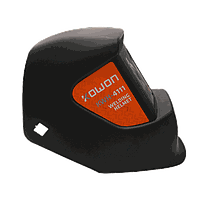
At the same time, performance depends heavily on operator skill, electrode selection, and workpiece condition. Slag removal is part of the process, and weld quality can be affected by technique, joint preparation, and machine-to-task mismatch. In addition, buyers should pay attention to ventilation, eye protection, gloves, and other welding safety practices because arc radiation, heat, and fumes remain important workplace hazards.
How to compare products on this category page
When browsing the available models, start with the basics: input voltage, usable current range, supported electrode diameter, and the overall size and weight of the machine. Then move to more practical points such as whether the unit is intended for light industrial work, mobile maintenance, or repeated welding in a fixed workshop environment.
It is also helpful to compare what comes with the machine, such as cable sets or connectors, because this affects setup time and total deployment cost. If your application extends beyond standard stick welding, reviewing adjacent equipment categories can help build a more complete welding setup without overbuying or choosing a machine that does not fit the actual process flow.
Final thoughts
A suitable arc welding machine should match the real conditions of your work: available power, electrode size, mobility needs, and expected welding frequency. Whether you are equipping a maintenance team, a fabrication shop, or a construction-focused workflow, comparing machines by application fit will usually lead to a better long-term choice than selecting by amperage alone.
This category brings together practical options from brands such as Hồng Ký and Megatec, with models that cover light-duty to more demanding welding tasks. By focusing on operating conditions, duty expectations, and portability, buyers can narrow down the most appropriate equipment for reliable everyday welding performance.
Get exclusive volume discounts, bulk pricing updates, and new product alerts delivered directly to your inbox.
By subscribing, you agree to our Terms of Service and Privacy Policy.
Direct access to our certified experts