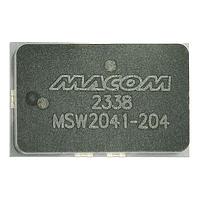
Diodes & Rectifiers
In power conversion, signal routing, and circuit protection, small discrete components often determine how stable and reliable the entire design will be. Engineers, buyers, and maintenance teams typically look at diode selection not as a single part decision, but as part of a broader electrical strategy involving current flow, voltage clamping, switching speed, thermal behavior, and package constraints.
Diodes & Rectifiers covers a wide range of devices used to direct current, convert AC to DC, protect sensitive inputs, stabilize voltage, and support high-frequency signal paths. Whether you are sourcing parts for industrial electronics, embedded systems, power supplies, or repair stock, this category helps narrow down the right component type for the job.
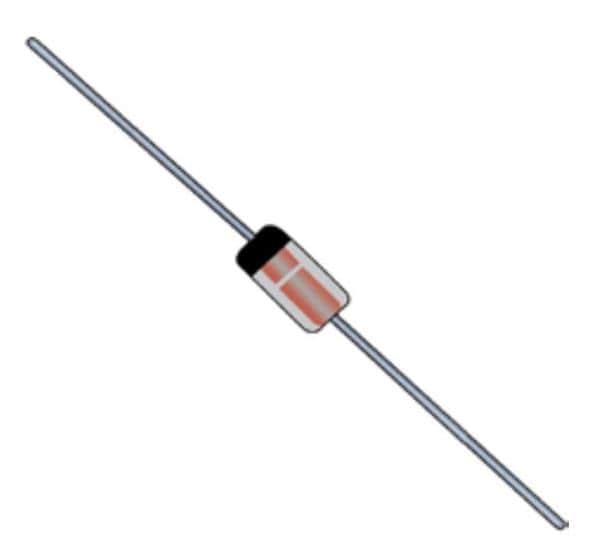
Where diodes and rectifiers are used in real designs
These components appear across control boards, communication hardware, power supplies, interface circuits, motor drives, and general electronic assemblies. A rectifier is commonly used where AC must be converted into usable DC, while other diode types support tasks such as voltage reference, reverse polarity protection, transient suppression, or fast switching in digital and RF circuits.
In practical terms, the right choice depends on the operating environment and electrical stress. Some applications need compact surface-mount parts for dense PCB layouts, while others prioritize surge handling, reverse voltage capability, or low leakage in standby circuits. If your requirement is centered more specifically on overvoltage defense, it may also be useful to review related surge protection devices.
Main device types found in this category
This category includes several functional groups rather than one single product style. Switching diodes are typically used for fast signal routing and general-purpose switching, Zener diodes are chosen for voltage regulation or reference functions, TVS devices are intended to clamp transient events, and rectifier diodes support current conversion and power path control.
For example, the Diodes Incorporated BAS21W is a switching diode suited to compact PCB implementations where controlled current flow and fast response are important. On the protection side, parts such as the ams OSRAM DM5W15AQ-13 TVS or Bourns SMCJ15CABDKR-ND TVS illustrate how transient suppression devices fit into the same discrete ecosystem, even though their role differs from a standard rectifier.
Where higher-level browsing is helpful, this category sits alongside other discrete semiconductor families such as transistors and discrete and power modules, which are often selected together in board-level design.
How to choose the right diode or rectifier
A good selection process starts with the application function. Ask whether the part is intended for rectification, regulation, clamping, switching, or RF use. From there, compare electrical parameters such as forward current, reverse voltage, breakdown or Zener voltage where relevant, package style, mounting format, and expected operating temperature.
Voltage and current ratings should always be evaluated with design margin rather than selected exactly at nominal operating level. For instance, a switching diode such as the BAS21W combines a compact package with a defined reverse voltage and current capability, while Zener parts like the Bourns CD0603-Z11 or Diodes Incorporated ZMM5242B-7 and ZMM5243B-7 are more relevant when the circuit requires voltage reference or simple regulation behavior.
Engineers should also consider response speed and failure mode. An RF diode such as the Broadcom 5082-3379#T25 serves a very different purpose from a rectifier or a TVS device, so choosing by part name alone is rarely enough. Matching the electrical role to the circuit function is usually more important than comparing package dimensions first.
Protection, regulation, and signal handling in one component family
One reason this category is so important is that it supports multiple design objectives at once. A single project may require one diode for reverse polarity protection, another for voltage regulation, and another for ESD or surge suppression at external interfaces. Grouping these products together makes sourcing easier for both prototype and production purchasing.
TVS diodes are especially relevant where external wiring, communication lines, or power inputs are exposed to transient events. Examples in this category include Diodes Incorporated D3V3L4U8MR-13, Bourns SMA6J120A, and ams OSRAM 15BJ30CAH. These parts are typically considered when circuit reliability depends on limiting short-duration overvoltage before it reaches sensitive downstream components.
For applications that focus more on standard current conversion and power path behavior, browsing the broader diodes and rectifiers range can help identify suitable rectification and signal diode options alongside protection-focused devices.
Examples of parts in this range
The product mix here reflects common sourcing needs across industrial and embedded electronics. Diodes Incorporated is represented with options such as BAS21W for switching, MMBZ5225BW-7 for Zener use, ZMM5242B-7 and ZMM5243B-7 for additional voltage regulation points, and JANTX1N5809 for rectifier-oriented applications. This range helps cover both signal-level and power-related design requirements.
Bourns also appears in the category with Zener and TVS options including CD0603-Z11, SMCJ15CABDKR-ND, and SMA6J120A, supporting designs where voltage control and transient protection are critical. For more specialized needs, ams OSRAM and Broadcom contribute examples used in suppression and RF-oriented applications respectively.
Because these devices serve different electrical roles, comparing them only by package or footprint can be misleading. A better approach is to filter by intended circuit function first, then validate the operating range and mounting requirements.
Typical sourcing considerations for B2B buyers
For OEM, MRO, and contract manufacturing environments, diode purchasing often involves more than replacing a single failed part. Buyers may need consistency across approved vendors, compatibility with assembly processes, and confidence that a selected device aligns with the original circuit intent. Surface-mount availability, temperature range, and voltage class are often used as early screening criteria.
It is also common to source these devices as part of a larger discrete semiconductor basket. Along with diode and rectifier requirements, teams may also evaluate related components such as thyristors when the design involves switching, triggering, or protection functions beyond standard diode behavior.
For maintenance stock, it helps to separate general-purpose switching and rectifier parts from application-specific TVS or RF devices. That distinction reduces selection errors and makes replacement planning more efficient, especially in mixed fleets of industrial equipment.
Finding the right fit for your application
The strongest results usually come from selecting by use case rather than by part family alone. Start with the circuit objective, confirm the relevant voltage and current window, then review package style, mounting method, and environmental conditions. This makes it easier to distinguish between a simple switching diode, a Zener regulator, a TVS protector, or a rectifier intended for power handling.
Across prototyping, production, and maintenance workflows, this category brings together the discrete building blocks needed for current control, voltage management, and circuit protection. If you are comparing options for a new design or replacement need, the available range in Diodes & Rectifiers provides a practical starting point for narrowing down parts that match the electrical function your application requires.
Get exclusive volume discounts, bulk pricing updates, and new product alerts delivered directly to your inbox.
By subscribing, you agree to our Terms of Service and Privacy Policy.
Direct access to our certified experts