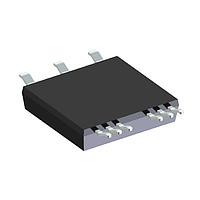
Discrete & Power Modules
Power conversion and switching designs often depend on the right semiconductor format as much as the right electrical rating. For engineers working on motor drives, inverters, industrial power supplies, welding equipment, renewable energy systems, or high-current switching assemblies, Discrete & Power Modules provide the core building blocks needed to handle voltage, current, and thermal demands with better design flexibility.
This category brings together power semiconductors used where standard low-power switching devices are no longer enough. It is especially relevant when a design must balance compact size, controllability, efficiency, and serviceability across industrial and electronic power applications.
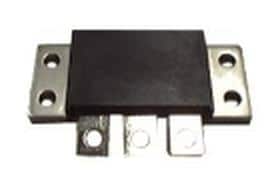
Where discrete devices and power modules fit in a design
In practical terms, these products are selected for circuits that need to switch or control significant power. Depending on the architecture, a designer may choose a single discrete IGBT for a targeted switching stage, or move to a module format when higher current handling, improved thermal performance, or easier mechanical integration is required.
This makes the category useful across both new product development and maintenance work. If you are comparing broader device options, it may also help to review related ranges such as transistors for general switching components or thyristors for line-frequency control and high-power triggering applications.
Typical device types found in this category
A large share of demand in this range comes from IGBT solutions, especially for medium- to high-power switching where MOSFET-only approaches may not be the best fit. Discrete IGBTs are commonly chosen for inverter stages, induction heating, UPS systems, motor control, and power factor correction sections that need efficient high-voltage switching.
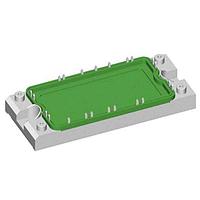
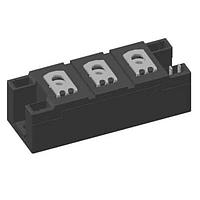
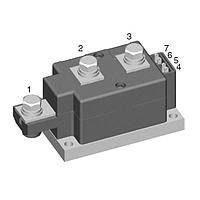
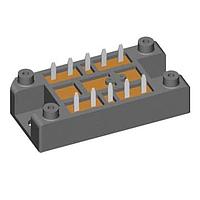
Power modules extend the same logic into more integrated mechanical formats. Instead of designing around multiple separate packages, engineers can use module-based parts to simplify assembly, improve heat transfer to a heatsink, and reduce interconnect complexity in higher-power equipment.
Representative products for industrial power switching
Several products in this category illustrate the spread from board-level discrete parts to more demanding power-stage devices. For example, the Infineon IRG4BC30K IGBT discrete is a 600 V class device with 28 A collector current data in the provided listing, making it relevant for many general industrial switching designs. The Infineon IRGS4045DPBF IGBT discrete represents a lower current 600 V option for more compact converter or control-stage implementations.
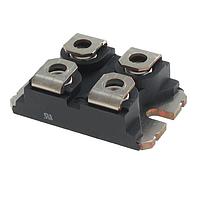
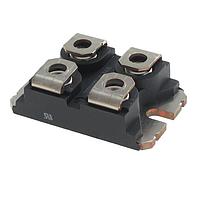
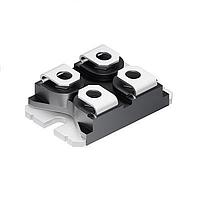
For heavier-duty requirements, parts such as the Infineon BSM25GD120DLC-E3224 IGBT discrete, listed at 1200 V and 50 A, point toward applications where bus voltage and current margin become more critical. On the higher-current side, the Littelfuse IXGN72N60C3H1 device shows how discrete IGBT formats can still serve demanding installations that need robust switching capability in a defined package style.
The category also includes larger-format options such as Infineon FZ1800R16KF4_S1 and additional Infineon FX-series parts, along with HITACHI CT09F. These examples show that selection is not only about voltage and current values, but also package style, mounting method, thermal path, and the role of the device within the full power stage.
How to evaluate the right part for your application
The first step is usually defining the electrical operating window: collector-emitter voltage, collector current, switching behavior, and expected thermal load. A device rated at 600 V may suit many inverter and SMPS topologies, while 1200 V-class parts are often considered when the DC bus, surge margin, or industrial environment demands additional headroom.
Engineers should also consider package and thermal management. A TO-247 or TO-268 style device may work well in serviceable assemblies or lower part-count designs, while larger module formats can be more suitable for high-power systems with dedicated cooling structures. In many projects, mechanical layout and heatsink strategy influence the shortlist almost as much as the raw electrical figures.
Another key factor is switching frequency and loss balance. IGBTs are often selected where conduction and switching trade-offs align better with the application than other semiconductor families. When the power stage includes protection and front-end conditioning, related categories such as diodes & rectifiers or surge protector devices may also be part of the overall design.
Manufacturers commonly considered in this range
This category includes products from established semiconductor suppliers used widely in power electronics. Infineon is strongly represented in the featured products, particularly across multiple IGBT discrete options that cover different current and voltage levels. Littelfuse and HITACHI also appear in the product mix, reflecting the variety of package styles and application targets found in industrial switching hardware.
Beyond the featured examples, buyers may also compare offerings from Fuji Electric, Fairchild, IXYS, Eaton, and Alpha and Omega Semiconductor depending on the design objective. In B2B sourcing, manufacturer preference is often influenced by qualification history, lifecycle expectations, package familiarity, and compatibility with existing gate-drive and thermal design practices.
When a discrete device is enough, and when a module makes more sense
A discrete device is often the right choice when the design requires flexibility, lower assembly cost at modest power levels, or easier replacement of individual components. It is also common in prototyping, repair work, and applications where the switching stage is relatively simple and thermal density remains manageable.
A power module becomes more attractive when higher current paths, tighter mechanical integration, and more predictable thermal behavior are needed. For OEMs and panel builders, modules can help streamline assembly and reduce wiring complexity inside converters, drives, and other power-dense industrial equipment. The decision is not purely about power level; it is also about service strategy, layout constraints, and production consistency.
Application-driven sourcing for industrial and B2B buyers
For purchasing teams, sourcing these components typically involves more than matching a part number. It requires checking electrical class, package compatibility, mounting footprint, and whether the device aligns with the intended switching topology. In maintenance environments, replacement work may prioritize fit, known performance, and dependable availability. In new design programs, engineers usually focus more on optimization of losses, thermal behavior, and integration effort.
That is why this category is best approached as a technical selection space rather than a simple parts list. Reviewing representative products, comparing manufacturer ecosystems, and considering neighboring semiconductor functions can make the shortlist more accurate and reduce redesign risk later in the project.
Choosing from the Discrete & Power Modules range
A suitable selection starts with the application: inverter, motor drive, power conversion, or high-voltage switching assembly. From there, it becomes easier to narrow by voltage class, current capability, package format, and thermal approach, then compare options from manufacturers already trusted in industrial electronics.
Whether you need a compact IGBT discrete for a focused switching stage or a larger-format solution for heavier power handling, this category supports a broad range of industrial design and replacement needs. A careful review of device format, operating conditions, and system-level requirements will usually lead to a more reliable and maintainable power stage.
Get exclusive volume discounts, bulk pricing updates, and new product alerts delivered directly to your inbox.
By subscribing, you agree to our Terms of Service and Privacy Policy.
Direct access to our certified experts