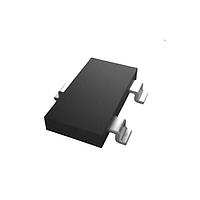
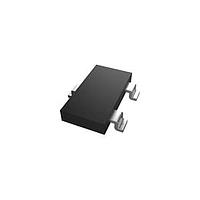
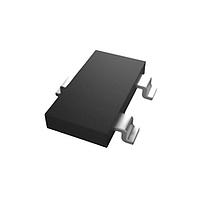
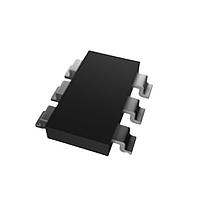
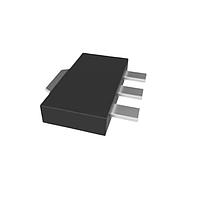
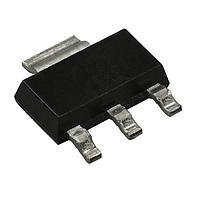
Bipolar Transistors
Reliable signal switching, amplification, and current control still depend on one of the most widely used discrete semiconductor devices in electronics design. Bipolar Transistors remain relevant across industrial control boards, embedded hardware, power management stages, and general-purpose analog circuits because they offer predictable behavior, broad availability, and flexible use in both low-power and higher-current designs.
On this category page, buyers and engineers can explore devices suited to different circuit roles, from compact small-signal parts to higher-current switching transistors and pre-biased transistor options that help simplify board layouts. Whether the requirement is basic signal conditioning, load switching, or a more space-conscious SMT design, this range supports practical sourcing for production, maintenance, and prototyping.
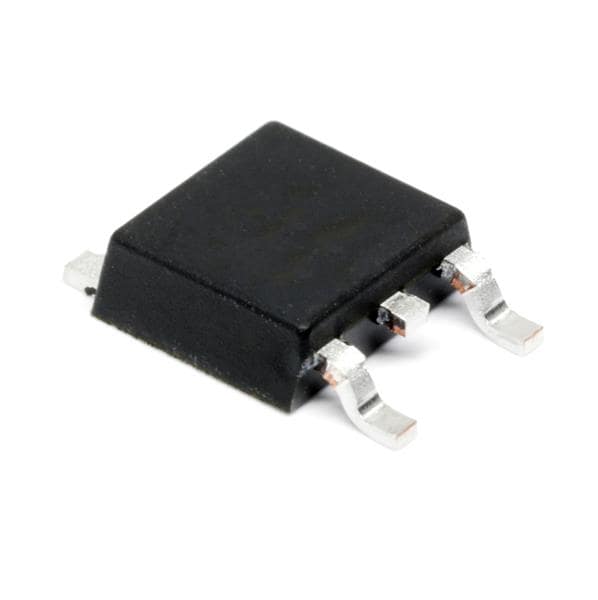
Where bipolar transistors fit in electronic design
A bipolar junction transistor, or BJT, is commonly selected when a circuit needs controlled current flow between collector and emitter using a base drive signal. In real applications, that can mean driving relays, controlling LEDs, conditioning sensor outputs, or providing gain in analog and RF stages. Their continued use is largely due to straightforward design methods and compatibility with a wide range of supporting components.
Compared with some other transistor families, BJTs are often chosen for designers who need familiar switching characteristics, compact packaging, and economical implementation. For buyers comparing options across discrete semiconductors, this category also serves as a useful starting point before branching into devices such as digital transistors or application-specific alternatives for different drive topologies.
Common product types in this category
This category includes both standard bipolar transistors and integrated resistor versions intended to reduce the number of external parts in a circuit. Standard NPN and PNP devices are typically used where the designer wants full control over base resistor selection, gain conditions, and operating point. These parts appear in countless switching and amplification tasks across industrial and commercial electronics.
Pre-biased versions, sometimes called digital-style bipolar transistors, integrate resistor networks that can streamline PCB design and improve assembly efficiency. Parts such as the Diodes Incorporated DDTB114GU-7-F, DDTB114TC-7-F, DDTB114EU-7-F, and DDTB114GC-7-F illustrate this approach, while devices like the BCX5116TC, ZXT3M322, and ZXTCM322TA represent more conventional discrete BJT options for broader circuit design needs.
Examples from leading manufacturers
Among the brands represented in this space, Diodes Incorporated stands out in the provided range with multiple compact SMT bipolar transistor options. Its portfolio shown here covers pre-biased PNP devices with integrated resistors as well as general-purpose parts suitable for switching and current handling in denser board designs. This is especially relevant for OEMs and contract manufacturers looking for consistency across recurring builds.
Broadcom also appears in the category with devices such as the AT-42085 and AT-42035, which are suitable for signal-oriented use cases where transistor behavior, package style, and circuit count matter more than simple load switching alone. Rather than treating all BJTs as interchangeable, it is worth reviewing package, polarity, current rating, and intended circuit role before shortlisting parts for procurement.
How to choose the right bipolar transistor
The most practical starting point is the intended function in the circuit. For low-level switching or amplification, parameters such as transistor polarity, collector-emitter voltage, collector current, gain behavior, and mounting style usually guide selection. Surface-mount parts are common in modern production, while resistor-integrated devices can reduce component count where the drive conditions are already well understood.
It is also important to match the transistor to the electrical environment of the application. A device intended for a small-signal path may not be suitable for a heavier load, and a higher-current transistor may be unnecessary for compact control logic. When comparing categories for related use cases, some engineers may also review Darlington transistor options for higher overall gain, or consider IGBTs when the switching requirement moves into a much higher power range.
Typical applications across industrial and embedded systems
Bipolar transistors are used in many circuit blocks that appear in automation, control, communications, and embedded products. Typical examples include interface boards, power sequencing circuits, sensor output stages, low-side or high-side switching arrangements, and small analog amplification tasks. Because these functions appear in both new equipment and maintenance work, BJT sourcing often supports both design engineering and replacement purchasing.
Pre-biased transistor variants are especially useful in compact logic interfaces, where integrated resistor values help reduce external design overhead. Higher-current parts such as the ZXT3M322 or ZXTCM322TA may be more relevant where a board needs stronger switching capability within a small footprint. For RF or signal-oriented implementations, examples from Broadcom can be more aligned with specialized analog front-end requirements.
Why package style and integration level matter
In modern electronics manufacturing, the package is often as important as the transistor type itself. Surface-mount devices support automated assembly, higher placement density, and shorter interconnect paths, all of which can influence production efficiency and electrical performance. For maintenance teams, package compatibility is equally important when replacing a failed part on an existing PCB.
Integration level also affects sourcing decisions. A general-purpose BJT may offer more design flexibility, while a pre-biased device can simplify BOM structure and save board space. The right choice depends on whether the priority is custom biasing, compact implementation, reduced assembly complexity, or easier standardization across multiple products.
Sourcing considerations for B2B buyers
For procurement teams, selecting the right transistor category is not only a technical matter but also a supply and lifecycle decision. It helps to align shortlist criteria around package format, polarity, voltage margin, current requirement, and whether integrated resistors are acceptable in the target design. This approach can reduce substitution risk and improve communication between engineering, purchasing, and production teams.
For projects involving recurring builds or multi-board platforms, reviewing manufacturer consistency can also be valuable. A focused range from suppliers such as Diodes Incorporated and Broadcom allows buyers to compare different transistor styles within a familiar sourcing framework rather than evaluating unrelated parts with mismatched application intent.
Find the right bipolar transistor for your design
This category is built for practical component selection, from straightforward small-signal devices to compact resistor-integrated solutions and higher-current switching parts. By comparing polarity, package style, current capability, and circuit role, engineers and buyers can narrow the range to components that fit both the design target and the purchasing process.
If your application calls for dependable discrete transistor behavior in control, interface, analog, or switching circuits, this selection of bipolar transistors provides a solid base for evaluation. Browse the available parts to identify the most suitable option for your board-level requirements, whether the priority is compact SMT assembly, simplified biasing, or general-purpose switching performance.
Get exclusive volume discounts, bulk pricing updates, and new product alerts delivered directly to your inbox.
By subscribing, you agree to our Terms of Service and Privacy Policy.
Direct access to our certified experts