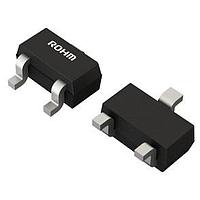
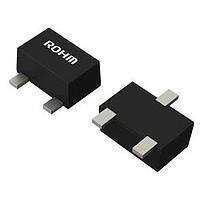
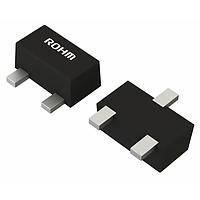
Digital Transistors
When board space is limited and biasing networks need to stay simple, digital transistors are often a practical choice in switching and interface circuits. By integrating resistor elements with the transistor structure, they help reduce external component count, streamline PCB layout, and support more consistent design implementation across compact electronic assemblies.
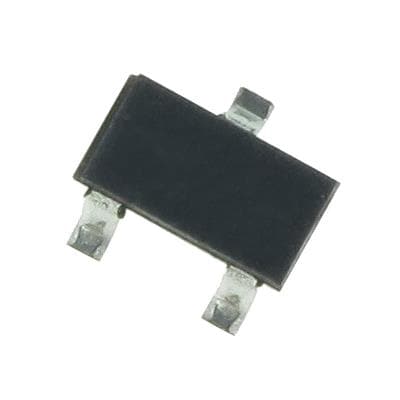
Why digital transistors are used in compact circuit design
Digital Transistors are commonly selected when designers want a transistor function with built-in bias resistors. This arrangement can simplify input drive design, reduce placement density around the transistor, and make repetitive switching stages easier to standardize in consumer, industrial, and automotive-related electronics.
Compared with a general-purpose device from the broader bipolar transistor range, a digital transistor is especially useful when resistor values are already defined in the application concept. It can help reduce BOM complexity while still supporting familiar transistor-based switching behavior.
Typical configurations available in this category
This category includes several common polarity and channel arrangements suited to different control tasks. Buyers may find single NPN or PNP devices for straightforward low-current switching, as well as dual or complementary transistor structures for more compact multi-function designs.
Examples from the range illustrate that the category is not limited to one package style or one resistor network. Parts such as the Nexperia PDTC143ET215 and Toshiba RN1405,LF represent compact 3-pin options, while devices like the Nexperia PUMH13115, PUMD9165, and PUMD12115 show how dual or complementary configurations can support denser circuit layouts in small surface-mount footprints.
Key selection points before choosing a part
The most important starting point is the required transistor polarity and switching role in the circuit. NPN and PNP versions behave differently in control paths, and complementary devices can be helpful where both polarities are needed in one compact package.
Next, check the integrated resistor values, because these directly affect input drive conditions. In this category, examples include lower input resistor values such as 1 kOhm or 2.2 kOhm, as well as higher values like 10 kOhm, 22 kOhm, and 47 kOhm. Those differences matter when matching logic signals, pull-up or pull-down behavior, and current-limiting expectations in the surrounding design.
Package style and current capability should also be reviewed carefully. Small outlines such as SOT-323, SOT-23 and SOT-363 are useful for dense assemblies, while some parts in the range support higher collector current than others. If the design environment includes elevated temperature or automotive-oriented requirements, it is also worth checking qualification and operating temperature data provided on each product page.
Examples of devices in the range
Nexperia is strongly represented in this category, with devices covering single, dual, and complementary digital transistor arrangements. For example, the PDTA114YU115 is a compact PNP option in SOT-323, while the PUMD9115 and PUMD10115 show how multi-transistor solutions can be integrated into a 6-pin package for tighter layouts.
For designs that need more current headroom in a 3-pin format, the Nexperia PDTB113ZT215 is one of the notable examples in the listing. The Toshiba RN1405,LF is another relevant option for engineers looking for an NPN digital transistor in a compact surface-mount package. These examples help illustrate the breadth of the category without reducing it to a simple list of part numbers.
Application contexts where digital transistors make sense
Digital transistors are often used in signal conditioning, logic-level interfacing, relay or LED driving, and simple switching stages where an external resistor network would otherwise be added around a standard transistor. Their integrated structure can make the circuit easier to assemble and easier to replicate across multiple channels.
They are also useful in compact embedded products, control boards, and automotive-adjacent electronics where board area, assembly efficiency, and predictable input behavior all matter. In some designs, they serve as a cleaner alternative to building the same function from a discrete transistor plus separate resistors.
How this category fits within the wider transistor landscape
Not every switching or power-control problem should be solved with a digital transistor. For simple bias-integrated signal switching, this category is often a strong fit. But for other use cases, engineers may compare against Darlington transistor options for higher gain structures, or review IGBT devices for very different high-power switching requirements.
That broader comparison is useful because it keeps part selection aligned with the actual electrical task. Digital transistors are best understood as space-saving discrete switching components rather than universal replacements for all transistor types.
What to review on product pages before ordering
For B2B sourcing and engineering review, it is worth checking a few details closely: package type, polarity, integrated resistor values, collector-emitter voltage, continuous collector current, and any qualification notes such as AEC-Q101. These parameters help confirm whether a device is suitable for prototype builds, production releases, or environmental requirements tied to the end application.
It can also be helpful to compare devices from established semiconductor suppliers such as Toshiba, alongside the wider range available in this category. If your design team is evaluating alternatives across transistor technologies, the dedicated digital transistor selection here can serve as a focused starting point for compact resistor-equipped switching devices.
Final considerations
Choosing the right part usually comes down to balancing polarity, resistor network, package size, current handling, and qualification needs. A well-matched digital transistor can simplify layout and reduce external component count without changing the basic switching approach engineers already know.
For teams designing compact electronic assemblies, this category provides a practical route to evaluate integrated-resistor transistor options across multiple package styles and circuit roles. Reviewing the available devices carefully at product level will make it easier to narrow down parts that fit both electrical requirements and production constraints.
Get exclusive volume discounts, bulk pricing updates, and new product alerts delivered directly to your inbox.
By subscribing, you agree to our Terms of Service and Privacy Policy.
Direct access to our certified experts