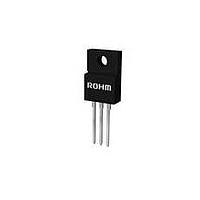
IGBTs
When efficient switching and high-voltage handling matter in power electronics, engineers often turn to devices that bridge the strengths of MOSFETs and bipolar transistors. IGBTs are widely used in converters, motor control, power supplies, welding equipment, UPS systems, and other industrial designs where switching performance and current capability need to be balanced carefully.
On this page, you can explore a focused range of IGBT devices for different voltage, current, package, and mounting requirements. Whether you are selecting a compact surface-mount part for space-constrained boards or a higher-power through-hole device for demanding power stages, the category is intended to support practical component selection for real engineering work.

Where IGBTs fit in modern power design
An insulated-gate bipolar transistor is commonly chosen when a design must switch relatively high voltage and current with good control efficiency. In many applications, IGBTs are especially relevant in medium- to high-power circuits where thermal behavior, switching losses, and ruggedness all influence overall system performance.
Compared with some other transistor families, IGBTs are typically associated with power conversion rather than low-level signal amplification. If your project is oriented more toward conventional amplification or general-purpose switching, related categories such as bipolar transistors or GaN FETs may also be worth reviewing depending on voltage, frequency, and efficiency targets.
Typical selection criteria for an IGBT
The first step is usually matching the device to the electrical demands of the application. Engineers generally look at collector-emitter voltage, continuous collector current, switching behavior, thermal limits, and package style. These factors influence not only safe operation, but also heatsink design, PCB layout, and long-term reliability.
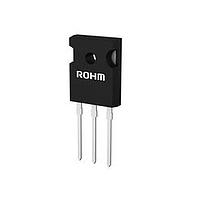
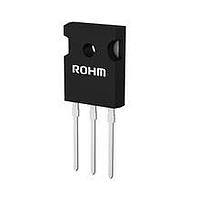
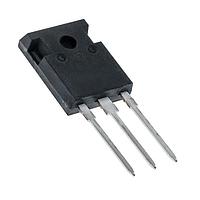
Mounting format also matters. Through-hole packages such as TO-220 and TO-247 are common when heat dissipation and mechanical robustness are priorities, while compact options like TO-263 (D2PAK) support higher board density. In some workflows, bare die or chip-format devices are selected for advanced module integration, hybrid assemblies, or highly customized power stages.
Examples from the available product range
The range shown here includes several Infineon solutions covering common industrial voltage classes. For example, the Infineon IGW20N60H3XK IGBT Single is positioned around 600 V with a 40 A current rating, making it relevant for many general power switching tasks. For higher current capability in a through-hole format, the Infineon SP001549776 Trans IGBT Chip N-CH 600V 96A 3-Pin(3+Tab) TO-247AC offers a stronger current profile in a package style often used for power stages with more substantial thermal management.
The category also includes higher-voltage parts such as the Infineon IGW03N120H2XK Trans IGBT Chip N-CH 1.2KV 9.6A 3-Pin(3+Tab) TO-247 and the Infineon IKW25N120H3FKSA1 IGBT Single, which are relevant when DC bus voltage or application topology calls for a 1.2 kV class device. For designs requiring high current at 650 V, options like the Infineon IKW50N65H5FKSA1 IGBT Single and Infineon IHW50N65R5XKSA1 Trans IGBT Chip N-CH 650V 50A 3-Pin TO-247 Tube provide alternatives across similar voltage ranges with different electrical trade-offs.
Where board space is limited, surface-mount parts can be more suitable. The Infineon IKB06N60TATMA1 Transistor IGBT N-CH 600V 12A 3-Pin TO-263 T/R and Infineon AIKB50N65DF5ATMA1 IGBT, 80 A, 1.6 V, 305 W, 650 V, TO-263 (D2PAK), 3 Pins illustrate how the category supports more compact assembly strategies. For high-power switching beyond many standard industrial designs, the Microchip APT50GF120B2RG Transistor Fast IGBT N-Channel 1200V 135A 3-Pin TO-247 is another notable option in the range.
Package style and thermal considerations
In power electronics, package selection should never be treated as a minor detail. TO-247 and TO-220 devices are often preferred where heatsinking, serviceability, and higher dissipation are important. These packages can simplify prototype work and are common in inverter legs, PFC stages, and industrial drives.
Surface-mount formats such as TO-263 help reduce assembly complexity in production environments, but thermal design becomes even more dependent on copper area, board structure, and airflow. Chip and die formats, including parts such as Infineon SIGC25T120CLX1SA3 IGBT CHIPS and Infineon SIGC39T60EX1SA3 IGBT, 75 A, 1.45 V, 600 V, DIE, are typically considered when the broader power assembly is being optimized at module level rather than around a standard discrete package.
How to compare voltage and current classes
Many engineers begin by grouping parts into 600 V, 650 V, and 1.2 kV classes, then narrowing options by current rating and thermal headroom. A 600 V or 650 V IGBT may be appropriate for a broad range of industrial switching applications, while 1.2 kV parts are more relevant in systems that need additional voltage margin or operate in harsher electrical environments.
Current rating should be considered alongside switching frequency, cooling method, and real operating conditions rather than as a headline number alone. A device specified for high collector current may still require careful derating depending on case temperature, duty cycle, and commutation stress. That is why package, power dissipation capability, and junction temperature limits should be reviewed together rather than independently.
Related technologies and category navigation
IGBTs are only one part of a broader switching portfolio. In some designs, engineers may compare them with digital transistors for control-oriented circuits or assess whether faster-switching wide-bandgap devices offer an advantage. For projects that still depend on established silicon power platforms, it can also be useful to browse manufacturers with a strong semiconductor background, including Microchip.
Within this category, a practical approach is to shortlist by voltage class first, then evaluate current capability, mounting style, and thermal strategy. This usually leads to a more reliable selection process than comparing part numbers in isolation.
Choosing the right IGBT for your application
A good selection process starts with the actual converter or load conditions: DC bus voltage, expected peak and continuous current, switching frequency, cooling constraints, and mechanical format. From there, it becomes easier to identify whether a compact TO-263 device, a robust TO-247 part, or a chip-level solution is the better fit for the design.
This IGBTs category is built to support that comparison process with a range of devices from recognized semiconductor suppliers and multiple package options. If you are refining a new power design or replacing an existing part, reviewing voltage class, current headroom, and package thermal behavior together will usually lead to a more dependable shortlist.
For industrial power electronics, there is rarely a one-size-fits-all answer. The right device is the one that aligns with the electrical stresses, assembly method, and thermal realities of the application, while leaving enough design margin for stable long-term operation.
Get exclusive volume discounts, bulk pricing updates, and new product alerts delivered directly to your inbox.
By subscribing, you agree to our Terms of Service and Privacy Policy.
Direct access to our certified experts