JFETs
When low input current, simple biasing behavior, and strong analog characteristics matter, engineers often turn to JFETs for signal-path and control designs. These devices continue to be relevant in discrete semiconductor selection, especially in front-end analog stages, switching functions, and circuits where predictable field-effect behavior is useful.
Within this category, buyers can compare JFET options for different channel types, package styles, and voltage needs across established semiconductor manufacturers. The range includes common N-channel and P-channel parts as well as selected dual-device options for compact circuit designs.

Where JFETs fit in transistor selection
A junction field-effect transistor is typically chosen for applications that benefit from voltage-controlled operation and very low gate current. In practical terms, that can make JFETs useful in analog amplification stages, input buffering, current limiting arrangements, signal switching, and general-purpose discrete circuit design.
Compared with other transistor families, JFETs often sit in a more specialized position. If your design is centered on conventional current-driven switching, bipolar transistors may be the more natural comparison point, while higher-power or high-efficiency switching applications may lead engineers toward IGBTs or other FET technologies.
Common device types in this category
The selection typically includes both N-channel and P-channel JFETs. N-channel parts are often the first choice in many general analog designs, and that is reflected in examples such as onsemi KSK30YTA JFET, onsemi J111D27Z JFET, and onsemi PN4092_D27Z JFET. For designs that call for a complementary device approach or a different biasing arrangement, P-channel options such as NXP PMBFJ177,215 JFET may be more appropriate.
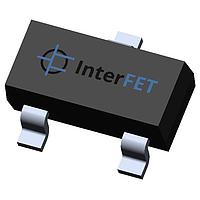
There are also compact configurations aimed at space-conscious layouts. For example, NXP PMBFJ620,115 Dual N-channel FET can support designs that need multiple channels in a smaller footprint, while parts like onsemi MMBF4416A_S00Z are suited to surface-mount assembly workflows. Through-hole options such as onsemi PN4117A_ND26Z in a TO-92 style package can remain useful for prototyping, maintenance, or legacy board designs.
Key selection points for engineers and buyers
Choosing the right JFET starts with the intended electrical role in the circuit. Channel type is the first filter, followed by package format, available board space, and the operating voltage range the design must handle. In the product list, examples include devices with stated drain-to-source ratings such as 25 V, 30 V, and 40 V, which helps narrow options for small-signal and general-purpose designs.
It is also important to consider whether the part is being used in a new design, a repair situation, or as a replacement in an existing BOM. In those cases, package compatibility and pin configuration may be just as critical as the transistor family itself. Buyers sourcing for production should also pay attention to whether they need tape-and-reel packaging, bulk supply, or a package style suited to manual assembly versus automated placement.
Representative manufacturers and product examples
This category includes parts from recognized semiconductor suppliers such as onsemi, NXP, Microchip Technology, and PANASONIC. That gives buyers a practical mix of sourcing options for both established designs and ongoing component maintenance requirements.
Among the representative products, onsemi TF262TH-4-TL-H JFET and onsemi TF202THC-5-TL-H show the breadth of compact JFET offerings, while Microchip Technology 2N2609 JFET and PANASONIC 2SJ163-(TX) JFET illustrate that the category is not limited to a single supplier or package direction. Rather than focusing on one part number alone, it is usually more effective to shortlist candidates based on channel type, mounting preference, and the role the transistor plays in the circuit.
Typical applications and design context
JFETs are commonly considered in analog and mixed-signal work where high input impedance and controlled signal handling are desirable. They may appear in sensor interfaces, preamplifier stages, switching sections, test fixtures, and support circuits inside industrial and embedded electronics. Their continued use often comes from the fact that some designs value analog behavior and simplicity over the switching profile of other transistor technologies.
In broader semiconductor sourcing, engineers may also compare JFETs with newer device families depending on system goals. For example, designs driven by high-frequency or high-efficiency power conversion may be better aligned with GaN FETs, whereas low-power discrete signal handling can still make JFETs an appropriate and economical choice in the right circuit position.
Packaging and integration considerations
For practical procurement, package style often determines how easily a JFET can be integrated into the target assembly. Surface-mount formats are typically preferred for dense production boards, while leaded packages may remain important in service applications, laboratory setups, and replacement of older discrete transistor designs. The category therefore supports both engineering evaluation and purchasing needs across different manufacturing stages.
Dual-device formats can also help simplify placement when board space is limited or when the circuit benefits from closely grouped transistor elements. This can reduce layout complexity in comparison with using separate discrete devices, particularly in compact analog sections or small control boards.
How to narrow down the right part
A useful approach is to begin with the circuit function: signal amplification, switching, current control, or replacement of an existing transistor. From there, filter by channel type, voltage rating, package, and manufacturer preference. If long-term sourcing or cross-platform qualification matters, it may also be worth reviewing options from suppliers with broader discrete semiconductor portfolios, such as Microchip Technology.
For teams working across several transistor technologies, keeping JFET selection in context is important. They are rarely a one-size-fits-all answer, but in the correct analog or small-signal role they remain highly practical components. A well-chosen JFET can simplify a design, support stable front-end behavior, and fit cleanly into both new product development and maintenance purchasing workflows.
For buyers and engineers evaluating discrete transistor options, this JFET category provides a focused starting point for comparing channel configurations, package styles, and supplier choices. Reviewing the intended circuit role first will make it much easier to identify the right device from the available onsemi, NXP, Microchip Technology, and PANASONIC product range.
Get exclusive volume discounts, bulk pricing updates, and new product alerts delivered directly to your inbox.
By subscribing, you agree to our Terms of Service and Privacy Policy.
Direct access to our certified experts