
MOSFETs
Efficient switching and compact power control are central to modern electronic design, from low-voltage embedded circuits to automotive and industrial boards. In many of these applications, MOSFETs are chosen for their fast switching behavior, low drive power, and wide suitability across load control, conversion, amplification, and protection tasks.
This category brings together devices used in practical circuit design where engineers need to balance voltage rating, current handling, gate drive conditions, package size, and thermal behavior. Whether the requirement is a small-signal transistor for compact electronics or a lower-resistance device for higher current paths, the selection here supports a broad range of design scenarios.
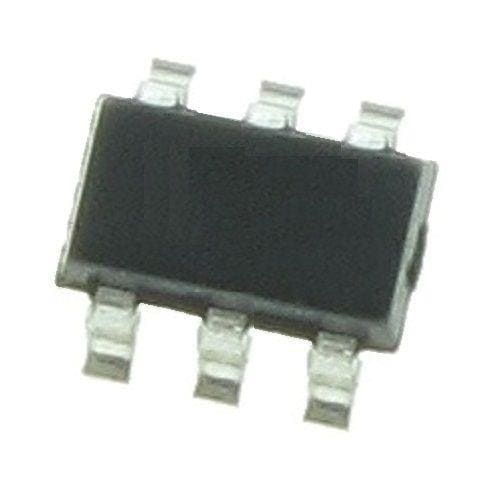
Where MOSFETs fit in electronic systems
A MOSFET is commonly used as an electronic switch or as part of an analog control stage. In power conversion circuits, it may handle load switching, DC motor control, battery-powered designs, or regulator stages. In signal-focused applications, certain devices are also used where RF behavior, gain, or low-noise performance matters.
Compared with other transistor families, MOSFETs are often selected when designers want high input impedance and efficient switching. For projects where another device structure is more suitable, related categories such as Bipolar Transistors or IGBTs may also be relevant depending on current, voltage, and switching requirements.
Common device types within the category
The most common distinction is between N-channel and P-channel devices. N-channel MOSFETs are widely used for low-side switching and many power applications because they typically offer better conduction performance for a given size. P-channel parts are often selected where high-side switching must be implemented with simpler gate-drive arrangements.
Designers may also encounter single and dual configurations. For example, the Diodes Incorporated ZVN4206NTA MOSFET is a dual N-channel device, which can be useful where board space is limited or where two switching paths are required in one package. In contrast, a part such as the Alpha and Omega Semiconductor AO3401 is a P-channel option suited to compact switching tasks.
Selection factors that matter in real designs
Choosing the right MOSFET starts with the electrical limits of the application. Drain-to-source voltage must exceed the operating bus voltage with adequate margin, while continuous drain current should reflect the expected load and thermal conditions. On-resistance is another important factor because it directly affects conduction loss and heat generation.
Gate threshold voltage should not be confused with full enhancement. In practical selection, designers also look at the intended drive voltage, gate charge, and input capacitance to understand switching speed and controller compatibility. For compact low-voltage designs, the Diodes Incorporated ZVN4206AVSTOA and DMN3018SFG-13 illustrate how device choice can differ depending on whether the priority is small-signal switching, lower on-resistance, or higher current capability.
Examples from leading manufacturers
This category includes parts from established semiconductor suppliers such as Diodes Incorporated, Broadcom, HITACHI, and Alpha and Omega Semiconductor. Each manufacturer is commonly associated with different device families and use cases, so selection often depends on the electrical profile of the circuit rather than brand preference alone.
Among the representative products, the Diodes Incorporated DMN3018SFG-13 is positioned for applications requiring an N-channel device with relatively stronger current handling in a compact footprint. Broadcom ATF-58143-TR1 and ATF-58143-TR2 are notable examples where the device context may be more specialized, especially in designs that involve RF-oriented transistor behavior. HITACHI parts such as 2SK1527, 2SK2869(L)TR, and 2SK2925(S) reflect the broader range of legacy and application-specific MOSFET usage still relevant in component sourcing and maintenance environments.
Application-focused buying considerations
For load switching in embedded or control boards, designers usually prioritize package size, gate-drive compatibility, and acceptable thermal performance. In battery-powered equipment, lower conduction losses can help reduce heat and improve overall efficiency. For repair, replacement, or lifecycle support work, matching package style and key electrical ratings is often just as important as the transistor polarity.
When evaluating alternatives, it is also useful to consider whether the application would benefit from newer device technologies. In some high-efficiency or high-frequency designs, GaN FETs may be explored as a different approach, while traditional MOSFETs remain a practical and widely adopted choice across mainstream electronic products.
How to compare parts without oversimplifying
Two MOSFETs with the same nominal voltage rating can behave very differently in a circuit. Package thermal limits, switching losses, gate charge, and resistance at the actual drive voltage all affect performance. That is why engineers typically review the full operating context rather than selecting purely by drain current or package outline.
For example, a compact 30 V N-channel part may be ideal for board-level switching, while a 60 V device may provide the margin needed in a noisier environment or inductive application. Likewise, a P-channel device such as AO3401 may simplify a high-side design even if its conduction efficiency differs from an N-channel alternative. The best choice depends on the circuit topology, control method, and mechanical constraints.
Finding the right MOSFET for sourcing or design support
This category is intended for engineers, buyers, and maintenance teams comparing discrete transistor options across different use cases. Some projects require small-signal parts for compact control functions, while others need robust switching devices with lower on-resistance and defined drive characteristics. Reviewing polarity, voltage class, current capability, package style, and application context will usually narrow the selection quickly.
If you are comparing semiconductor switching options for a new design or a replacement task, this MOSFET range provides a practical starting point. By focusing on the electrical role of the device rather than only the part label, it becomes easier to identify components that fit the circuit, the layout, and the long-term sourcing requirement.
Get exclusive volume discounts, bulk pricing updates, and new product alerts delivered directly to your inbox.
By subscribing, you agree to our Terms of Service and Privacy Policy.
Direct access to our certified experts
