FPGA Field Programmable Gate Array
When a design needs hardware-level flexibility without committing to a fixed-function IC, programmable logic often becomes the practical choice. FPGA Field Programmable Gate Array devices are widely used in embedded systems, industrial control, communications, data processing, and interface bridging because they allow engineers to implement and revise digital logic after manufacturing.
For B2B buyers, this category is typically less about one part number in isolation and more about matching device capacity, I/O resources, power requirements, package constraints, and lifecycle expectations to the target application. The products in this range support everything from compact control logic to higher-density programmable designs used in more demanding platforms.

Where FPGAs fit in embedded and industrial design
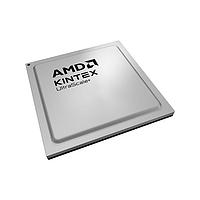
An FPGA is a reconfigurable logic device that can be programmed to perform custom digital functions. Unlike a standard processor that executes software instructions sequentially, programmable logic can implement parallel hardware behavior, which is valuable for timing-sensitive control, signal handling, protocol conversion, and specialized processing pipelines.
In industrial and embedded environments, these devices are often selected when standard central processing units do not offer the required determinism, interface mix, or hardware customization. They are also relevant when designers need to adapt a platform over time without redesigning the full board-level logic.
Typical applications for this category
FPGAs are used across a wide range of electronic systems where custom logic integration is important. Common use cases include machine control, communications interfaces, data acquisition front ends, image and video handling, motor-control support functions, and bridging between legacy and modern digital buses.
They are also useful in designs that need multiple digital functions consolidated into a single programmable platform. Depending on the device family and design goals, an FPGA may serve as the main logic core, a support component beside a processor, or a migration path between fixed logic and more advanced programmable architectures.
How to evaluate FPGA options
A practical selection process starts with the logic scale required by the design. Device density, available RAM, and I/O count all affect whether a part is suitable for a simple control function or a more complex hardware implementation. Package format and mounting style also matter, especially for space-constrained boards or assemblies with specific manufacturing limitations.
Power rails and operating temperature range are equally important in industrial projects. Some applications prioritize low-voltage operation and compact designs, while others require wider environmental tolerance. If non-volatile or supporting memory is part of the design architecture, it is also worth reviewing related FPGA configuration memory options during the device selection stage.
Representative device examples in this range
The available portfolio spans from low-density solutions for efficient control logic to higher-capacity parts intended for more demanding logic integration. For example, the Lattice Semiconductor ICE40LP1K-CM81 FPGA is aligned with compact, lower-resource applications, while the LFE2-20E-5F484I FPGA provides a larger logic and I/O envelope for broader embedded design work.
At higher densities, devices such as the Intel 5AGXFA7H4F35C5G FPGA and Altera EP2S90F1020C4ES FPGA illustrate the type of programmable logic used when projects require significantly expanded logic resources and interface capacity. For legacy compatibility or specific architecture preferences, buyers may also encounter parts such as the AMD XC4013XL-3PQ160I FPGA, alongside established programmable logic offerings from Microsemi including the M1A3P1000L-FG484I FPGA and A3PE600-PQG208I FPGA.
Comparing FPGA, CPLD, and other programmable logic approaches
Not every programmable design calls for the same device class. In some projects, lower-complexity logic can be handled by Complex Programmable Logic Devices, especially where fast startup, simpler glue logic, or modest logic integration is the priority. FPGAs are generally considered when the design requires more scalability, deeper logic resources, or richer memory and I/O structures.
Likewise, some signal-processing tasks may be split between programmable logic and dedicated digital signal processors & controllers. The right choice depends on whether the application benefits more from hardware parallelism, software programmability, or a mixed architecture using both.
Manufacturer landscape and sourcing considerations
This category includes devices associated with well-known programmable logic suppliers such as Altera, AMD, Intel, Lattice Semiconductor, and Microsemi. Each vendor family tends to reflect different design priorities, ranging from compact and power-conscious implementations to larger devices for more logic-intensive systems.
For procurement teams, manufacturer selection is not only a technical issue but also a supply-chain decision. Long-term availability, approved vendor lists, package preferences, qualification needs, and compatibility with existing development flows can all influence the final choice. Reviewing the broader manufacturer range early can help reduce redesign risk later in the project lifecycle.
Choosing the right FPGA for your project
The most effective approach is to begin with the application requirements rather than the part number itself. Define the needed logic scale, interface count, memory demands, voltage domain, environmental range, and form factor, then compare candidate devices that fit those boundaries. That process usually leads to a much better result than selecting only on brand familiarity or raw density.
Whether the requirement is a compact programmable device for interface logic or a larger platform for custom hardware acceleration, this category provides a useful starting point for evaluating programmable solutions in embedded and industrial electronics. A well-matched FPGA can simplify board design, improve flexibility, and support future revisions without forcing a complete hardware redesign.
Get exclusive volume discounts, bulk pricing updates, and new product alerts delivered directly to your inbox.
By subscribing, you agree to our Terms of Service and Privacy Policy.
Direct access to our certified experts