32bit Microcontrollers
When an embedded design needs more processing headroom, richer peripherals, and better control over communications, engineers often move toward 32bit Microcontrollers. This category supports a wide range of industrial and electronic applications, from control boards and human-machine interfaces to connected devices and compact embedded platforms where memory, timing, and interface flexibility all matter.
Compared with lower-bit architectures, 32-bit MCUs are commonly selected when the project must handle more complex firmware, faster execution, or multiple peripheral functions at the same time. In practice, that can mean combining analog input, timers, communication buses, and real-time control inside one device while still keeping board space and power requirements manageable.
Where 32-bit MCUs fit in embedded design
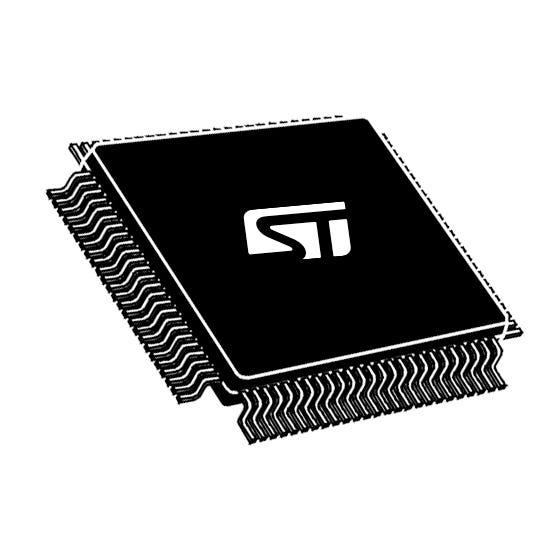
A 32-bit microcontroller is typically used when a system needs a stronger balance of computing capability and integrated control features than simpler MCU classes can provide. Many designs in automation, instrumentation, and industrial electronics rely on this architecture for handling sensor data, motor or actuator logic, display control, serial communication, and application-level decision making within a single embedded device.
This makes the category relevant for engineers comparing options against 16-bit microcontrollers or evaluating a broader migration to ARM-based microcontrollers. The right choice often depends on firmware complexity, required peripherals, voltage constraints, package format, and whether the design uses internal flash or an external memory architecture.
Typical architecture and peripheral considerations
Within this category, buyers will encounter devices built around different 32-bit cores and feature sets. Some parts focus on real-time control with integrated timers, PWM, watchdog support, and analog inputs, while others are better suited to communication-heavy or higher-throughput embedded tasks. Peripheral combinations such as ADC channels, DMA capability, serial interfaces, and external bus support can have a direct impact on system design and firmware structure.
Memory architecture is another key factor. Some MCUs include embedded flash for standalone program storage, while others are ROM-less and intended for systems that boot or operate with external memory resources. For engineering teams, this affects not just component selection, but also PCB routing, startup design, update strategy, and long-term maintainability of the embedded platform.
Examples from leading manufacturers
Several widely used suppliers appear in this range, including Renesas Electronics and Microchip Technology. Their product families are often evaluated for industrial controllers, custom embedded boards, communication modules, and equipment interfaces where 32-bit performance is needed without moving to a full application processor.
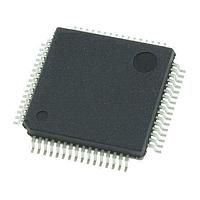
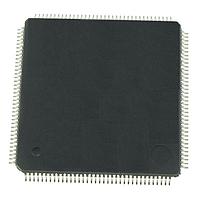
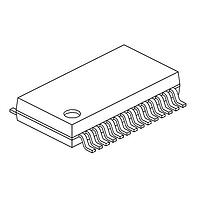
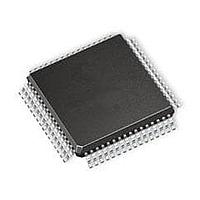
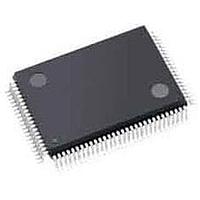
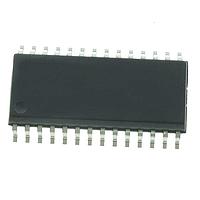
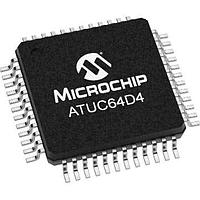
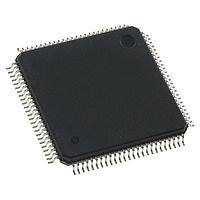
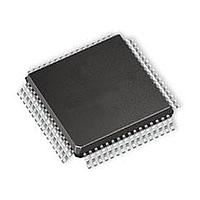
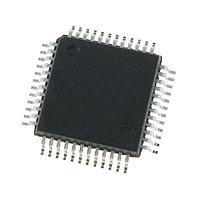
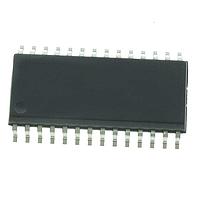
For example, the Renesas Electronics HD64F7044F28V QFP represents a flash-based SuperH device aimed at embedded control tasks with integrated analog and timer resources. The Renesas Electronics HD6417145FW50V LQFP and HD6417750SF167 illustrate another selection path, where designers may prioritize higher operating frequency, broader I/O availability, or ROM-less architectures for external memory-based systems. On the Microchip side, ATSAM4CMP8CA-AUR shows how a 32-bit MCU can combine flash memory, communication interfaces, and integrated peripherals in a compact embedded design workflow.
How to choose the right 32-bit MCU
The best selection process starts with the application rather than the part number. Engineers usually begin by mapping the number of required I/O points, analog channels, communication ports, timing resources, and software overhead. From there, practical filters such as package type, supply voltage, operating temperature, and memory strategy help narrow the field to devices that fit both the design target and the manufacturing constraints.
It is also important to review whether the application needs internal flash, external bus support, or a ROM-less device intended for a more customized architecture. A compact controller for a dedicated machine function may benefit from an integrated flash MCU, while a more specialized embedded system with external code storage or advanced networking can justify a different structure. If the project has unusual control, timing, or interface requirements, it may also be useful to compare this range with specialized microcontrollers.
Performance, integration, and package trade-offs
Not every 32-bit MCU is optimized for the same design goal. Some devices in this category emphasize moderate clock speeds and compact packages for space-constrained boards, while others provide higher frequency operation, more I/O, or enhanced connectivity options such as Ethernet. The difference matters in applications where data throughput, response time, or field communication is part of the core system requirement.
Package selection should not be treated as a secondary detail. QFP, LQFP, BGA, and related package styles affect assembly method, inspection, repairability, and board density. For prototyping or lower-complexity production, a more accessible package may simplify handling, while denser packages can help when the board layout must stay compact. In industrial procurement, these trade-offs are often reviewed together with lifecycle considerations and second-source strategy.
Use cases across industrial and electronic systems
In B2B and industrial environments, embedded control requirements are rarely identical from one project to the next. A 32-bit MCU may be used in motion and process control boards, sensor acquisition units, gateway modules, operator panels, data loggers, or custom communication interfaces. The common thread is the need to combine control logic and peripheral management in a programmable, production-ready component.
For teams standardizing their platform, this category can also serve as a bridge between simpler controller designs and more advanced embedded architectures. Buyers who are still assessing whether 32-bit processing is necessary for a given project may find it useful to compare against 8-bit microcontrollers when application complexity, cost targets, or firmware size remain relatively modest.
What to review before ordering
Before selecting a specific device, it is worth checking the core architecture, available development ecosystem, package format, supply range, and required interfaces in detail. In many cases, DMA support, ADC resources, timers, and communication blocks such as I2C, SPI, SCI, UART, or Ethernet will shape both hardware design and firmware effort more than raw clock speed alone.
It is also advisable to confirm how the MCU will be used in the larger system: as a standalone controller, as part of a distributed embedded node, or as the main controller in a mixed-signal design. That broader view helps avoid over-specifying the processor while still ensuring enough headroom for firmware growth, field updates, and future feature expansion.
Final thoughts
This category is well suited to design teams looking for a practical balance of processing capability, peripheral integration, and architectural flexibility. Whether the priority is a flash-based controller for self-contained firmware or a ROM-less device for a more customized system, 32-bit MCUs provide a strong foundation for many embedded industrial and electronic applications.
By comparing architecture, memory approach, interfaces, package style, and environmental requirements together, buyers can shortlist devices more efficiently and choose components that fit both current design goals and long-term product strategy.
Get exclusive volume discounts, bulk pricing updates, and new product alerts delivered directly to your inbox.
By subscribing, you agree to our Terms of Service and Privacy Policy.
Direct access to our certified experts