
Microcontrollers
Choosing the right control device often shapes the performance, cost, and long-term maintainability of an embedded design. In many electronic systems, microcontrollers provide the practical balance between processing capability, peripheral integration, and low-power control needed for sensing, communication, and real-time decision-making.
This category brings together devices used in a wide range of embedded applications, from compact control boards and communication modules to instrumentation and mixed-signal designs. Whether you are replacing a legacy part, evaluating an 8-bit platform for simple control logic, or reviewing options for more integrated embedded architectures, this page helps frame the selection process in a more useful technical context.
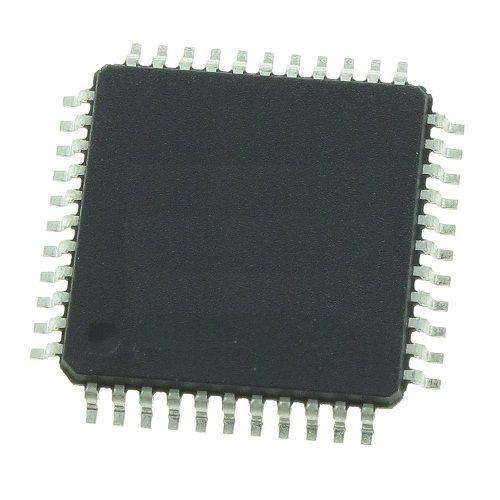
Where microcontrollers fit in embedded system design
A microcontroller is typically used when a design needs a compact device that can execute firmware while also handling common I/O and communication tasks on the same chip. This makes it well suited for control loops, user interfaces, sensor acquisition, serial communications, timing functions, and equipment monitoring in industrial and commercial electronics.
Compared with devices in categories such as central processing units, microcontrollers are generally chosen for more tightly integrated control tasks rather than for general-purpose computing. In projects that demand deterministic response, simpler board design, and lower component count, they remain a very practical foundation.
Common architectures and integration levels
One of the main reasons engineers select from a broad embedded control category like this is the diversity of architectures available. Depending on the application, a design may prioritize a familiar 8051-compatible core, an AVR-based device, or a more application-focused solution that combines control with communications or analog features.
For example, devices such as the Altera AT89S8253-24AU and Altera AT89S8253-24JU illustrate classic 8051-based options for compact control tasks, while the Altera ATMEGA8515-16JU and Altera ATMEGA8-16AUTR represent AVR-oriented approaches often considered for flexible peripheral handling. For projects requiring mixed-signal capability, the Analog Devices ADUC814BRU is a useful example of how a microcontroller can sit closer to the measurement chain rather than acting only as a digital controller.
Typical applications across industry
Microcontrollers are widely used in industrial electronics because they support direct interaction with the physical world. Typical use cases include motor and actuator control, panel interfaces, sensor polling, protocol conversion, environmental monitoring, test fixtures, and supervisory functions inside larger machines.
They are also common in connected and communications-oriented hardware. The Broadcom BCM94704AGR Module 802.11a/g 5.8GHz 54Kbps shows how embedded control can work alongside wireless functionality in more specialized designs. In practical engineering terms, the microcontroller layer often acts as the bridge between field inputs, local logic, and higher-level system communication.
How to evaluate the right device
The best choice usually depends less on headline performance and more on system fit. Engineers typically compare the core architecture, memory resources, available interfaces, I/O count, clock speed, operating voltage, and environmental requirements before narrowing down candidates. Even modest differences in serial support or port availability can affect PCB layout, firmware complexity, and future design revisions.
As an example, the listed data for the ADUC814BRU highlights common selection criteria such as 8-bit architecture, SPI, I2C, UART/USART support, operating range, and temperature tolerance. Similarly, parts like the Altera AT89S8253 family emphasize how interface support and I/O density matter in smaller control systems. If your application needs more specialized math throughput or signal-centric processing, it may also be worth reviewing digital signal processors and controllers alongside standard MCU options.
Examples of devices in this category
This catalog includes a mix of legacy-oriented and application-specific devices from manufacturers such as AMD, Altera, Analog Devices, and Broadcom. AMD entries such as NG286LX-16/F, NG286LX-16/S, S80C188-20M, AM29C334GC, and AM29C331GC are relevant where existing platforms, long-life equipment, or compatibility-driven sourcing is important.
Other listed devices provide a useful spread of implementation styles. The Altera P80C32SBAA,512 fits the profile of a classic embedded controller, while the ATMEGA8515-16JU and ATMEGA8-16AUTR reflect compact MCU choices for general embedded logic. Together, these examples show that this category is not limited to a single architecture or application pattern, which is often exactly what sourcing teams need when comparing alternatives.
Microcontrollers within the wider programmable device ecosystem
In many product designs, a microcontroller does not work alone. It may manage housekeeping, timing, and communications while a programmable logic device handles custom digital logic or high-speed interface tasks. That is why engineers sometimes evaluate MCUs together with complex programmable logic devices when balancing flexibility, latency, and board complexity.
This wider ecosystem matters for scalable design. A simple controller may be enough for sequencing and peripheral management, but systems with evolving logic requirements can benefit from a combined approach. Understanding that boundary helps buyers avoid over-specifying a processor when a well-matched microcontroller can already meet the control requirement efficiently.
What matters for sourcing and lifecycle planning
For B2B purchasing, technical suitability is only part of the decision. Package style, compatibility with existing firmware, migration risk, and long-term service needs all influence component selection. In maintenance or redesign projects, teams often prioritize continuity with an installed base over moving immediately to a newer architecture.
This is especially relevant for embedded equipment used in industrial automation, communications hardware, and field devices where validation cycles are costly. Reviewing available microcontroller options by architecture, interface set, and manufacturer family can make it easier to align engineering needs with procurement constraints and service expectations.
Final considerations
A well-chosen microcontroller simplifies both hardware and firmware development by combining control logic, memory resources, and interfaces into a single embedded platform. The products in this category support a broad range of design paths, from established 8-bit implementations to more integrated devices used in communications and mixed-signal applications.
If you are comparing parts for a new design or searching for a compatible replacement, focus first on the functional requirements of the system: processing method, interface needs, I/O structure, and lifecycle considerations. That approach makes this Microcontrollers category more than a parts list—it becomes a practical starting point for selecting embedded components that fit the real demands of your application.
Get exclusive volume discounts, bulk pricing updates, and new product alerts delivered directly to your inbox.
By subscribing, you agree to our Terms of Service and Privacy Policy.
Direct access to our certified experts
