8bit Microcontrollers
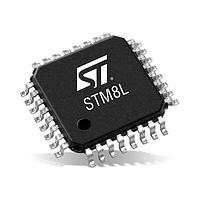
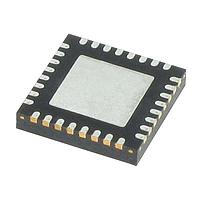
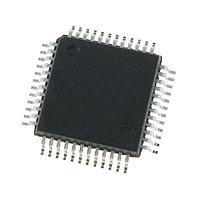
For many embedded designs, the priority is not raw processing power but a stable, cost-conscious controller that can handle I/O, timing, communication, and basic control tasks with minimal overhead. That is why 8bit Microcontrollers remain relevant across industrial electronics, consumer devices, interface boards, and compact automation products. They are widely used where predictable behavior, straightforward development, and efficient hardware integration matter more than moving to a larger architecture.
Within this category, buyers typically compare devices based on memory size, available interfaces, operating voltage, package style, and temperature range. From simple controllers for low-pin-count applications to higher-integration parts with UART, SPI, I2C, and analog capability, this product group covers a broad range of practical embedded design needs.
Where 8-bit MCUs still make sense
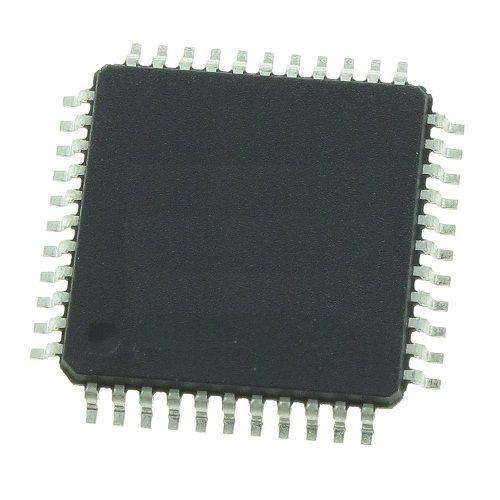
An 8-bit MCU is often the right choice for dedicated control logic, sensor interfacing, keypad or display handling, simple communication tasks, and equipment housekeeping functions. In many systems, the controller is not expected to run a heavy software stack; instead, it manages a fixed set of inputs and outputs with reliable timing and low power requirements.
This makes the category especially useful for engineers designing compact control boards, maintenance replacements, and mature product platforms. If the application needs more processing headroom or software complexity, it may be worth reviewing 16-bit microcontrollers or 32-bit microcontrollers as part of the selection process.
Typical device families in this range
This selection includes established architectures from Microchip Technology and Infineon, both of which are widely used in embedded control applications. In practical terms, that means buyers can evaluate classic PIC-based options, AVR-based devices, and alternative 8-bit platforms depending on development familiarity, peripheral needs, and lifecycle considerations.
Examples from the category illustrate that range well. Devices such as the Microchip Technology PIC16C54AT-10I/SS and PIC16C58B-20/SS fit straightforward control functions with modest memory and I/O requirements, while parts like the ATMEGA88-20MI offer a familiar AVR core with integrated serial interfaces. On the Infineon side, the CY8C21334-12PVXET and XC8664FRABEKXUMA1 show how 8-bit controllers can also support richer peripheral sets, communication options, and extended temperature capability.
How to choose the right 8-bit microcontroller
The first step is to map the controller to the actual workload. For a simple control loop or small interface task, low memory and a limited I/O count may be enough. For a board that must manage multiple serial channels, analog inputs, PWM outputs, or a larger number of signals, a higher-capacity device is often the safer choice.
It is also important to look beyond core width and check the peripheral set. Interfaces such as I2C, SPI, UART, and USART can reduce the need for external logic and simplify board design. Parts like the PIC16C65AT-20E/L or PIC18F87K22-I/PTRSL are examples of devices that address more communication-heavy designs, while smaller devices such as the PIC12LF1501-I/P are better suited to compact, focused control tasks.
Environmental and electrical requirements matter just as much. Voltage range, mounting style, and operating temperature should align with the target application, especially in industrial or field-installed equipment. For long-running products, designers also commonly check package compatibility and firmware migration paths before finalizing a part number.
Memory, I/O, and integration considerations
When comparing 8-bit devices, memory size should be viewed in context. A small EPROM, OTP, or Flash device may be entirely adequate for fixed-function products with stable code, while larger Flash capacity becomes more useful when firmware must support additional diagnostics, communication routines, or future revisions.
I/O availability is another major filter. Some applications only need a handful of pins for switches, LEDs, and a sensor input, while others need dozens of channels for multiplexed control, communication buses, and status feedback. For example, a compact PIC12 device with 5 I/O serves a very different design goal than a larger PIC18 family part with high pin count and broader interface support.
Integration level can also affect total system cost. Features such as watchdog timers, brown-out detection, PWM, and built-in A/D conversion can reduce external component count and improve system robustness. If the project depends on more architecture-specific control features rather than general-purpose MCU selection, it may be useful to explore specialized microcontrollers.
Examples of application fit
Lower-end 8-bit controllers are commonly selected for appliance logic, small motor control stages, panel interfaces, low-speed serial communication, and simple monitoring functions. In these use cases, designers often prioritize fast startup, stable behavior, and easy integration into proven hardware designs.
Mid-range and higher-end 8-bit devices can extend into more demanding roles such as multi-channel control, embedded communication nodes, instrumentation support circuits, and distributed I/O tasks. A part such as the PIC18F8720T-E/PT, with larger memory and broader connectivity, is more appropriate when the application needs to coordinate more signals or support external memory and communication interfaces.
For battery-aware or low-voltage designs, operating range becomes a major differentiator. Devices such as the PIC12LF1501-I/P can be relevant where lower supply voltage is required, while other controllers in the category are better aligned with traditional 5 V embedded systems.
Why this category is useful for B2B sourcing
From a procurement perspective, grouping 8-bit MCUs in one place makes it easier to compare architecture, package, memory, and interface options without jumping between unrelated semiconductor classes. That is particularly helpful for OEM buyers, maintenance teams, and engineers working on redesigns where compatibility and availability are just as important as performance.
This category also supports fast evaluation across legacy and mainstream embedded platforms. Some projects need a simple replacement for an existing control board, while others need a cost-effective controller for a new design that does not justify moving to ARM-class processing. In cases where an application may eventually scale upward, reviewing ARM microcontrollers can help frame the trade-off between software complexity, integration level, and system cost.
Final selection guidance
The right 8-bit MCU depends less on headline specifications and more on application fit. A practical selection process usually starts with required I/O, memory, interface support, voltage range, and temperature rating, then narrows further by package style and preferred development ecosystem.
For buyers comparing established embedded platforms from Microchip Technology or Infineon, this category provides a useful starting point for both compact control designs and more feature-rich 8-bit implementations. If your project calls for dependable embedded control without unnecessary architectural overhead, this is a strong place to evaluate parts that match the real demands of the design.
Get exclusive volume discounts, bulk pricing updates, and new product alerts delivered directly to your inbox.
By subscribing, you agree to our Terms of Service and Privacy Policy.
Direct access to our certified experts