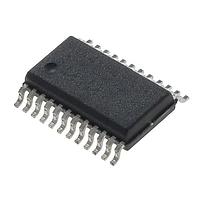
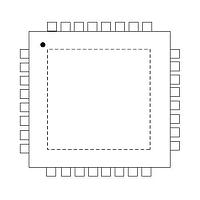
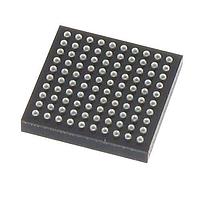
ARM Microcontrollers
When embedded designs need a practical balance of processing performance, peripheral integration, power efficiency, and long product lifecycles, ARM-based MCUs are often the starting point. This category brings together ARM Microcontrollers used in industrial control, connected devices, measurement equipment, HMIs, and general embedded product development.
For engineering and procurement teams, the key advantage of this segment is flexibility. ARM MCU platforms span compact low-power devices for basic control tasks through to higher-performance parts with richer communications, larger memory, and broader I/O resources for more demanding real-time applications.
Where ARM MCUs fit in embedded system design
ARM microcontrollers are widely selected for systems that need more than simple digital control but do not require a full application processor. In many designs, they serve as the core of sensor acquisition, motor control, communications handling, protocol conversion, safety monitoring, or user interface management.
Compared with broader 32-bit microcontroller options, this category is especially relevant when architecture standardization, software ecosystem support, and scalable performance matter. Many designers also review ARM devices alongside 8-bit microcontrollers when deciding whether a project needs more memory, wider data handling, or more advanced communication capability.
Typical applications in industrial and electronic products
In industrial environments, ARM MCUs are commonly used in controllers, drives, communication modules, process instruments, power management boards, and smart peripheral devices. Their broad peripheral mix often helps reduce external component count while supporting common interfaces such as SPI, I2C, UART, CAN, USB, or Ethernet, depending on the series.
They are also well suited to connected embedded products where the design must handle multiple subsystems at once. That may include reading analog inputs, managing communication stacks, storing operating parameters, and coordinating actuator outputs in real time.
Examples from leading manufacturers
This category includes devices from established suppliers such as Infineon, Microchip, and Renesas Electronics. The product mix in the current range illustrates how ARM MCUs can serve very different design goals, from compact low-power control through to communication-heavy industrial platforms.
For example, the Infineon XMC1000 and XMC1400 families are often relevant for cost-sensitive industrial control tasks where integrated peripherals and reliable temperature performance are important. Devices such as Infineon SP001308144 and SP001306928 show the kind of Cortex-M0 class option engineers may consider for compact control nodes, converters, or interface boards.
At a higher performance tier, Infineon XMC4000 series devices such as SP001171976, SP001311750, SP001311812, and SP001279434 demonstrate how Cortex-M4 based MCUs can support more demanding applications with broader interface sets, higher clock speeds, and increased memory resources. These are the kinds of parts often evaluated for automation equipment, communication gateways, and advanced control architectures.
On the Microchip side, ATSAML10E14A-AFT represents a smaller ARM-based option aimed at efficient embedded control, while other Microchip devices in the broader MCU portfolio can address higher-end needs. For buyers comparing architectures, this makes it useful to review ARM devices in parallel with specialized microcontrollers when a project depends on a particular peripheral set or application-specific function.
How to choose the right ARM microcontroller
A good selection process starts with the actual workload rather than the core name alone. The most important questions usually involve required interfaces, memory size, analog capability, package constraints, operating temperature range, and whether the design needs deterministic real-time behavior for control or communications.
Peripheral integration is often one of the biggest decision factors. If the application needs CAN, Ethernet, USB, LIN, or multiple serial interfaces on one device, the available peripheral mix can quickly narrow the shortlist. For measurement, power, and control products, ADC channel count and resolution may also be central to the decision.
Performance and memory headroom should be matched to firmware complexity, not just current requirements. A design handling communication stacks, diagnostics, data logging, and control loops at the same time may benefit from moving beyond an entry-level MCU to a device with more RAM, more flash, and a stronger core.
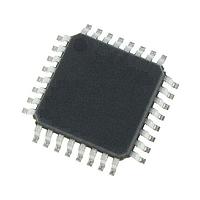
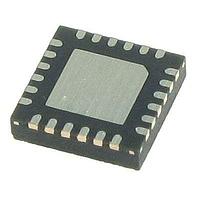
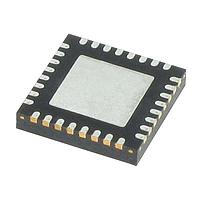
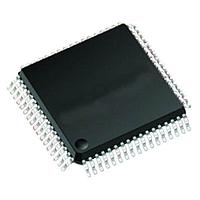
Package and environmental limits also matter in real production settings. Pin count, PCB density, assembly method, and thermal conditions can determine whether a compact VQFN device or a larger TQFP/LQFP package is the better fit for manufacturing and serviceability.
Entry-level versus higher-performance ARM MCU families
Not every project needs the same class of ARM microcontroller. Entry-level Cortex-M0 devices are often chosen for simple control functions, local communications, and compact embedded modules where low complexity and efficient cost structure are priorities. In this range, the focus is usually on essential peripherals, stable operation, and straightforward firmware development.
Higher-performance Cortex-M4 devices are more appropriate when the system must manage richer communications, larger code bases, or more advanced real-time control. In industrial electronics, that can include motion-related control, communication hubs, smart I/O modules, and systems that combine sensing, processing, and network connectivity within a single board.
If your project is still being scoped, it can also be helpful to compare this category with the broader 16-bit microcontroller range. In some applications, a 16-bit device remains sufficient, while others clearly benefit from the software scalability and peripheral richness available in ARM-based 32-bit platforms.
Why this category matters for sourcing and lifecycle planning
For B2B buyers, selecting an ARM MCU is not only a technical choice but also a supply-chain decision. Engineers often need devices that align with approved vendor lists, established toolchains, qualification processes, and long-term maintenance plans. A well-structured ARM MCU category helps teams compare options faster without losing sight of application fit.
This is especially useful in industrial and OEM environments where one platform may be reused across multiple product variants. Standardizing on an ARM ecosystem can simplify firmware portability, reduce redevelopment effort, and make it easier to scale from a smaller controller to a more capable one within a similar design philosophy.
Find ARM microcontrollers that match your design priorities
Whether the requirement is a compact controller for embedded I/O, a communication-capable MCU for industrial electronics, or a more capable Cortex-M4 platform for complex real-time tasks, this category supports a structured starting point for evaluation. The available range covers different levels of integration, memory, interface support, and package styles suited to practical engineering use.
By comparing application needs against peripherals, performance class, environmental requirements, and lifecycle considerations, teams can narrow down ARM microcontrollers more effectively and reduce redesign risk later in the project. If you are building around established embedded workflows and scalable 32-bit control, this category is a strong place to begin.
Get exclusive volume discounts, bulk pricing updates, and new product alerts delivered directly to your inbox.
By subscribing, you agree to our Terms of Service and Privacy Policy.
Direct access to our certified experts