
Amplifier ICs
Signal conditioning often determines whether an electronic design performs reliably in the real world. In analog front ends, sensor interfaces, data acquisition systems, and industrial control boards, the right amplifier stage helps preserve small signals, drive loads correctly, and maintain stable operation across the rest of the circuit. That is why selecting suitable Amplifier ICs is not just about gain alone, but about bandwidth, input structure, output behavior, supply range, and the role the device plays in the full design.
This category brings together integrated amplifiers used in a wide range of semiconductor and embedded applications. Whether the requirement is a general-purpose operational amplifier, a buffer stage, or a differential amplifier for cleaner signal measurement, the available options support both straightforward designs and more specialized analog signal paths.
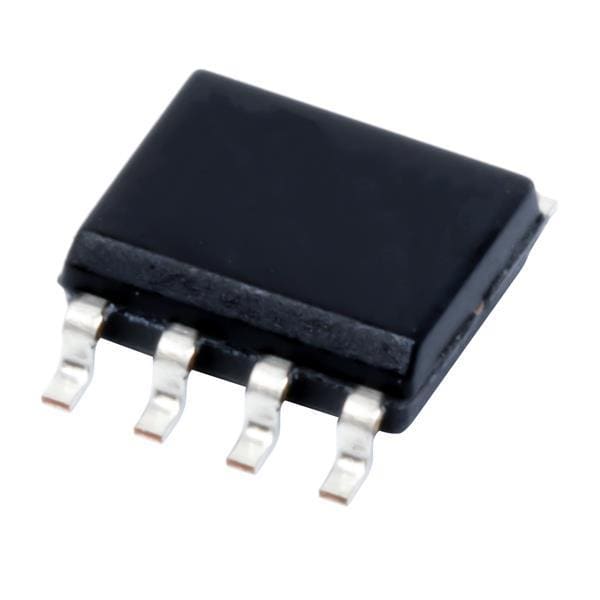
Where amplifier ICs fit in electronic system design
Amplifier ICs are used wherever low-level or conditioned signals need to be processed before further control, conversion, or transmission. In practical terms, they appear in measurement electronics, industrial sensing, interface boards, communication modules, and mixed-signal systems that combine analog accuracy with digital control.
In many projects, these devices work alongside other functional blocks rather than in isolation. For example, an amplifier stage may sit in front of conversion and processing hardware, or be combined with devices from broader specialized IC solutions when the application requires a more application-specific analog chain.
Common amplifier IC types in this category
This category includes several familiar amplifier formats. General-purpose op amps are widely used for amplification, filtering, level shifting, buffering, and basic analog computation. Buffer amplifiers are often chosen when signal isolation, impedance matching, or output drive capability is important. Differential amplifiers are especially useful when engineers need to measure the difference between two signals while reducing the effect of common-mode noise.
The listed products illustrate this range well. Examples such as the Analog Devices AD706JR-REEL and LT6203IMS8 cover general-purpose operational amplifier use cases, while the LT1990AHS8#TR represents a differential amplifier approach for more demanding signal measurement tasks. Buffer-oriented parts such as AD8051AR-REEL7, AD8048AR, AD8047AR-REEL, and LT1010CT/FLOW06 reflect the need for stable signal drive in compact circuit designs.
Selection factors that matter in real applications
When comparing amplifier ICs, engineers typically start with the signal itself: amplitude, source impedance, frequency content, and expected noise environment. From there, key parameters include gain bandwidth, slew rate, input bias current, offset voltage, number of channels, and supported supply voltages. These characteristics directly affect accuracy, response speed, and how easily the amplifier can be integrated into an existing architecture.
Output structure also matters. Some designs benefit from rail-to-rail input and output behavior, particularly in lower-voltage systems where available headroom is limited. In other cases, a non-rail-to-rail part may still be appropriate if the operating range is well controlled and the application prioritizes different analog characteristics. Packaging and mounting style are also relevant, especially for dense boards or production environments using surface-mount assembly.
Examples from leading manufacturers
Analog Devices is strongly represented in this category, with parts suited to both precision-oriented and higher-speed amplifier needs. The AD706JR-REEL, for instance, reflects a dual general-purpose amplifier format, while the AD746JR-REEL shows a JFET-input approach that can be useful in circuits where input behavior is an important consideration. For higher-bandwidth requirements, the LT6203IMS8 offers a dual amplifier option with rail-to-rail input/output characteristics.
There is also broader semiconductor context beyond purely analog amplification. Altera PLMJ5128A appears here as part of the wider ecosystem of IC sourcing, which can be relevant for buyers managing multi-component BOMs across digital and analog sections of a design. If your project also includes programmable or processing hardware, it may be useful to review related categories such as embedded computing components depending on the system architecture.
Typical application scenarios
In industrial electronics, amplifier ICs are frequently used in sensor signal conditioning, current and voltage measurement, control feedback loops, and communications interface circuits. A differential amplifier can support cleaner measurement in electrically noisy environments, while a buffer amplifier may help stabilize a signal path between a sensor output and downstream circuitry.
In mixed-signal designs, amplifier stages are often paired with filtering functions to improve signal quality before conversion or control. Where the analog path needs more defined frequency shaping, related categories such as active filter ICs can be relevant alongside amplifier selection. This is especially useful in instrumentation, audio-frequency conditioning, and front-end signal cleanup.
How to narrow down the right part
A practical starting point is to define whether the application needs precision, speed, differential measurement, output drive, or multi-channel integration. From there, engineers can compare device structure and electrical fit. A dual-channel device may reduce board space in compact designs, while a single-channel differential amplifier can be the better choice when measurement quality is the primary concern.
It also helps to consider how the amplifier interacts with surrounding ICs in the design. If the amplifier is part of a larger analog chain, browsing the broader amplifier IC portfolio together with adjacent IC categories can make part selection more efficient. For procurement teams, consistency in package style, manufacturer preference, and sourcing availability may be just as important as the electrical specification itself.
For engineering teams and B2B procurement
For design engineers, amplifier IC selection affects performance margins, PCB layout decisions, and long-term maintainability. For purchasing teams, the same category supports faster comparison of manufacturer options, package formats, and product suitability across multiple projects. This is particularly valuable in industrial and OEM environments where repeatability and documentation matter.
Because amplifier ICs serve many roles across analog and mixed-signal systems, the best choice depends on application context rather than one universal specification. Reviewing amplifier type, operating range, channel count, and integration needs will usually lead to a more reliable shortlist than focusing on a single parameter in isolation.
Conclusion
Choosing amplifier ICs becomes easier when the selection is tied to the actual signal path, not just a generic part description. From general-purpose op amps to buffer and differential amplifier devices, this category supports a wide range of electronic design tasks across industrial, embedded, and measurement applications. If you are comparing options for a new design or refining an existing BOM, use the category as a starting point to match amplifier function, electrical behavior, and integration requirements more effectively.
Get exclusive volume discounts, bulk pricing updates, and new product alerts delivered directly to your inbox.
By subscribing, you agree to our Terms of Service and Privacy Policy.
Direct access to our certified experts
