
Counter ICs
Digital counting functions appear in far more designs than many buyers initially expect. From frequency division and pulse accumulation to event sequencing and timing logic, Counter ICs remain a practical building block in control electronics, embedded hardware, industrial interfaces, and legacy system maintenance.
On this category page, buyers can compare counter devices used for binary counting, synchronous counting, up-counting, and decade counting across established semiconductor manufacturers. Whether you are replacing an existing logic part or selecting components for a new board design, the right device depends on counting method, logic family compatibility, supply requirements, package style, and how the counter fits into the broader signal chain.
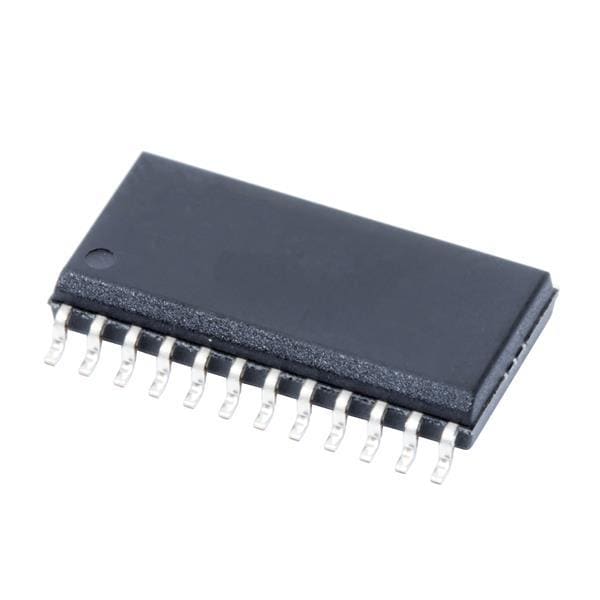
Where counter ICs are used in electronic systems
A counter device converts clock pulses or incoming events into a defined count sequence. In practice, that makes these ICs useful in applications such as timer circuits, position or motion pulse tracking, digital instrumentation, simple control logic, and frequency-related functions where signals need to be divided or accumulated in a predictable way.
In industrial and embedded electronics, counters are often part of a larger logic architecture that may also include memory ICs, interface logic, and processing hardware. They can be used as standalone building blocks in compact designs or integrated into more complex control boards where dependable pulse handling is required.
Common counter types found in this category
This selection includes several familiar counter architectures. Binary counters are widely used when the output must advance in a standard binary sequence with each clock pulse. Devices such as the HITACHI HD14161BP and onsemi DM74ALS161BN represent the kind of 4-bit synchronous binary up counters often specified in classic digital logic designs.
Some parts are chosen for synchronous clear behavior or related timing control. For example, the NXP 74LV163PWDH is identified as a synchronous binary counter with synchronous clear, which can be important in designs that need controlled reset behavior without introducing asynchronous timing concerns.
This category also includes decade counters and multi-stage counter options suited to divide-by-ten and related counting tasks. The onsemi MC74HC390AFL1, described as a dual decade counter, is a typical example of a part used where decimal-oriented counting or signal division is needed rather than a simple binary progression.
How to choose the right counter IC
Selection usually starts with the counting function itself. Buyers should confirm whether the design needs an up counter, a bidirectional counter, a binary sequence, a decade function, or a specific reset and preset behavior. A part such as Nexperia 74HC193D653 may suit applications where the counter structure differs from a simple fixed up-counting requirement, while devices in the 161/163 family are often considered for straightforward synchronous binary counting.
Next, check the logic family compatibility of the surrounding circuit. In real projects, replacement and design-in decisions are often constrained by voltage rails, input thresholds, timing margins, and existing board architecture. Variants from NXP, Nexperia, onsemi, and Renesas Electronics may serve similar logic purposes, but package style, family behavior, and integration context still need careful review.
Package format also matters, especially for maintenance, prototyping, or automated assembly. Through-hole PDIP versions may be convenient for legacy boards and lab work, while SOIC and other surface-mount packages are more common in modern production environments.
Representative products in this range
Several parts in this category illustrate the variety available. The HITACHI HD14161BP is presented as a single 4-bit binary up counter in a 16-pin PDIP package, making it relevant for traditional digital logic layouts and replacement requirements. The closely related HITACHI HD14162BP and Renesas Electronics HD14163BP also reflect the continued demand for established counter families in maintenance and redesign work.
For newer logic ecosystems, Nexperia and NXP offer devices such as the 74HC4020N652, 74HCT161DB118, and 74LVC16374ADL,112-NXP. These parts can be useful when designers need mainstream logic-family options for compact digital circuits, clock-driven state progression, or pulse-counting functions in mixed electronic assemblies.
onsemi is also well represented in this category, including the MC74HC390AFL1 and DM74ALS163BM. These examples show how the range covers both standard binary counter requirements and more specialized divide or decade counting tasks, helping buyers compare parts by function rather than by part number alone.
Counter ICs in embedded and industrial design workflows
Although many counting functions can be implemented inside programmable devices, discrete counters still offer advantages in simplicity, deterministic behavior, and straightforward replacement. They are often used in support circuits around controllers, signal-conditioning chains, display-driving logic, and timing sections of embedded boards.
In broader designs, these devices may work alongside amplifier ICs for front-end signal handling or with specialized ICs when the counting stage is only one part of a larger measurement or control function. This makes category-level comparison especially useful for engineers and procurement teams that need both functional fit and sourcing flexibility.
What buyers typically verify before ordering
Before selecting a device, it is worth checking the full datasheet details for pinout, count sequence, enable inputs, reset method, propagation timing, and package compatibility with the target PCB. Even when two parts are functionally similar at a high level, substitution may not be practical if logic thresholds or pin assignments differ.
For repair and replacement purchasing, manufacturer continuity can also matter. This category includes products associated with recognized suppliers such as HITACHI, Honeywell, NXP, Nexperia, onsemi, and Renesas Electronics, giving buyers a useful starting point when matching legacy references or qualifying alternate sources.
Finding the best fit for your application
A well-chosen counter IC supports stable pulse handling, predictable sequencing, and efficient digital design without adding unnecessary complexity. The most suitable option will depend on whether your application prioritizes binary counting, decade division, synchronous operation, board-level compatibility, or replacement of an existing part already designed into equipment.
By comparing function, logic family, package style, and manufacturer ecosystem, buyers can narrow this category to the devices that align with real design constraints. If your project also involves adjacent logic and processing stages, reviewing related IC categories can help build a more complete component selection path while keeping the core counting function reliable and easy to integrate.
Get exclusive volume discounts, bulk pricing updates, and new product alerts delivered directly to your inbox.
By subscribing, you agree to our Terms of Service and Privacy Policy.
Direct access to our certified experts