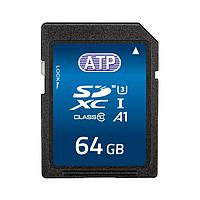
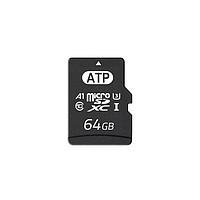
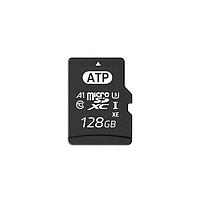
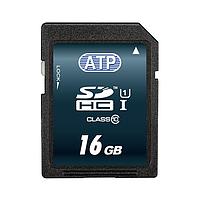
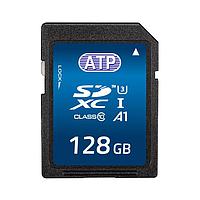
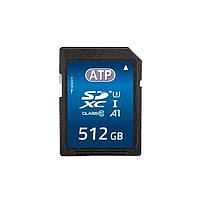
Memory Cards
Reliable non-volatile storage is a small component that often carries a large share of system risk. In industrial electronics, embedded devices, and connected equipment, the right memory choice affects boot behavior, data retention, field updates, and overall design longevity. This category brings together memory solutions used where stable storage, repeatable performance, and practical integration matter.
Memory Cards and related flash memory devices are commonly used in embedded platforms, industrial controllers, communication hardware, and application-specific electronics. Depending on the architecture, designers may need compact removable storage, on-board flash for firmware, or higher-density memory for data logging and application storage. Understanding the role of different memory technologies helps narrow the selection more effectively than choosing by capacity alone.
Where memory solutions fit in electronic systems
In practical system design, storage is rarely a standalone consideration. It works alongside processors, controllers, communication interfaces, and power architecture to support boot code, configuration data, logs, and application files. That is why buyers evaluating memory often also review adjacent component groups such as integrated circuits when defining the overall hardware platform.
For embedded and industrial equipment, the main question is usually not just “how much memory is needed,” but how the memory will be used. A device that stores firmware and infrequent configuration data may require a different approach from one that handles higher write volumes, larger data sets, or field-update workflows. Matching the memory type to the operating pattern is usually more important than focusing on headline capacity alone.
NOR and NAND flash in this category context
Two of the most common flash technologies seen in embedded applications are NOR Flash and NAND Flash. NOR is often chosen where fast random read access and reliable code storage are important, such as boot memory, firmware storage, and execute-in-place designs. NAND is typically used where higher density and cost-efficient bulk storage are needed, especially for larger data sets.
Examples in this category context include devices such as the Infineon S29NS512P0PBJW003 NOR Flash, Infineon S29GL512P10FAI010 NOR Flash, Micron N25Q256A11E1240F TR NOR Flash, and Micron NANDA8R3N0AZBB5E NAND Flash. These examples illustrate the breadth of flash options used across embedded systems rather than suggesting a one-size-fits-all replacement path. Selection should always reflect interface compatibility, memory map requirements, and expected write/erase behavior.
Typical applications for memory cards and flash memory
In industrial and B2B environments, memory devices support a wide range of use cases. These include firmware storage in control boards, parameter retention in automation equipment, event and process logging in monitoring devices, and data buffering in edge electronics. In more advanced systems, memory may also support software updates, diagnostics, and local storage for communication gateways.
Designers working with compact controllers and edge platforms may also need to evaluate the surrounding compute hardware. In those situations, browsing related categories such as embedded computers can help align memory decisions with processor architecture, board format, and storage interface constraints.
How to choose the right memory option
A practical selection process usually starts with four points: interface, density, endurance expectations, and environmental conditions. Interface matters because memory must fit the host design, whether that means SPI, parallel, or another supported architecture. Capacity should reflect real storage needs with enough margin for firmware growth, logs, or future feature expansion.
Environmental fit is equally important in industrial applications. Some products in this broader set show operating ranges such as -40 to 85C, which is often relevant for equipment exposed to wider ambient variation. Devices such as the Microchip Technology AT45DB161-JI NOR Flash and Microchip Technology AT49LV001-12JI NOR Flash show how interface style and temperature range can influence suitability for embedded designs.
It is also worth thinking about serviceability. If the product design may later require accessories, adapters, or supporting items for installation and integration, related options in memory accessories may be useful during project planning.
Representative manufacturers and product coverage
This category context includes flash memory products from established semiconductor suppliers such as Infineon, Micron, and Microchip Technology. These manufacturers are widely referenced in embedded design workflows because they cover different combinations of density, interface type, and memory architecture. For buyers, that means the category supports both legacy-oriented replacements and design considerations for newer hardware builds.
Representative products listed here include Micron MT29F336G08CUCABH3-12Q:A NAND Flash, Micron MT29F64G08AECABH1-10IT:A NAND Flash, and Infineon S29GL032N11FFIS20 Parallel NOR. Some are better aligned with code storage or lower-density control functions, while others are more relevant for higher-capacity data storage requirements. The most suitable option depends on the host controller, memory protocol, board footprint, and application duty cycle.
Selection considerations for industrial procurement
For engineering teams and purchasing departments, memory selection is often tied to lifecycle and integration stability. Beyond the device itself, it is useful to consider sourcing continuity, compatibility with existing BOMs, and the impact of qualification changes on production. These factors are especially relevant when the memory device is part of a validated embedded design or a field-installed industrial product.
Where replacement or cross-checking is part of the buying process, reviewing package style, mounting approach, and interface assumptions can prevent costly mismatch. Products such as the Micron RC48F4400P0TB0E4 NOR Flash and the Microchip Technology AT49LV001-12JC NOR Flash highlight how even within the same broad memory family, intended use can differ depending on configuration and design constraints.
Choosing with system requirements in mind
The most effective way to use this category is to begin with the system function the memory must support: boot code, configuration storage, application data, or removable media use. From there, narrow the options by interface, density, operating range, and integration method. This approach is usually more efficient than comparing part numbers in isolation.
For teams building or maintaining embedded and industrial electronics, a well-matched memory solution supports long-term reliability, smoother firmware management, and more predictable system behavior. If your application depends on stable non-volatile storage, this category provides a practical starting point for comparing flash memory options and identifying products that fit real design requirements.
Get exclusive volume discounts, bulk pricing updates, and new product alerts delivered directly to your inbox.
By subscribing, you agree to our Terms of Service and Privacy Policy.
Direct access to our certified experts