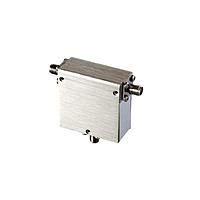
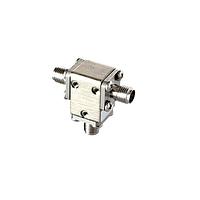
RF Circulators
In many RF signal chains, managing the direction of energy flow is just as important as amplifying or filtering it. When reflected power can reduce stability, affect measurement accuracy, or stress sensitive components, RF circulators provide a practical way to route signals between ports in a controlled, non-reciprocal path.
This category brings together circulators used across wireless, microwave, and high-frequency system design. They are commonly selected for lab setups, communication subsystems, radar-related assemblies, and other RF architectures where signal isolation, power handling, and operating band all need to be considered together.
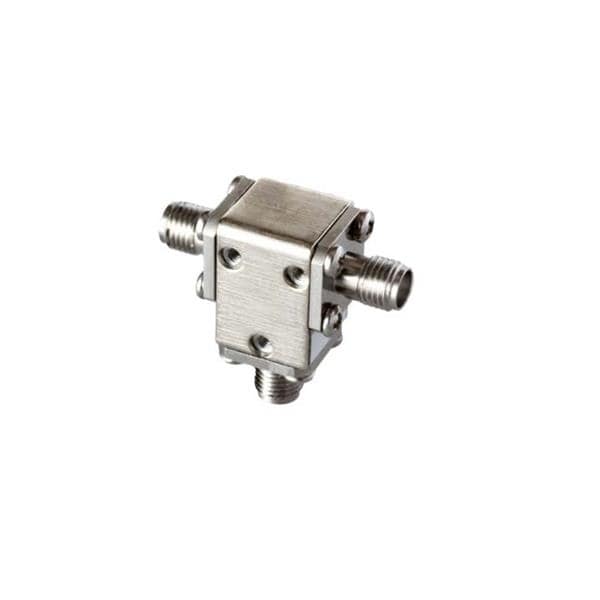
Where RF circulators fit in an RF system
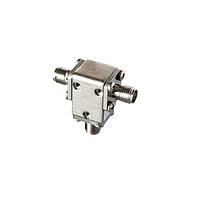
A circulator is a passive multi-port device that directs energy from one port to the next in sequence. In a typical 3-port configuration, power entering port 1 is routed to port 2, power entering port 2 is routed to port 3, and so on. This behavior makes circulators useful when transmit and receive paths must share common hardware while limiting unwanted reverse flow.
They are often used to protect amplifiers, separate forward and reflected signals, and improve overall system behavior in microwave assemblies. In some designs, engineers compare a circulator with an RF isolator when the goal is to reduce reflections, while circulators are preferred when a multi-port routing function is required.
Common configurations and selection logic
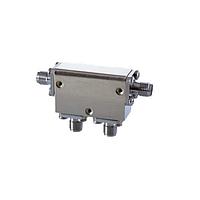
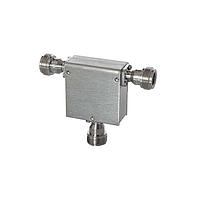
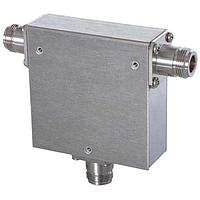
One of the first decisions is the number of ports. 3-port circulators are widely used for directional signal flow in compact RF paths, while 4-port and dual-junction designs may be chosen for more specialized routing requirements. Mechanical form factor, connector arrangement, and integration constraints are also important in bench, rack, and embedded system builds.
Frequency range is another key factor. This category includes examples spanning from lower-frequency bands, such as the DiTom D3C0555-5 Single Junction 0.50 - 0.55 GHz Circulator, up to much higher microwave ranges like the DiTom D3C3743-4 Single Junction 37.00 - 43.00 GHz Circulator. That range illustrates why engineers usually start with operating band and insertion path requirements before narrowing the shortlist by port count, package size, and environmental limits.
Single-junction and dual-junction options
Single-junction models are often selected where compact size and straightforward signal routing are priorities. Examples in this category include the DiTom D3C0102N-4 Single Junction 1.00 - 2.00 GHz Circulator, the DiTom D3C1014-4 Single Junction 10.70 - 14.80 GHz Circulator, and the DiTom D3C5814-1 Single Junction 5.80 - 14.50 GHz Circulator. These products show how circulators are available across very different operating bands while maintaining the same core routing principle.
For designs that need a different architecture, dual-junction circulators can be relevant. Models such as the DiTom D4C0116-5 Dual Junction 1.40 - 1.60 GHz Circulator, DiTom D4C3570-2 Dual Junction 3.50 - 7.00 GHz Circulator, and DiTom D4C1112-2 Dual Junction 10.70 - 11.70 GHz Circulator illustrate this broader range of options. In practice, the right choice depends on how the device is being used within the larger RF network rather than on port count alone.
Application considerations for wireless and microwave design
RF circulators are commonly evaluated in transmitter protection, duplexing-related architectures, test setups, and microwave subsystems where reflected energy must be directed away from sensitive stages. In development environments, they can help stabilize measurements by controlling how power moves through interconnected instruments and DUTs. In deployed hardware, they may support more reliable operation in systems exposed to varying loads.
Designers should also think about operating temperature, connector interface, and space constraints. For example, this category includes compact devices for higher-frequency use as well as larger units covering lower bands. Specialized options such as the DiTom D3C4080Y-2 Single Junction 4.00 - 8.00 GHz Cryogenic Circulator also show that application environment can strongly influence product selection.
Representative manufacturers and product coverage
This category includes products from DiTom, with examples covering single-junction, dual-junction, and cryogenic configurations across a broad frequency span. That breadth is useful for engineers sourcing parts for both general-purpose RF work and more application-specific microwave designs.
Depending on the wider system, buyers may also review related component ecosystems from manufacturers such as TDK and Molex. While product fit always depends on the exact RF path and integration requirement, looking at the broader supplier landscape can help when consistency, availability, and compatibility matter in B2B procurement.
How to narrow down the right RF circulator
A practical selection process usually starts with the required frequency band and the intended signal flow between ports. From there, teams typically review form factor, interface style, environmental range, and whether a standard single-junction unit or a more specialized design is appropriate. If the circulator is part of a broader active chain, it can also help to evaluate adjacent components such as RF transistors or related front-end building blocks during system planning.
It is also worth considering whether the use case is primarily laboratory validation, communications hardware, aerospace-oriented development, or a temperature-sensitive application. For example, the DiTom DHC2060-2 Single Junction 2.00 - 6.00 GHz Circulator, Mil-Aero Qualified, points to cases where qualification context may matter alongside frequency coverage and package layout.
Choosing with system performance in mind
The right RF circulator is usually the one that fits the signal path cleanly, supports the operating environment, and aligns with the rest of the RF design. Broad frequency coverage alone is not enough; port configuration, mechanical constraints, and the intended role in the circuit all influence long-term performance and integration effort.
For teams comparing options across wireless and microwave applications, this category provides a focused starting point for evaluating available circulators by band, configuration, and manufacturer. Reviewing the devices in context of the full RF chain will usually lead to a better selection than choosing on frequency range alone.
Get exclusive volume discounts, bulk pricing updates, and new product alerts delivered directly to your inbox.
By subscribing, you agree to our Terms of Service and Privacy Policy.
Direct access to our certified experts