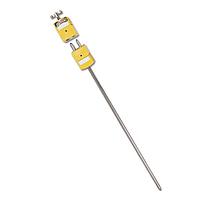
Other Temperature Sensor
Temperature measurement needs do not always fit into a standard sensor format. In many industrial, laboratory, HVAC, storage, and process environments, users need devices built for unusual mounting conditions, wider operating ranges, handheld verification, leak monitoring, or remote data collection. That is where Other Temperature Sensor products become useful: they cover specialized sensing tasks that fall outside more narrowly defined temperature sensor categories.
This category brings together a practical mix of transmitters, probes, and Wi-Fi-enabled monitoring devices for applications where standard contact sensors may not be enough. Whether the requirement is continuous analog output, high-temperature spot measurement, cryogenic monitoring, or alarm-based environmental supervision, this range helps buyers compare different sensing approaches in one place.

Where specialized temperature sensors are typically used
Not every process can be covered by a single sensor style. Some installations need a compact transmitter with enclosure protection for fixed mounting, while others require a long probe for high-temperature areas or a sensor that combines temperature monitoring with status detection such as open/close contact or water leak conditions.
These products are commonly selected for environmental monitoring, cleanrooms, storage areas, process equipment, utilities, laboratories, and facilities management. In practice, buyers often look at this category when they need a more application-specific solution than a conventional C-Type Temperature Sensor or a standard-purpose G-Type Temperature Sensor.
Different device types covered in this category
A key advantage of this category is its breadth. Instead of focusing on one sensor geometry, it includes several measurement and monitoring formats that support different operating models. Some devices are intended for integration into control systems, while others are better suited to portable checking or cloud-connected alarms.
For fixed installation, temperature transmitters such as the Rotronic TF53x and TF520 are designed to convert temperature readings into standard analog signals for downstream controllers, indicators, or automation systems. For manual verification in demanding environments, handheld probes like the Rotronic HC2-HK40 and HC2-HK25 provide an option for high-temperature measurement tasks where probe reach and response characteristics matter.
This category also includes connected monitoring hardware from SensoScientific, such as the B18-500-OTA and B18-200-OTA open/close dry contact temperature sensors, along with B17-500-OTA and B17-200-OTA units that combine water leak and temperature supervision. In addition, RTD probes such as the RTD10-C, RTD10-HP, RTD01-F, and RTD10-H support applications ranging from cryogenic measurement to higher-temperature point sensing.
How to choose the right sensor for the job
The first selection factor is the temperature range. If the application involves very low temperatures, a cryogenic-capable probe such as the SensoScientific RTD10-C may be relevant. If the environment runs at elevated temperatures, products like the Rotronic TF53x, TF520, or the HC2-HK series may be more appropriate based on whether the installation requires a transmitter or a handheld probe.
The second factor is the output or communication method. Analog transmitters are commonly chosen when the sensor must interface with PLCs, controllers, or building management systems using current or voltage signals. Wi-Fi-enabled sensors are often preferred when remote alerts, cloud logging, or distributed monitoring is more important than direct wired integration.
Another important point is installation style. Probe dimensions, cable length, housing material, and enclosure protection can all affect performance and serviceability. In some cases, the right answer may even be a more mounting-specific solution such as pipe and tank mounting sensors rather than a general specialized sensor.
Examples of sensors in this range
For industrial signal transmission, the Rotronic TF53x and TF520 represent enclosure-based temperature transmitters with support for broad measurement spans up to 200 °C. They are suitable for users who need a compact device with standard analog output behavior and a protected housing for permanent installation.
For measurement in hotter zones or more difficult access points, the Rotronic HC2-HK40 and HC2-HK25 handheld probes illustrate how probe length and sensor design influence usability. These models are relevant when operators need direct measurement access in chambers, ducts, equipment interiors, or other positions where a longer or shorter probe body changes how the reading is taken.
On the monitoring side, SensoScientific devices show how temperature sensing can be part of a broader environmental control strategy. The B18 series adds dry-contact open/close status to temperature monitoring, while the B17 series combines water leak detection with temperature data. This can be valuable in cold storage, facilities supervision, or equipment rooms where environmental events and temperature trends need to be tracked together.
What matters in industrial and facility monitoring applications
In B2B purchasing, the sensor itself is only one part of the decision. Buyers also consider how the device fits into the wider monitoring architecture: signal compatibility, mounting constraints, maintenance access, calibration practices, and alarm workflows all affect long-term usability.
For example, a standalone RTD probe may be the right fit when temperature must be measured at a specific point with high precision and connected to a compatible logger or transmitter. A transmitter with 4…20 mA output can be easier to integrate into conventional automation systems. A Wi-Fi sensor with onboard alarms and cloud connectivity may be more attractive for distributed sites where local wiring is difficult or where audit trails and alert visibility are priorities.
This is also why specialized products often sit alongside categories such as D-Type Temperature Sensor and other standard sensor families. The right choice depends less on category name alone and more on the installation method, operating environment, and monitoring objective.
Comparing transmitters, probes, and connected sensors
Transmitters are generally selected when the goal is continuous process integration. They take the measured temperature and provide a standardized output that can be sent to a controller, recorder, or supervisory system. This makes them a practical choice for fixed systems where stable signal transmission matters.
Handheld probes are better suited to spot checks, inspections, validation work, and occasional measurements in areas where permanent installation is not necessary. They are especially useful when technicians need flexibility to move between measuring points or reach into process zones.
Connected monitoring sensors are often chosen for facilities and compliance-oriented environments where data logging, alarms, and remote visibility are central requirements. In these cases, temperature is not just a process value; it becomes part of an operational monitoring workflow that may also include door status, leak events, or storage condition tracking.
Finding a more suitable fit for your application
Because this category covers a wide range of specialized use cases, selection should start with the real operating condition rather than the product form alone. Consider the temperature span, whether the sensor will be permanently mounted or used portably, what output or network method is required, and whether the application also needs related monitoring functions such as leak or contact status detection.
For buyers comparing multiple approaches, this category offers a useful starting point to narrow down between analog transmitters, handheld high-temperature probes, and remote monitoring devices. Reviewing the sensing method, installation constraints, and system integration needs will usually make the best option clear and help identify the product that matches the job with less compromise.
Get exclusive volume discounts, bulk pricing updates, and new product alerts delivered directly to your inbox.
By subscribing, you agree to our Terms of Service and Privacy Policy.
Direct access to our certified experts