Humidity controller
Stable humidity is often just as important as temperature when protecting stored goods, maintaining process consistency, and reducing avoidable equipment stress. In applications such as cold rooms, storage areas, production spaces, ducts, and environmental control cabinets, the right humidity controller helps keep conditions within a defined range so that moisture does not become a hidden source of product loss, condensation, corrosion, or mold.
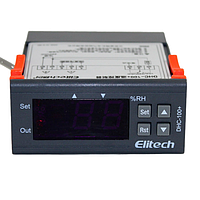
This category focuses on controllers used to monitor and regulate relative humidity, and in some cases both humidity and temperature together. Depending on the installation point and control logic, these devices can switch humidifiers, dehumidifiers, fans, heaters, or alarm outputs to support a more stable operating environment.
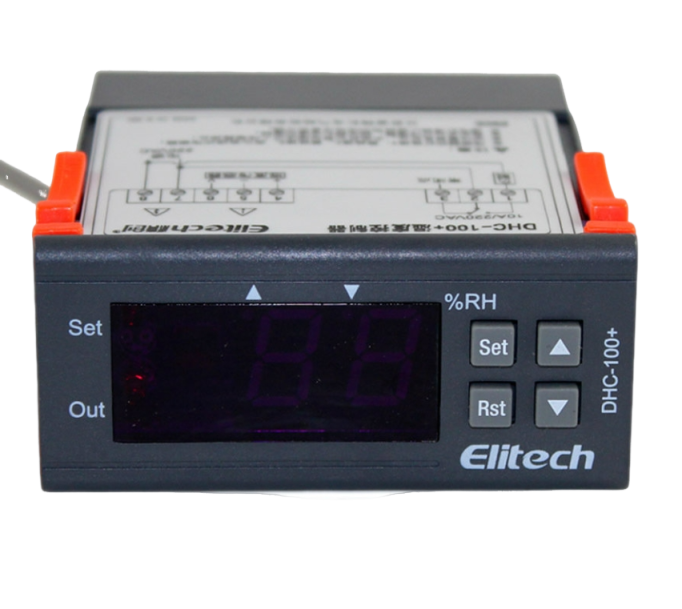
Where humidity controllers are commonly used
Humidity control is relevant in far more places than climate chambers alone. Warehouses, cold storage rooms, food handling areas, pharmaceutical storage, greenhouses, electrical panels, HVAC ducts, and process rooms may all require active monitoring and switching based on measured RH values.
In cold storage in particular, unstable humidity can lead to surface condensation, faster evaporator icing, dehydration of packaged goods, and inconsistent product quality. In ventilation or air handling systems, a duct-mounted controller can help coordinate humidification or dehumidification based on real operating conditions rather than fixed assumptions.
Typical controller configurations in this category
Not every installation needs the same control structure. Some users only need a dedicated humidity controller with a simple relay output, while others need a combined temperature and humidity control device that can manage multiple outputs and thresholds from one panel.
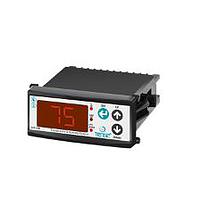
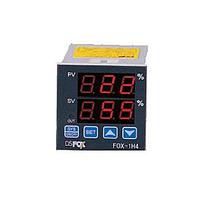
For example, the Conotec FOX-1H Humidity Controller is a compact panel device designed for humidity control with ON/OFF relay switching. If the application requires both variables, models such as the TENSE HT-310 Temperature And Humidity Control Device or the Conotec FOX-300A-1 Temperature and Humidity Controller provide a more integrated approach for environments where heat, cooling, humidification, and dehumidification interact.
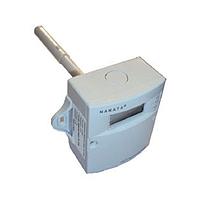
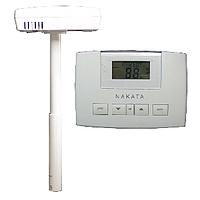
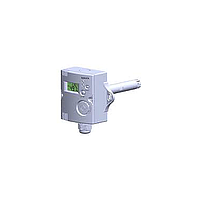
There are also application-specific formats. The Nakata NC-6085-THD High Precision Temperature & Humidity Controller is positioned for duct-related use, while the Nakata NC-3590 and NC-6080-THD illustrate setups that rely on external sensors. This matters when the sensing point must be separated from the panel for better measurement accuracy or easier installation.
What to look for when selecting a humidity controller
The first checkpoint is the control range and sensing method. A controller intended for room humidity may be sufficient for basic indoor regulation, but harsher locations or wider RH variation may call for external probes, duct sensors, or devices built to handle lower temperatures and higher condensation risk.
Next, review the output structure. A single relay can be enough for straightforward humidifier or dehumidifier switching, while more complex systems may need separate outputs for temperature and humidity, alarm functions, or multiple relays for staged control. The Conotec FOX-300A-1, for instance, is suited to applications that benefit from multiple relay outputs and broader integration possibilities.
Power supply, mounting style, and front-panel dimensions also affect the final decision. Panel cutout size, supply voltage compatibility, and terminal arrangement should match the cabinet or machine layout to avoid unnecessary rework during installation.
Sensor placement matters as much as the controller
Even a capable controller will perform poorly if the sensor is installed in the wrong location. A common mistake is placing the sensing point too close to a door, evaporator, heater, direct airflow path, or moisture source. In these cases, the displayed value may reflect a local disturbance rather than the real condition of the protected space.
External-sensor models can be useful when the panel must stay in an accessible area but the measurement point needs to be inside a chamber, duct, or controlled room. This is one reason products such as the Nakata NC-3590 or duct-oriented NC-6085-THD are relevant in practical industrial installations.
For compact room control, the Nakata NC-1099-HS Controller humidity in room is an example of a simpler approach focused on indoor humidity management. By contrast, applications that require coordinated control of both humidity and temperature may be better served by a combined device rather than two separate standalone controllers.
Examples of devices in this range
Several manufacturers in this category cover different installation and control needs. Conotec offers models ranging from dedicated humidity control to multi-output temperature and humidity controllers. This makes the brand relevant for users who need either a straightforward panel controller or a broader environmental control setup.
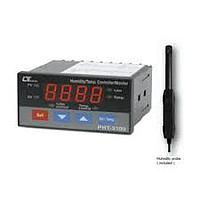
TENSE provides combined control devices such as the HT-310, which supports separate temperature and humidity control functions in one unit. NAKATA adds options for room and duct-based monitoring, while LUTRON includes controller/monitor designs such as the PHT-3109 for users who also value display and interface functions in the same device.
Rather than choosing by brand name alone, it is usually better to match the device to the control objective: room humidity stabilization, duct monitoring, cold storage support, remote sensing, or dual-parameter environmental control.
Installation and operation considerations
Humidity control systems often fail due to installation details rather than controller defects. Mismatched wiring, insufficient relay capacity for the load, poor sensor placement, and uncontrolled air infiltration can all create unstable behavior. In cold rooms or humid process areas, these issues are amplified because condensation and temperature shifts can distort readings and shorten component life.
It is also important to distinguish between measurement and control. If the main need is simply to check material moisture rather than switch equipment automatically, a dedicated measuring device may be more suitable. For related applications, users may also explore a multifunction moisture meter or a soil moisture meter depending on the material and environment involved.
When a combined temperature and humidity controller is the better choice
In many industrial and commercial spaces, humidity cannot be managed independently from temperature. Cooling reduces air moisture capacity, heating changes relative humidity, and airflow patterns affect both variables at once. In these situations, a combined controller can simplify panel design and improve control coordination.
The TENSE HT-310, Conotec FOX-300A-1, and LUTRON PHT-3109 are representative examples of devices that combine monitoring and switching for both parameters. This can be useful in cold storage, conditioned rooms, laboratory support areas, and duct systems where the process response depends on more than one environmental input.
Choosing the right category option for your application
A practical selection process starts with four questions: where the sensor will be placed, what output needs to be switched, whether temperature must be controlled together with humidity, and how demanding the environment is. Once those points are clear, it becomes easier to narrow the choice between compact room controllers, external-sensor units, duct-mounted solutions, and multi-output combination controllers.
This Humidity controller category is built for users who need more than a simple display. Whether the priority is protecting stored goods, reducing condensation, stabilizing production conditions, or supporting HVAC-related control, the right device should fit both the sensing location and the control task. Reviewing the product format, relay logic, and sensing arrangement will usually lead to a much more reliable result than selecting only by price or panel size.
Get exclusive volume discounts, bulk pricing updates, and new product alerts delivered directly to your inbox.
By subscribing, you agree to our Terms of Service and Privacy Policy.
Direct access to our certified experts