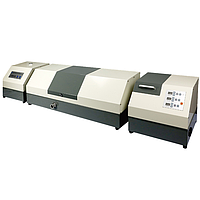
Polarimeter
When optical rotation needs to be measured reliably, the right instrument depends as much on workflow as on accuracy. In pharmaceutical, food, sugar, cosmetic, fragrance, and chemical laboratories, a polarimeter is often used to verify concentration, identify optically active substances, and support routine quality control without adding unnecessary complexity to the testing process.
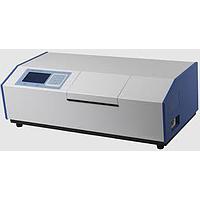
Polarimeter systems in this category cover both compact portable models and higher-precision benchtop instruments. That makes the selection suitable for users who need quick field or production-floor checks, as well as laboratories that require stable temperature control, traceable data, and broader measurement flexibility.
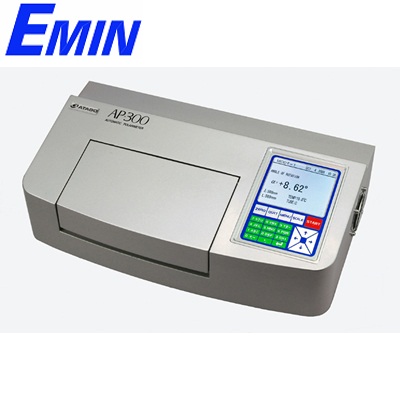
Where polarimeters are used in laboratory and production testing
A polarimeter measures the rotation of plane-polarized light as it passes through an optically active sample. In practical terms, this helps laboratories evaluate sugars, pharmaceutical compounds, food ingredients, and other substances where optical rotation is a meaningful analytical parameter.
In daily operation, the instrument may be used for incoming material checks, batch comparison, concentration-related evaluation, or confirmation of product consistency. Depending on the model, users may read angle of rotation only or work with additional values such as specific rotation, concentration, Brix, refractive index, or sugar scale, which can reduce the number of separate tests required.
Portable and benchtop options for different workflows
One of the main differences within this category is the intended working environment. Portable devices are useful when sample volume is limited, mobility matters, or fast screening is needed close to the process. Benchtop instruments are generally more appropriate for controlled laboratory conditions, repeat testing, and applications where documentation and temperature stability play a larger role.
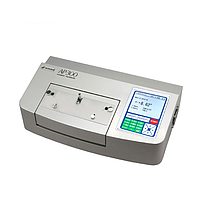
For example, the ATAGO Po-1 Portable Polarimeter is designed for quick measurement with a small sample volume and a compact form factor. In the same portable family, RePo series models combine polarimetry with refractometry, giving users a practical option when both optical rotation and dissolved solids-related data are relevant in one workflow.
Hybrid measurement: when a refracto-polarimeter makes sense
In many food and ingredient applications, optical rotation alone does not tell the full story. A hybrid instrument that reads both rotation and refractive properties can help users compare concentration, sweetness-related values, or composition trends more efficiently. This is especially useful when screening syrups, sugar solutions, honey, or other products where multiple indicators are commonly reviewed together.
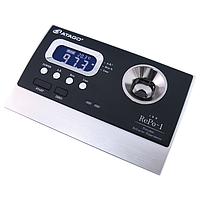
Models such as ATAGO RePo-1, RePo-2, RePo-3, RePo-4, and RePo-5 illustrate this approach. Within the available product range, some versions emphasize Brix and angle of rotation, while others extend the reading set to values such as fructose, invert sugar ratio, honey moisture, or refractive index. The benefit is not simply having more numbers on the display, but improving decision-making in routine quality control with less instrument switching.
What to consider when choosing a polarimeter
The best choice usually starts with the sample and the testing target. If the job is basic rotation measurement with straightforward handling, a compact unit may be enough. If the laboratory needs finer resolution, wider measurement range, controlled temperature conditions, and better repeatability, a modular benchtop system is usually the more suitable direction.
Key factors to review include measurement range, resolution, accuracy, wavelength, temperature handling, sample path length, and response time. It is also worth checking whether the instrument supports the scales your process actually uses, such as specific rotation, concentration, or sugar scale, rather than selecting a device based only on general specifications.
- Portable use: useful for fast checks, low sample volume, and mobility
- Benchtop use: better suited to controlled environments and repeatable laboratory workflows
- Hybrid measurement: relevant when optical rotation and Brix or refractive index are both important
- Temperature control: important when result stability depends on sample temperature
Examples of instruments in this category
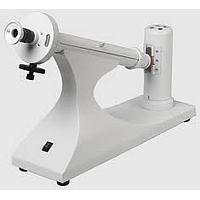
For routine portable work, the ATAGO Po-1 focuses on rotation measurement in a compact, battery-powered design. The ATAGO POLAX-2L represents a more traditional laboratory-style format for optical rotation and international sugar scale measurement, with observation tubes included for typical path lengths.
For users who need expanded functionality, the RePo series adds dual-purpose capability. RePo-1 supports angle of rotation, sugar-related scales, concentration, and Brix, while RePo-5 extends measurement possibilities with refractive index. Specialized versions such as RePo-4 for honey-related control and RePo-3 for invert sugar applications show how instrument selection can align with a specific product type rather than a generic lab requirement.
Higher-precision modular polarimeters for advanced labs
When laboratories need tighter accuracy, stronger repeatability, broader wavelength options, or more advanced temperature control, modular benchtop systems become more relevant. The Anton Paar range in this category includes models such as MCP 100, MCP 150, MCP 4100, MCP 5100, and MCP 5500, which address different levels of analytical demand.
These instruments are better aligned with environments where users may need automated temperature control, flexible sample cell configurations, higher resolution, and interface options for data handling. In regulated or method-driven laboratories, those features can matter as much as the raw measurement performance because they support consistency across operators and batches.
Manual versus automatic operation: which is more practical?
For most modern laboratories, automatic measurement offers clear advantages in speed, repeatability, and ease of use. It reduces operator-dependent variation and helps standardize routine testing, especially when multiple people use the same instrument or when sample throughput is high.
That said, the decision is not only about automation. A practical comparison should include how often the instrument is used, whether temperature control is necessary, the level of documentation required, and whether the laboratory benefits from extra parameters beyond rotation alone. If your broader workflow also involves related preparation or support tools, you may also want to review other laboratory preparation equipment used in sample handling.
Choosing by application instead of specification alone
A good polarimeter selection usually comes from matching the instrument to the sample matrix and the reporting requirement. Sugar analysis, honey quality control, pharmaceutical raw material verification, and fragrance or cosmetic formulation checks do not always require the same combination of precision, speed, portability, and calculated scales.
That is why this category includes both straightforward optical rotation instruments and more flexible systems built for multi-parameter analysis. If your lab is developing a broader analytical setup, it can also be useful to look at related lab essentials that support safe and efficient testing conditions.
Final considerations before selecting a model
The most effective instrument is the one that fits your real testing routine, not just the one with the longest specification sheet. Start by identifying whether you need simple optical rotation measurement, a portable device for quick checks, or a higher-end system with temperature control and advanced data handling.
Within this category, users can compare compact ATAGO models for mobile and application-focused testing, as well as modular Anton Paar systems for more demanding analytical environments. With the right balance of measurement range, precision, and workflow fit, a polarimeter can become a reliable part of daily quality control rather than a specialized instrument used only occasionally.
Get exclusive volume discounts, bulk pricing updates, and new product alerts delivered directly to your inbox.
By subscribing, you agree to our Terms of Service and Privacy Policy.
Direct access to our certified experts