Ampoule
Small-volume sample packaging often needs more than an ordinary glass container. In laboratory workflows, pharmaceutical handling, chemical preparation, and retained sample storage, ampoules are widely used when the goal is secure containment, single-use presentation, and reliable protection of sensitive contents. This category brings together Ampoule products for teams that need practical options across different capacities, glass formats, and handling requirements.
Where ampoules fit in lab and production environments
Ampoules are commonly selected for liquids or prepared samples that must be stored in a sealed glass vessel until use. Their format is especially useful when contamination control, batch separation, or one-time opening is important. Compared with more general-purpose containers, they support a cleaner handoff between filling, storage, transport, and dispensing.
In many facilities, ampoules are part of a wider labware ecosystem that may also include transfer accessories, storage consumables, and sealing-related materials. For applications that involve sample preparation or packaging support, it can also be useful to review related items such as adhesives for laboratory use or handling and containment products like lab bags.
Common ampoule types in this category
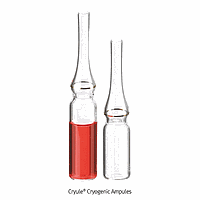
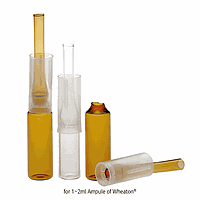
The range shown here includes several practical ampoule styles rather than a single uniform format. General ampoules are suited to routine sample containment across common laboratory volumes, while amber ampoules are useful when light-sensitive materials need additional protection from exposure. There are also specialized formats such as vacule and cryule designs for workflows with more specific storage or handling demands.
Typical capacities in this category span from compact 1 ml options up to larger 20 ml formats. That makes it easier to match container size to sample volume, reduce headspace where appropriate, and keep handling more consistent across small-batch or controlled lab processes.
Examples from Wheaton
This selection features products from Wheaton, a well-known manufacturer in laboratory glassware and sample handling. Representative items include the Wheaton WH.176772 Ampule general 1ml, WH.176776 Ampule general 2ml, WH.176779 Ampule general 5ml, and WH.176780 Ampule general 10ml, giving buyers a straightforward path when standard volume progression matters in day-to-day work.
For applications that need light protection, examples such as the Wheaton WH.176792 Ampule amber 1ml, WH.176796 Ampule amber 2ml, and WH.176799 Ampule amber 5ml help cover common small-volume requirements. The category also includes more specialized items such as the Wheaton WH.651502 Ampule vacule 1ml and Wheaton WH.651486 Ampule cryule 2.0ml, along with ampule breakers like Az.AWY700 for 1~4 ml and Az.AWY702 for 5~10 ml, which support safer opening in routine use.
How to choose the right ampoule
The first selection point is usually volume. Choosing a container that closely matches the intended fill amount can help improve handling consistency and reduce unnecessary empty space. For example, smaller formats such as 1 ml or 2 ml are often suitable for analytical samples or single-dose quantities, while 10 ml or 20 ml ampoules may be more practical for prepared reagents, retained samples, or process liquids that require a slightly larger vessel.
The second consideration is the material’s sensitivity to environmental factors. If the contents may degrade under light exposure, amber glass is often the more appropriate direction. If the workflow involves special storage conditions or application-specific formats, specialized ampoules should be reviewed alongside the opening method and downstream handling steps.
Handling and workflow considerations
Ampoules are effective only when they are also convenient and safe to use within the real process. Teams should consider how the ampoule will be filled, stored, labeled, opened, and disposed of after use. The availability of dedicated ampule breakers in this category is important because it supports more controlled opening and can help reduce the risk associated with manual breaking.
It is also worth thinking about how ampoules connect with adjacent lab operations. If liquids are transferred frequently, related handling tools such as a bottle top solvent pump may support upstream preparation tasks, while the final choice of ampoule should still reflect the storage and dispensing requirements of the actual sample.
Why color, size, and format matter
Even within a narrow product family, small differences in size and construction can affect usability. A 1 ml ampoule and a 20 ml ampoule serve very different purposes in terms of fill control, handling comfort, and storage footprint. Matching the ampoule size to the process can make sample organization more efficient and help standardize routine lab work.
Likewise, the distinction between clear general ampoules and amber versions is not just cosmetic. It directly relates to how the contents are protected during storage and transport. Buyers comparing options in this category should focus on the sample type, required protection level, and how often the ampoule will be handled before opening.
Supporting a more consistent purchasing decision
For procurement teams, lab managers, and technical buyers, the value of a focused ampoule category is that it simplifies comparison across a defined set of capacities and formats. Instead of treating every glass container as interchangeable, it is easier to evaluate the intended use case: standard storage, protected storage, specialized small-volume containment, or safer opening with the correct accessory.
If you are comparing closely related products, this category page is a practical starting point for narrowing choices by volume, glass type, and workflow fit. You can also explore the broader ampoule range shown here to identify suitable options for routine laboratory use, sample retention, or controlled small-volume packaging.
Choosing the right ampoule is ultimately about matching the container to the sample and the process around it. By focusing on capacity, light sensitivity, handling method, and supporting accessories, buyers can select a more suitable format for everyday lab operations without overcomplicating the specification process.
Get exclusive volume discounts, bulk pricing updates, and new product alerts delivered directly to your inbox.
By subscribing, you agree to our Terms of Service and Privacy Policy.
Direct access to our certified experts