Burette
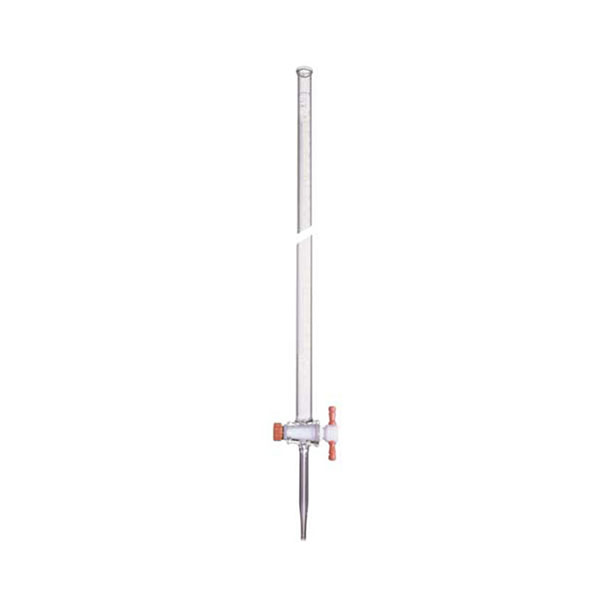
Accurate liquid dispensing is fundamental to titration, volumetric analysis, and many routine laboratory workflows. When the task calls for controlled delivery of a measured volume with clear graduation reading and reliable shutoff, a burette remains one of the most practical pieces of labware for chemistry labs, QA environments, education, and process support applications.
This category brings together glass burettes, automatic burette configurations, and selected accessories used to support repeatable manual dosing. Whether you are setting up a general laboratory bench or replacing worn components in an existing titration setup, the range is relevant for users who need dependable handling of reagents in controlled increments.
Where burettes fit in laboratory work
A burette is designed for precise volumetric delivery, typically in analytical procedures where the operator must add liquid gradually and monitor the dispensed amount closely. This makes it especially useful in acid-base titration, redox analysis, water testing, educational chemistry experiments, and reagent standardization.
Compared with general-purpose bottles or transfer tools, a burette provides a more controlled way to release liquid through a stopcock or valve. In many workflows, that control helps reduce overshooting the endpoint and supports better repeatability between operators and test runs.
Common burette types in this category
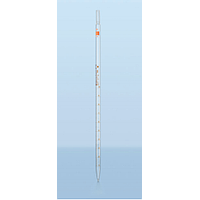
The selection includes classic glass burettes as well as automatic burette styles paired with reagent bottles. Standard glass formats are well suited to bench titration where the user fills the burette manually and reads the graduation directly. Examples in this category include SciLab models such as SL.Bur1002 and SL.Bur1003, along with the Glassco GL.110.224.03.
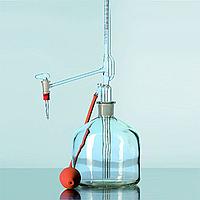
For workflows that benefit from integrated reagent storage and refilling convenience, automatic burette assemblies are also represented. WITEG products such as WI.3312010, WI.3312025, and WI.3312050 illustrate this format, where the burette works together with a bottle to simplify repeated dispensing during routine analysis.
Users who also need related liquid handling accessories may find it helpful to explore bottle top solvent pump options for adjacent reagent transfer tasks, especially in laboratories where multiple dispensing methods are used side by side.
Materials, visibility, and stopcock selection
Material and construction details can affect day-to-day usability. Clear glass burettes are often preferred when easy meniscus reading is the main priority, while amber versions can be useful when the reagent benefits from reduced light exposure. In this category, SciLab offers both clear and amber A-Class burettes in 25 mL and 50 mL formats, giving laboratories a choice based on reagent handling needs.
Stopcock design also matters. PTFE plug configurations are commonly selected for smooth operation and chemical resistance in routine use, while glass stopcock designs remain familiar in many traditional laboratory settings. The right choice depends on reagent compatibility, maintenance preference, and how frequently the burette will be used.
For buyers standardizing around a preferred manufacturer, brands such as SciLab, WITEG, and Glassco are represented in this range with products suited to different laboratory practices.
How to choose the right burette
Selection usually starts with volume capacity and graduation. A 25 mL burette is often suitable when smaller additions and finer control are needed, while a 50 mL model may be more practical for procedures that require a larger total dispense volume. The examples listed here reflect both formats, making it easier to align the instrument with the method in use.
Next, consider the working setup. A manually filled burette may be the straightforward choice for teaching labs or occasional analysis, while an automatic burette with bottle can be advantageous in repetitive testing where refill efficiency matters. Reagent properties should also be reviewed carefully, especially when deciding between clear and amber glass or between PTFE and glass stopcock designs.
Finally, think about replacement and maintenance. Spare bottle components and support accessories can be just as important as the main burette itself when the goal is to keep an existing titration station operational with minimal disruption.
Accessories and replacement parts for burette systems
This category is not limited to complete burettes. It also includes useful supporting items for burette operation and upkeep, such as the WITEG WI.3156200 amber spare buret bottle, the WI.3155200 clear spare bottle, and bulb-based accessories like SL.Bul6041 Double ball with net and WI.3157000 Bulb pressure 1×valve.
These items play a practical role in the wider titration setup. Replacement bottles help extend the life of automatic burette assemblies, while bulb accessories support filling or pressure-assisted handling in certain laboratory routines. For procurement teams and lab managers, sourcing these parts from the same category can simplify replenishment planning.
Typical users and application environments
Burettes are widely used in chemical laboratories, water and wastewater testing, education, food and beverage quality control, pharmaceutical support labs, and industrial QC environments. In each case, the shared requirement is measured liquid delivery that is visible, controllable, and suitable for documented procedures.
Even in laboratories with advanced instrumentation, manual volumetric glassware still has an important place. A well-matched burette supports training, reference methods, and routine analyses where operator control and clear reading remain essential. In broader laboratory workflows, burettes are often used alongside storage consumables such as laboratory bags and other everyday labware depending on sample preparation and handling needs.
What to review before ordering
Before purchasing, it is worth confirming a few practical points: required capacity, graduation preference, visibility needs, stopcock type, and whether the process requires a standard burette or an automatic bottle-mounted configuration. If you are replacing an existing component, compatibility with the current setup should be checked carefully, especially for bottles and accessories.
It is also helpful to align the burette choice with the operating environment. High-frequency routine testing may justify a configuration that is easier to refill and maintain, while occasional analytical work may prioritize simplicity and reading clarity. A-Class options can be relevant where tighter volumetric performance is part of the method expectation.
Find a burette suited to your laboratory routine
The right burette depends less on broad marketing claims and more on how the instrument will actually be used: the test method, the reagent, the reading requirement, and the overall bench setup. With options ranging from standard glass burettes to automatic burette assemblies and replacement accessories, this category supports both new setups and ongoing laboratory maintenance.
If you are comparing models, focus on capacity, construction, and workflow compatibility first. That approach usually leads to a more practical choice and a burette solution that fits naturally into everyday analytical work.
Get exclusive volume discounts, bulk pricing updates, and new product alerts delivered directly to your inbox.
By subscribing, you agree to our Terms of Service and Privacy Policy.
Direct access to our certified experts