Staining Jars
Consistent slide staining depends on more than the reagent itself. In many laboratory workflows, the container, rack, and slide support directly affect handling speed, sample organization, and the repeatability of immersion steps. Staining Jars are therefore a practical part of histology, microscopy, pathology, and routine laboratory preparation where glass slides need controlled exposure to stains, rinses, or solvents.
This category brings together staining jars, stain dishes, trays, racks, and related supports used to process slides efficiently. Whether the priority is upright storage, horizontal handling, compact bench use, or compatibility with slide carriers, the selection helps laboratories match vessel format to their day-to-day staining method.
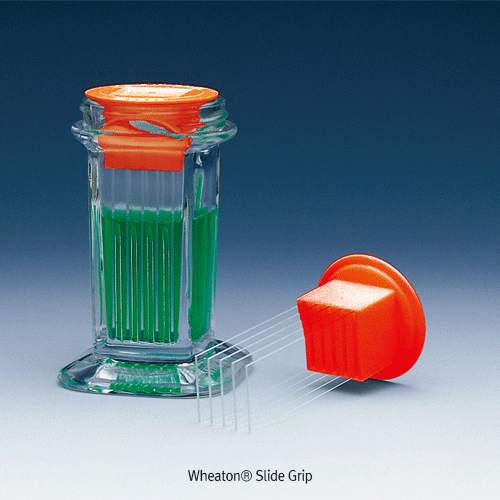
Designed for routine slide staining workflows
In manual staining processes, laboratory staff often move slides through a sequence of reagents for fixation, staining, differentiation, washing, and mounting preparation. A suitable staining vessel helps keep slides stable during immersion and supports safer handling when multiple slides are processed in parallel.
Depending on the workflow, users may prefer high-form jars for vertical immersion, horizontal dishes for bench-efficient processing, or trays intended for organized staining steps. Products in this category are relevant for laboratories that need simple, dependable labware for repeated slide preparation rather than fully automated systems.
Common product formats in this category
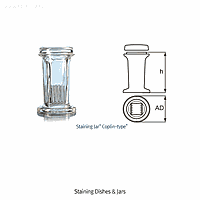
The range includes several vessel styles to suit different staining habits. High-form jars such as the Wheaton WH.900570 Jar staining high form are useful when slides are immersed vertically and bench footprint matters. Horizontal options such as the Kartell KA.351 Dish staining jar horizontal or the Kartell KA.354 Dish staining tray horizontal may fit workflows where access and slide placement are easier from above.
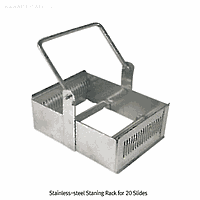
There are also dedicated stain jars and stain dishes intended for general laboratory slide treatment, including DURAN DU.2331400 Stain jar, DURAN DU.2331900 Stain jar, and DURAN DU.2331600 Stain dish. For labs that need a more complete handling setup, accessories such as the SciLab SL.Rac7095 Staining Rack, SUS, 20Holes and SciLab SL.Sup7051 Support, Slide Glass, 40*300mm help organize slides during transfer and immersion.
How to choose the right staining jar setup
The first consideration is the orientation of the slide. Vertical jar formats are often chosen when users want compact storage and immersion-style processing, while horizontal jars or trays may be easier for loading, unloading, and visual checking during staining steps. The preferred format usually depends on reagent volume, slide quantity, and operator habit.
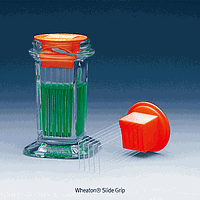
Another important point is whether the application requires only the jar or a broader handling system. Some laboratories prefer a simple vessel and loose slide insertion, while others use supports, racks, or lids to improve consistency and reduce handling risk. For example, the Kartell KA.353 Dish staining jar w/ 2 lid may be useful where covered handling is preferred, and the Wheaton WH.900575 Grip slide is relevant when easier slide manipulation is needed around the staining process.
If your workflow includes reagent transfer or other supporting containers, it can also be useful to review adjacent labware such as bottle top solvent pump options for controlled liquid dispensing in the same workspace.
Manufacturer options for different lab preferences
This category includes products from established labware brands such as DURAN, Wheaton, Kartell, and SciLab. Each of these manufacturers contributes practical formats for staining, slide support, or accessory handling, allowing users to choose based on vessel shape, material preference, bench arrangement, or compatibility with existing laboratory routines.
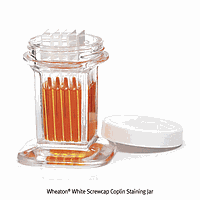
DURAN offers dedicated stain jars and stain dishes for laboratories that prefer straightforward glass labware. Wheaton includes staining jars and related slide-handling items such as optional caps and grips. Kartell contributes several dish-style staining formats, including horizontal and vertical configurations, while SciLab supports the workflow with racks and slide supports rather than only the primary vessel.
Where staining jars fit in the broader labware ecosystem
Although staining jars are specialized, they rarely work in isolation. They are part of a wider labware setup that may include reagent containers, dispensers, storage items, and consumable handling tools. In practical terms, the best setup is often the one that reduces unnecessary slide contact, keeps reagents organized, and makes each staining stage easier to repeat.
For laboratories that also manage sample packaging or supporting consumables, related categories such as laboratory bags may be relevant elsewhere in the workflow. In preparation or assembly tasks around slide labeling and handling, some users also look at adhesives for lab applications when building a complete bench process.
Typical use cases in laboratory practice
Slide staining equipment is commonly used in pathology and histology preparation, educational laboratories, microscopy sample preparation, and other settings where glass slides are immersed in process liquids. Manual staining remains important in many labs because it allows flexible reagent sequences, visual control, and adaptation to variable sample loads.
In these environments, practical details matter: a jar must be easy to access, stable on the bench, and compatible with the number of slides handled per cycle. Support items such as racks, lids, trays, and optional caps can improve cleanliness and handling discipline, especially where multiple staining stages are carried out in succession.
Selection guidance for purchasing teams
When comparing products in this category, it helps to focus on workflow fit rather than looking only at item names. Consider whether your team needs an individual jar, a stain dish, a tray, or a complete set of vessel plus support accessories. Also review whether the process is built around vertical immersion, horizontal placement, or transfer with a dedicated rack.
Examples in this category illustrate those differences clearly: the Wheaton WH.900522 Jar optional cap 58-400 serves as a supporting accessory, while products such as Kartell KA.355 Dish staining jar vertical and DURAN DU.2331400 Stain jar are closer to the primary vessel role. This makes the category suitable both for first-time setup and for replacing a single missing component in an existing staining station.
Choosing with confidence
A well-matched staining jar system helps laboratories keep slide preparation organized, repeatable, and easier to manage during routine bench work. By comparing jar orientation, handling accessories, and manufacturer range, buyers can select labware that fits their actual staining method instead of adapting the method to the container.
If you are building or refining a manual slide staining workflow, this category provides a focused starting point for selecting jars, dishes, trays, and supports that align with everyday laboratory practice.
Get exclusive volume discounts, bulk pricing updates, and new product alerts delivered directly to your inbox.
By subscribing, you agree to our Terms of Service and Privacy Policy.
Direct access to our certified experts